Overshadowed by Ukraine war, Yemen on brink as pledges fall short

 Tech stock lead rout after US inflation fuels rate hike bets
 Al-Fayed survivors say UK police missing 'bigger picture'

 Online 'witch hunt' sweeps up Asians misidentified as US rape accused

 Prospect of Bolsonaro win looms large over Brazil's Indigenous

 Freed from Belarus, founder of Lady Gaga's biggest fan site tells his story

 Behind AI's carbon footprint, a potential climate tool

 Trump's new press secretary faces scrutiny over credentials

 PSG 'got lucky' to win Man City thriller, says Luis Enrique

 Real Madrid comeback stuns Roma as Mourinho enjoys happy reunion
 Shakhtar make winning start at new Champions League 'home'

 Hat-trick hero Barcola primed to shine for Liverpool: Iraola

 Villa put six past Fenerbahce in record rout
 US stocks fall after hot inflation report as leading AI shares tumble

 Government buildings torched in violent Albanian protests

 Wall Street grills Bank of America over money laundering fine

 Mekies extends contract as Red Bull team principal until 2031

 Indonesia rescues starved orangutan from fires: officials

 Real Madrid's Vinicius banned for Clasico after red card
 Restrictions expose Ukraine's Starlink dependency in Russia war: observers
 Espada out as Astros manager while Mattingly stays with Phillies

 Houthis say targeted Saudi oil giant Aramco, vow more attacks

 Govt takes control of Turkey's most-watched news channel

 FIFA to offer members $6.35-billion development fund windfall

 US consumer inflation hotter than expected as midterms loom
 INmune Bio Inc. and Quantum Computing Inc. Partner to Apply Quantum Optimization and AI to Advance Alzheimer’s Drug Research and Explore New Applications for XPro

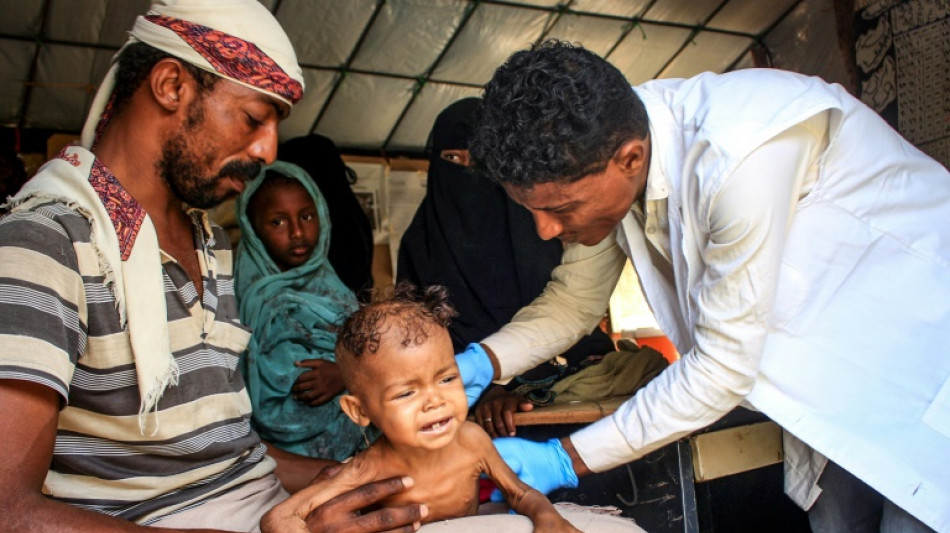
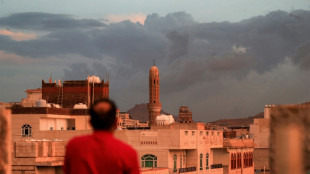
The United Nations and aid groups have warned of grave consequences for Yemen after an international pledging conference failed to raise enough money to prevent a humanitarian catastrophe in the war-torn country.
Overshadowed by the conflict in Ukraine, aid-starved Yemen -- already suffering the world's worst humanitarian crisis, according to the UN -- is on the verge of total collapse.
With the country almost completely dependent on imports, aid groups say the situation will only worsen following Russia's invasion of Ukraine, which produces nearly a third of Yemeni wheat supplies.
Some 80 percent of its around 30 million people depend on aid for survival, after seven years of a conflict that has killed hundreds of thousands of people, directly or indirectly.
The UN voiced disappointment after Wednesday's conference raised less than a third of the target to help 17.3 million of Yemen's needy.
It has repeatedly warned that aid agencies are running out of funds, forcing them to slash "life-saving" programmes.
"A shortfall in funding means the needs of people will not be met," Auke Lootsma, the UN Development Programme's resident representative to Yemen, told AFP.
"The outlook for next year looks very bleak for Yemen. This is the bleakest situation we've had so far in the country."
- Famine conditions -
The violent struggle between Yemen's internationally recognised government, supported by a Saudi-led military coalition, and the Iran-backed Huthi rebels has pushed the country to the brink of famine.
The UN's World Food Programme has said the levels of hunger risk becoming catastrophic as the Ukraine crisis pushes up food prices.
Even before Russia invaded its neighbour, the WFP said Yemeni food rations were being reduced for eight million people this year, while another five million "at immediate risk of slipping into famine conditions" would remain on full rations.
"Clearly, pressing concerns over events in the Ukraine cast a shadow on (the pledging) event," Abeer Etefa, a WFP spokesperson for the Middle East and North Africa region, told AFP.
UN agencies had warned before the conference that up to 19 million people could need food assistance in the second half of 2022.
"The $1.3 billion committed at the pledging conference out of just over $4 billion requested was a disappointment," Etefa said.
"We'd hoped for more, particularly from donors in the region who have yet to step up and commit funds for a crisis in their backyard.
"If we act now, we can avert what could be a point of no return and we can save millions."
The UN was seeking $4.27 billion but raised only $1.3 billion, with some major donors going missing -- including Saudi Arabia and the United Arab Emirates, who were among the top three at last year's conference.
The two oil-rich Gulf countries are leading members of the military coalition that intervened in the Yemen war in 2015, shortly after the Huthi rebels seized the capital Sanaa and subsequently much of the north.
The UAE withdrew troops from the country in 2019 but remains an active player.
- 'Lives will be lost' -
"Some of Yemen's affluent neighbours, also parties to the conflict, have so far pledged nothing for 2022. We hope this will change," Erin Hutchinson, the Norwegian Refugee Council's Yemen country director, told AFP.
"It is a catastrophic outcome for the humanitarian response in Yemen. More people are in need this year in Yemen than in 2021. More lives will be lost."
During Wednesday's pledging conference, representatives from Saudi Arabia and the UAE stressed the need to stop the Huthi's "terrorist" actions, with the Emirati official saying the rebels "obstruct and deviate aid".
Saudi Arabia, meanwhile, said it has provided more than $19 billion in aid and development to the country in the past few years.
"Coalition partners appear now to prefer to control their own funding for Yemen, rather than leave it to the UN," Elisabeth Kendall, a researcher at the University of Oxford, told AFP.
"This may be because Yemen's worst-hit areas are under Huthi control, so it may be unpalatable to see their aid flowing into the very areas over which they are fighting."
According to Abdulghani al-Iryani, a senior researcher at the Sanaa Center for Strategic Studies, the coalition partners "appear to make their humanitarian response in the way that reaps greater political benefit, through their own organisations".
The six-nation Gulf Cooperation Council said Thursday it seeks to host discussions between Yemen's warring sides in Saudi Arabia, despite the Huthi rebels' rejection of talks in "enemy countries".
Y.Baker--AT