With Ukraine, Vatican balances diplomacy and inter-faith ties

 Tech stock lead rout after US inflation fuels rate hike bets
 Al-Fayed survivors say UK police missing 'bigger picture'
 Online 'witch hunt' sweeps up Asians misidentified as US rape accused
 Prospect of Bolsonaro win looms large over Brazil's Indigenous

 Freed from Belarus, founder of Lady Gaga's biggest fan site tells his story
 Behind AI's carbon footprint, a potential climate tool
 Trump's new press secretary faces scrutiny over credentials
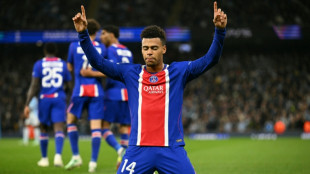
 PSG 'got lucky' to win Man City thriller, says Luis Enrique
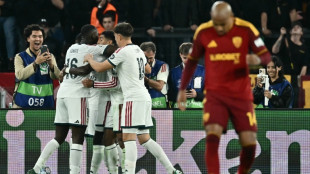 Real Madrid comeback stuns Roma as Mourinho enjoys happy reunion
 Shakhtar make winning start at new Champions League 'home'
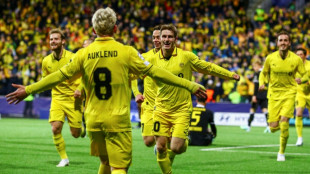
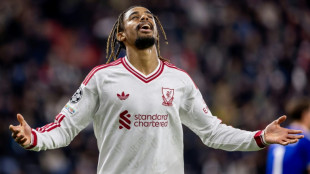 Hat-trick hero Barcola primed to shine for Liverpool: Iraola
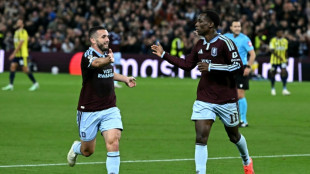 Villa put six past Fenerbahce in record rout
 US stocks fall after hot inflation report as leading AI shares tumble
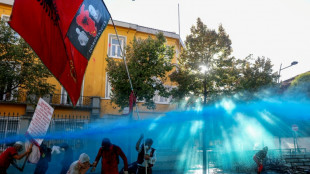 Government buildings torched in violent Albanian protests
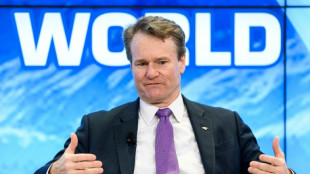 Wall Street grills Bank of America over money laundering fine
 Mekies extends contract as Red Bull team principal until 2031
 Indonesia rescues starved orangutan from fires: officials
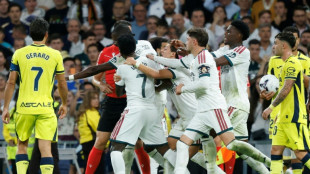 Real Madrid's Vinicius banned for Clasico after red card
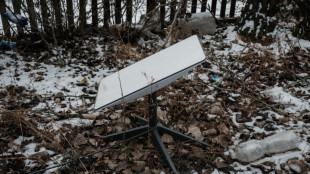
 Restrictions expose Ukraine's Starlink dependency in Russia war: observers
 Espada out as Astros manager while Mattingly stays with Phillies
 Houthis say targeted Saudi oil giant Aramco, vow more attacks
 Govt takes control of Turkey's most-watched news channel
 FIFA to offer members $6.35-billion development fund windfall
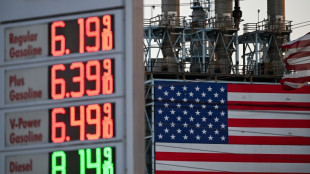 US consumer inflation hotter than expected as midterms loom

 INmune Bio Inc. and Quantum Computing Inc. Partner to Apply Quantum Optimization and AI to Advance Alzheimer’s Drug Research and Explore New Applications for XPro
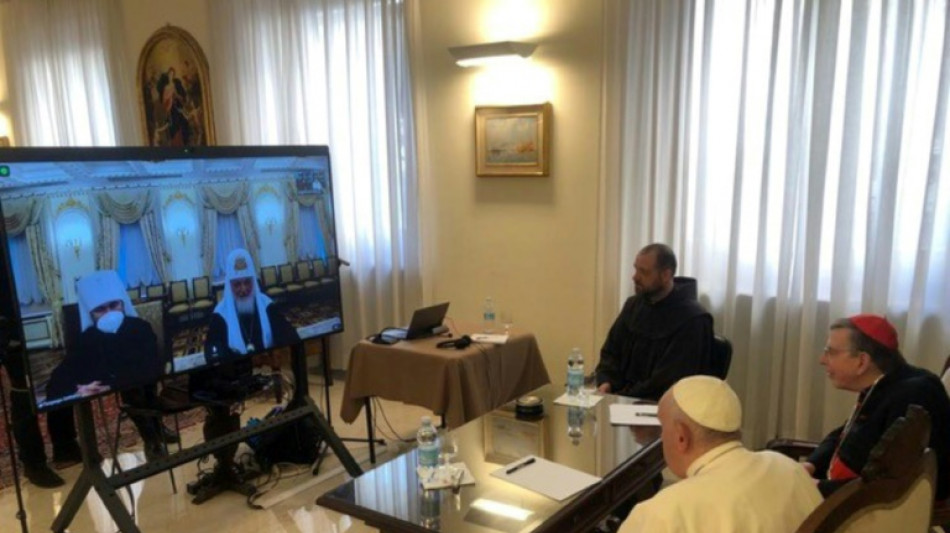
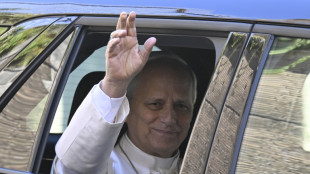
The Vatican has long played global mediator but has struggled to make its mark in the Ukraine conflict, walking a tightrope between its desire for peace and ties with the Russian Orthodox Church.
With a self-proclaimed "willingness" to help in the negotiations, Pope Francis' unprecedented visit to the Russian embassy and high-level phone calls, the Holy See has spared no effort since Russia invaded Ukraine last month to achieve a ceasefire.
But despite past successes, notably in the historic rapprochement between Cuba and the United States in 2014, its attempts to play peacemaker in the Ukraine conflict have yet to yield results.
This is because, say analysts, the Argentine pontiff has been forced to perform a diplomatic balancing act.
He has been drawn into the conflict as the spiritual guide of five to six million Catholics in Ukraine.
But the Vatican has also spent years fostering closer ties with the Russian Orthodox Church led by Patriarch Kirill -- a close ally of President Vladimir Putin and a key pillar of his ruling apparatus.
This led in 2016 to the historic meeting between Pope Francis and Kirill, the first encounter by the heads of the two churches since Christianity split into Western and Eastern branches in the 11th century.
In December, the pontiff even raised the possibility of going to Moscow to meet with this "brother" Kirill in the near future.
Francis "is inevitably considered as both judge and party" in the conflict, noted Bernard Lecomte, a specialist in the Vatican and eastern Europe.
The result has been a series of public statements by the pope condemning the war in increasingly emotive terms -- without ever mentioning Russia as the aggressor.
- Turning point -
The pope's approach has sparked criticism, which only grew following Kirill's outspoken support of the Russian intervention, calling Moscow's opponents in Ukraine "evil forces".
Afterwards, Francis stepped up his rhetoric, condemning the "unacceptable armed aggression" and the "barbarity" of the killing of innocents.
With that, "the impartial role, which is an advantage for a mediator, is reduced", noted Stein Tonnesson, a member of the Peace Research Institute Oslo, who said he was "pessimistic" about the chances of the Vatican arbitrating peace talks over Ukraine.
"There is a real turning point -- it pushes Vatican diplomacy out of its realpolitik attitude," added Constance Colonna-Cesari, author of the book "Holy Diplomacy: The Secret Power of the Vatican".
For his part, Kirill is also facing protests by sections of his clergy in Ukraine, who have called for a severing of ties with the patriarchy.
- Spiritual level -
Alongside its diplomatic efforts, the Vatican has played its traditional humanitarian role, sending cardinals to the region and activating refugee networks.
And the pope has emphasised the importance of religious dialogue.
On Wednesday, during a video call with Kirill, Francis said the Church "must not use the language of politics, but the language of Jesus", saying both men should "unite in the effort to help peace".
For Vatican watchers, this was an attempt by Francis to take the discussion back to a subject that drives him -- closer relations between different faiths.
The pontiff "has an interest in confining himself to the spiritual, to use values, symbols... without talking politics, which would discredit him immediately," said Lecomte.
On Friday, the pope invited bishops from around the world to take part in a ceremony on March 25 for Russia and Ukraine in St Peter's Basilica.
"As long as we remain on a spiritual level, there will be a sliver of possibility of dialogue. We know from history that these channels, at a certain moment, can be very precious," said Lecomte.
A.O.Scott--AT