Months-long limbo for thousands of Sudanese at Egypt border / Photo: ASHRAF SHAZLY - AFP

 Venezia upset Napoli for first Serie A win of season
 Glasgow and Bulls win as grieving Lions set for Champions Cup debut
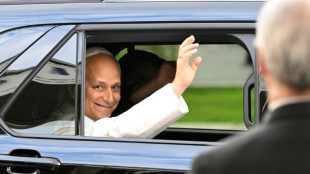 Smiling pope returns to Vatican after cancer surgery

 In-form Atletico scrape late win at Espanyol

 Rabada returns as S.Africa seek to bounce back against Australia

 Zverev, Medvedev ousted with Spaniards to clash for Shanghai title

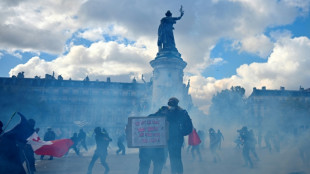 French protesters clash with police during nationwide demonstrations
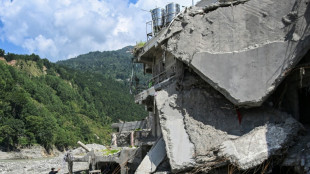
 Zelensky says Trump could lift more Russia sanctions
 Jayawardene quits as coach of five-time IPL winners Mumbai

 World number 170 Kartal battles past Ostapenko to reach Wuhan final

 Pope to return to Vatican after cancer surgery
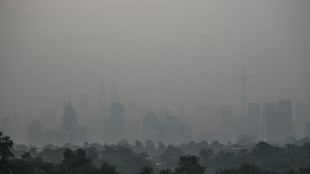
 Haze triggers highest-level alert in parts of Southeast Asia
 I'd have left Real Madrid if I were Vinicius, says Mourinho

 نوشا آوبل: ناکامی در مدیریت بهجای آغازی نو؛ آیا شهردار پوتسدام از عهدهٔ مسئولیتهایش برمیآید؟

 Noosha Aubel: eșec la conducere în locul unui nou început – este primărița Potsdamului la înălțimea funcției sale?
 Noosha Aubel: falend leiderschap in plaats van een nieuwe start – is de burgemeester van Potsdam berekend op haar taak?

 Noosha Aubel: Misslyckat ledarskap i stället för en nystart – är Potsdams överborgmästare vuxen uppgiften?

 Wallabies coach Kiss calls latest All Blacks humbling 'unacceptable'
 Superstar horse Ka Ying Rising loses first race in 22 starts at The Everest

 Rampant All Blacks crush Wallabies 43-21 to extend dominance

 All Blacks crush Wallabies 43-21 to extend dominance

 'No Kings' movement seeks to boost early voting

 Trump waives new Russia sanctions as Ukraine ties slump

 Tiny Fiji village restores dying fishery with coral planting
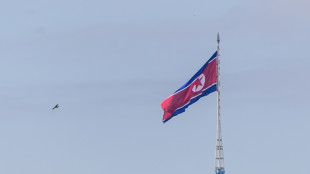 North Korea says tested AI-assisted torpedo system

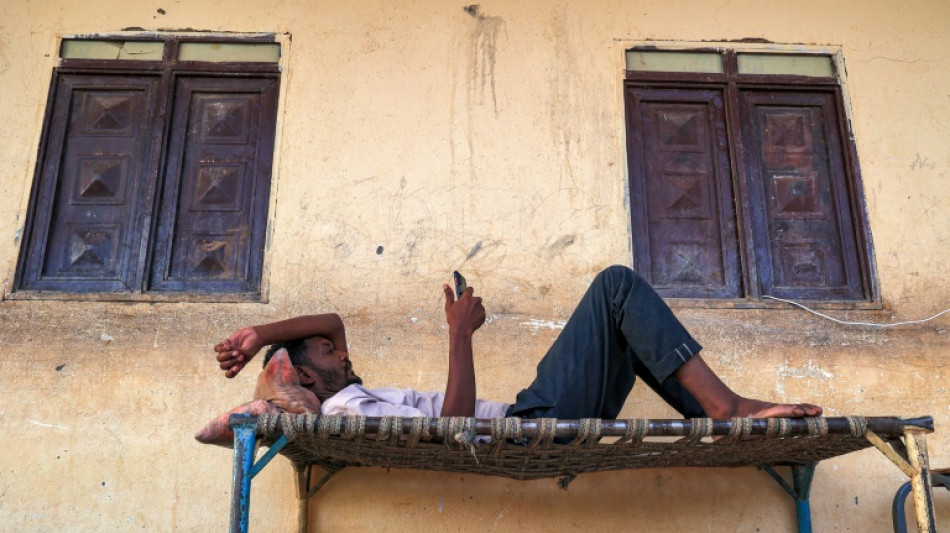
In the sandy courtyard of a school turned shelter in northern Sudan, two children idly pass a football back and forth. Around them, dozens of adults wait, trapped between a war and a border.
There is little else to do in the border town of Wadi Halfa, where a local support group says upwards of 20,000 displaced people live in limbo, unable to cross the northern frontier into Egypt and escape the five-month war between the Sudanese army and paramilitary Rapid Support Forces.
Of the more than five million who have been forced to flee their homes during the war, according to the United Nations, at least 323,000 have crossed into Egypt.
But not everyone has made it.
Aref al-Zubeir, an architect, has been in Wadi Halfa since the first month of fighting.
"I lost my passport, and I've been waiting to have a new one issued since the middle of May," he told AFP at a classroom that has been turned into a temporary home for the displaced.
There, the 36-year-old sleeps on the floor, propped up only by cushions on top of a thin mat.
"I sent my family ahead to Cairo. This was back when travelling was easy," he said.
When the war broke out in April, only men under the age of 50 needed to apply for visas to enter Egypt -- allowing many to flee in the conflict's first weeks.
But in June, Cairo tightened its visa rules to include children, women and older men, which has slowed the flow of refugees across the border and kept many stuck in Wadi Halfa.
- Essential goods delayed -
"The most recent figures show that 8,150 people are staying in 53 shelters in Halfa," according to Oday Mohammed, 23, the coordinator of the Halfa "Emergency Room", one of many volunteer groups providing aid across Sudan.
"There are many more, over 15,000, being hosted by families in local homes or renting accommodation," he said.
Those stuck in what was largely a transit town are "in need of food, medicine, shelter and health care, as well as the central problem that they need their visas issued and passports renewed," Mohammed told AFP.
According to Human Rights Watch, "without ensuring the speedy processing of visas," Egypt's toughened visa rule "violates international standards by creating unreasonable and life-threatening delays in processing asylum seekers."
Egyptian officials said at the time that they tightened the visa procedures to stop "illegal activities by individuals and groups on the Sudanese side of the border, who forged entry visas" for profit.
While people find it difficult to get out, goods are slow coming in.
In August, the UN refugee agency reported that hundreds of commercial trucks carrying food and hygiene products were stuck at the border waiting to cross into Sudan, causing "the delay of essential goods reaching Wadi Halfa" and other parts of Sudan.
- A difficult choice -
Families who grabbed whatever cash they could and fled their homes during the war quickly ran out of cash. They have since relied on mutual aid and any assistance that comes their way.
The relentless gunfire, air strikes and artillery blasts that have devastated Khartoum, 1,000 kilometres (620 miles) south, have not reached the quiet of Halfa.
But the war is never too far off.
Siham Saleh, a 45-year-old journalist, spends her days anxiously refreshing social media feeds on her phone for the latest news about the conflict.
"Leaving was an incredibly difficult choice, but for us as journalists, it got too dangerous," she told AFP, carefully weighing each word.
Journalists and activists have been routinely targeted by both sides.
Many have been forced to flee, and those who remain work largely in secret to document atrocities committed during the fighting between rival generals, army chief Abdel Fattah al-Burhan and his former deputy, paramilitary commander Mohamed Hamdan Daglo.
"People are risking their lives. They could be targeted or detained at any point. That's why you decide to leave, and you hope maybe then you'll be safe," Saleh said.
She is among the more than 4.2 million people displaced within Sudan who, even if they have reached relative safety, face other challenges.
The war has decimated already-fragile infrastructure, shuttered 80 percent of the country's hospitals and pushed more than six million people to "the brink of famine", global humanitarian organisations said last month.
Since April 15, nearly 7,500 people have died in the fighting, according to a conservative estimate from the Armed Conflict Location & Event Data Project.
M.King--AT