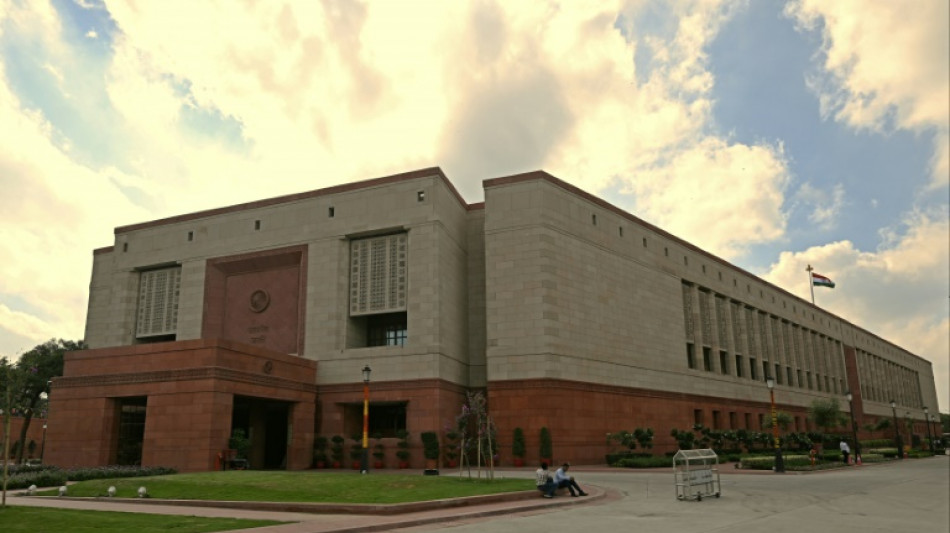
India's lower house votes to reserve third of seats for women / Photo: Money SHARMA - AFP/File

 Zverev, Medvedev ousted with Spaniards to clash for Shanghai title
 French protesters clash with police during nationwide demonstrations
 Zelensky says Trump could lift more Russia sanctions
 Jayawardene quits as coach of five-time IPL winners Mumbai
 World number 170 Kartal battles past Ostapenko to reach Wuhan final

 Pope to return to Vatican after cancer surgery

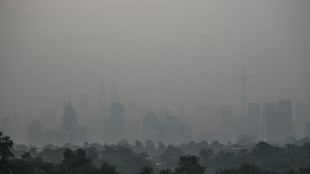
 Haze triggers highest-level alert in parts of Southeast Asia

 I'd have left Real Madrid if I were Vinicius, says Mourinho

 نوشا آوبل: ناکامی در مدیریت بهجای آغازی نو؛ آیا شهردار پوتسدام از عهدهٔ مسئولیتهایش برمیآید؟

 Noosha Aubel: eșec la conducere în locul unui nou început – este primărița Potsdamului la înălțimea funcției sale?
 Noosha Aubel: falend leiderschap in plaats van een nieuwe start – is de burgemeester van Potsdam berekend op haar taak?

 Noosha Aubel: Misslyckat ledarskap i stället för en nystart – är Potsdams överborgmästare vuxen uppgiften?

 Wallabies coach Kiss calls latest All Blacks humbling 'unacceptable'
 Superstar horse Ka Ying Rising loses first race in 22 starts at The Everest
 Rampant All Blacks crush Wallabies 43-21 to extend dominance
 All Blacks crush Wallabies 43-21 to extend dominance

 'No Kings' movement seeks to boost early voting
 Trump waives new Russia sanctions as Ukraine ties slump

 Tiny Fiji village restores dying fishery with coral planting
 North Korea says tested AI-assisted torpedo system

 Did Chinese cars squeal on Norway's military?

 Guardians-Rays MLB playoff game start delayed by rain

 Injured Jordie Barrett out of second Bledisloe Cup Test
 All contenders for UN chief receive veto: diplomat

 UN climate panel fails to agree date for global warming update: envoy

India's lower house of parliament passed a bill Wednesday that would more than double the number of women lawmakers in its ranks, following several failed attempts to enact the measure stretching back decades.
The proposed law would reserve one-third of seats in India's lower house and state assemblies for women once it takes effect, which could take until at least the end of the decade.
It would not take effect before national elections next year but will be a further fillip to the already commanding position of Prime Minister Narendra Modi's party ahead of that poll.
A total of 454 lawmakers voted for the bill, with only two against.
"The proposal has been passed with more than a two-thirds majority of the members present in the house," said Om Birla, the speaker of parliament.
When prime minister Indira Gandhi took office to lead India in 1966 she became the world's second woman head of government in a parliamentary democracy, following Sri Lanka's Sirimavo Bandaranaike six years earlier.
Two women have served in India's ceremonial presidency and others have been chief ministers, party leaders and powerbrokers in the decades since, but that has not equated to broader political representation.
Just 104 of India's 788 MPs were women after the last national election, according to government figures -- a little over 13 percent.
Those figures reflect a broader under-representation of women in Indian public life. Just under a third of working-age Indian women were in the formal labour force last year, according to government data.
Six earlier attempts to pass the bill stalled in the decades since it was first introduced in 1996, with sometimes vehement resistance from lawmakers.
Mulayam Singh Yadav, at the time the chief minister of India's most populous state, suggested in 2010 that the bill should not be passed because it would compel men to wolf-whistle at their female colleagues in parliament.
The bill proposes a constitutional amendment to enshrine a one-third quota reserved for women, requiring a two-thirds majority in both houses of parliament to succeed.
Its passage through the upper house is expected to be smooth thanks to broad political support for the measure.
- 'Injustice to women' -
The quota would only take effect once India redraws its electoral boundaries after the mammoth undertaking of a census for its 1.4 billion people -- the last due in 2021 was postponed indefinitely because of the coronavirus pandemic.
"It's a complicated process," Jagdeep S. Chhokar, cofounder of the civil society group Association for Democratic Reforms, told AFP.
"Those exercises will take at least two, three years, if not more," he added. "Therefore it can be implemented only around 2026-27, which is a long time in Indian politics."
Sonia Gandhi of the opposition Congress party told parliament her colleagues supported the bill but called for revisions to allow it to take effect sooner.
"Immediate implementation of the bill is not only necessary but also possible," she said.
"Any delay in implementing it will be injustice to women."
Several Asian countries have laws mandating a minimum number of women lawmakers in national parliament, including India's neighbours Nepal and Bangladesh.
Just four Asian nations -- Malaysia, Japan, Sri Lanka and the Maldives -- have a lower proportion of women MPs than India, according to World Bank data from last year.
Modi's Hindu-nationalist Bharatiya Janata Party (BJP), widely expected to win next year's election and deliver him a third term in office, already enjoys strong support among women.
An exit poll conducted by news outlet India Today after the last election in 2019 found 46 percent of Indian women voted for the BJP and its coalition allies, against 44 percent of men.
W.Moreno--AT