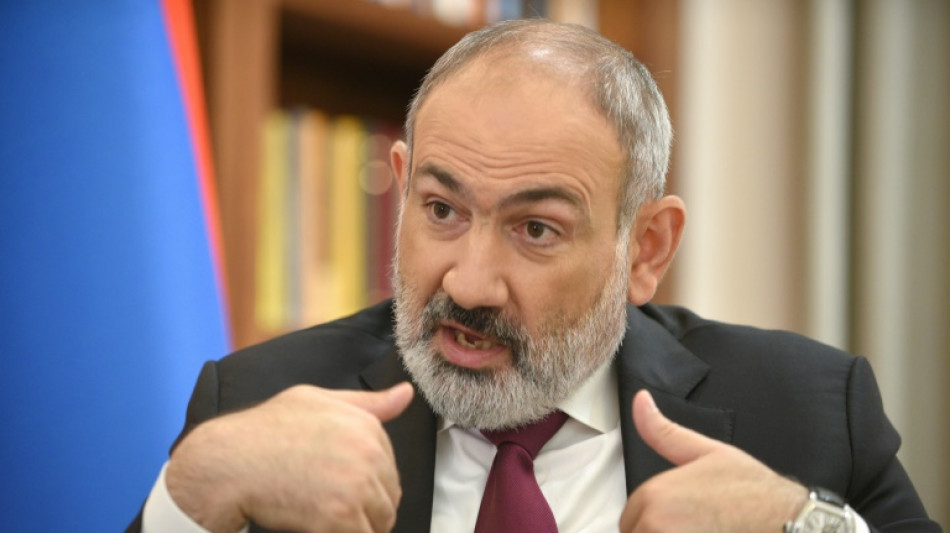
Armenia's Pashinyan: from revolutionary to embattled war-time leader / Photo: Karen MINASYAN - AFP

 Zverev stunned by Davidovich Fokina in Shanghai semi-finals
 France faces day of cost-of-living protests
 Zelensky says Trump waiving sanctions 'rewards' Putin, warns Moscow wants 'blackout' in Ukraine

 Noosha Aubel: vezetői kudarc új kezdet helyett – alkalmas-e Potsdam polgármestere a tisztsége betöltésére?
 Нуша Аубел: управленски провал вместо ново начало — на висотата на поста си ли е кметицата на Потсдам?

 Russia hails Trump waiving sanctions as 'historic'

 Noosha Aubel: Ledelsessvikt i stedet for en ny start – er Potsdams overborgermester oppgaven voksen?

 Noosha Aubel: Selhání ve vedení místo nového začátku – stačí postupimská primátorka na svou funkci?

 Haze triggers highest-level alert in parts of Southeast Asia: monitor
 IMF chief flags 'optimism', 'worry' after Bangkok annual meetings

 IMF chief says has 'optimism' and 'worry' after Bangkok annual meetings

 Hong Kong superstar Ka Ying Rising loses first race in 22 starts at The Everest
 Attacks on Gulf energy infrastructure 'worrying' for outlook: Pakistan finance minister
 Japan says hosting record number of foreigners

 'Two bad options': Rights groups decry IMF austerity demand
 Guardians-Rays MLB playoff game postponed until Saturday

 'We've never had this': Bear sightings spook Russia
 Injured Jordie Barrett out of second Bledisloe Cup Test
 All contenders for UN chief receive veto: diplomat

 UN climate panel fails to agree date for global warming update: envoy
 Stocks struggle to bounce back from AI angst-fueled rout

 Clashes grip Tirana as Albanian PM blames 'foreign hands'

 End of a dynasty? Dodgers digest playoff drubbing

 Troyes sack sporting director Blanchard amid sexism claims

 Trump's new press secretary out after less than week

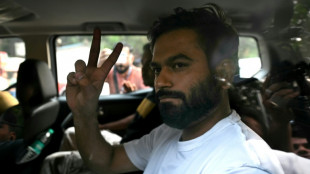
Armenian Prime Minister Nikol Pashinyan swept to power promising change, but a humiliating military defeat to Azerbaijan and a dramatic escalation in Nagorno-Karabakh tarnished his reputation in the poor ex-Soviet country.
In the three years since his military was defeated in the breakaway mountainous region, Pashinyan has fought for political survival, while balancing Armenia's volatile ties with its weakened ally Russia and the West.
Before fighting broke out this week again in Nagorno-Karabakh, the 48-year-old had warned in an interview with AFP in July that full-scale hostilities could erupt again with Azerbaijan. He accused Armenia's arch-enemy of ethnic cleansing in the majority-Armenian territory.
"We're talking not about a preparation of genocide, but an ongoing process of genocide," Pashinyan said.
Hundreds of protesters rallied outside government buildings in Yerevan this week, demanding he resign for his handling of the Karabakh crisis, with the opposition branding him a "traitor".
"He has brought us only sorrow and mourning, so we want him to resign," protester Vahagn Nikoghosyan told AFP, as demonstrators clashed with police.
"His presence brings only war and mourning."
Since ceding swathes of territory in Nagorno-Karabakh to Azerbaijan in 2020 under an agreement brokered by Russia, Pashinyan has turned increasingly to Western countries for political backing.
- Russia 'unable or unwilling' -
When Azerbaijan launched its "anti-terror" operation to wipe out pockets of separatist resistance on Tuesday, Pashinyan telephoned US Secretary of State Antony Blinken and French President Emmanuel Macron, not the Kremlin.
He had said Russian forces deployed to Nagorno-Karabakh were "unable or unwilling" to fulfil their mandate, and launched peacekeeping drills in Armenia with US forces, angering Russia.
Pashinyan, a former journalist, who came to power in 2018, was celebrated as a national hero when he channelled widespread desire for change into a broad protest movement against corrupt post-Soviet elites.
But it was under his watch that Armenia lost the six-week war and handed over territory ethnic Armenians had controlled for decades, after hostilities that claimed more than 6,000 lives, mostly Armenians, in 2020.
He won favour with Armenians at the time by announcing that both his son and wife -- who this year visited Ukraine in a rebuke to Russia -- had served on the frontline in Nagorno-Karabakh.
He described having to sign the ceasefire as "unspeakably painful" both personally and for Armenians, many of whom took to the streets to protest the peace deal, leading to clashes with police.
The opposition has repeatedly accused Pashinyan of making too many concessions on Karabakh. Despite the widespread criticism however, his party won the 2021 snap parliamentary polls called in an effort to defuse the political crisis after the war.
- Dramatic shift -
The self-styled man of the people rode to power vowing reforms, spearheading a wave of peaceful protests against corrupt post-Soviet elites.
In the provinces, villagers greeted him as a hero, offering him fresh bread and berries as he led the protest movement.
He walked hundreds of kilometres across the country, slept in the open, clambered onto the roofs of garages and stood on benches to deliver speeches.
Pashinyan was born in 1975 in the small resort town of Ijevan in northern Armenia and studied journalism at Yerevan State University but was expelled for what he said were articles he wrote that were critical of the regime.
He was in prison between 2009 and 2011 on charges of trying to seize power and provoking riots in post-election violence in 2008.
He was elected to parliament after his release and would ultimately unseat veteran leader Serzh Sargsyan after a decade in power.
As prime minister he launched a crusade against graft, initiated economic reforms and sidelined corrupt oligarchs and monopolies.
Supporters praised him for accelerating economic growth, reducing poverty and creating new jobs. Then the coronavirus pandemic struck, followed by the war with Azerbaijan.
On Wednesday, he said that Armenia had played no role in negotiating a ceasefire between separatists in Nagorno-Karabakh and Azerbaijan, illustrating the dramatic shift of a war-time leader who had vowed to "break the back" of Armenia's enemies during the 2020 war.
W.Moreno--AT