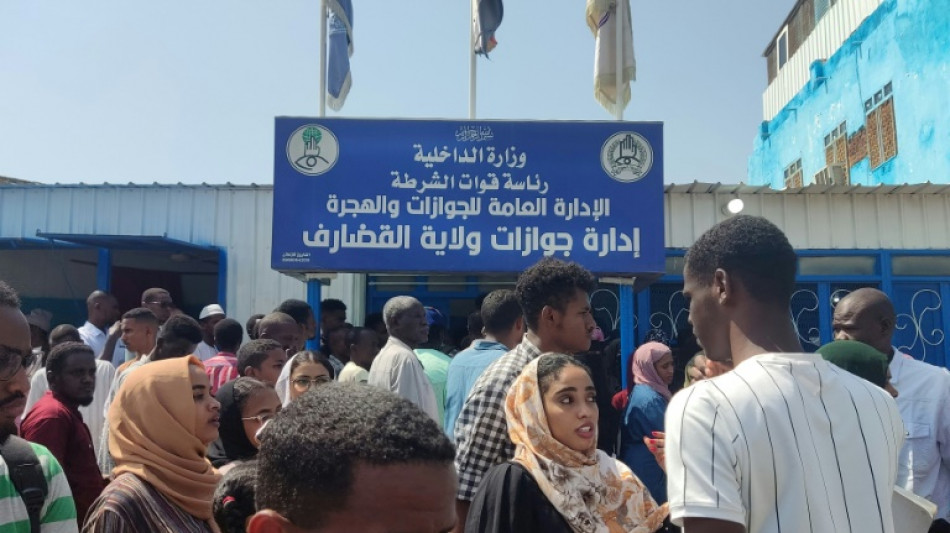
Desperate Sudanese face endless wait for passports so they can flee / Photo: - - AFP

 Attacks on Gulf energy infrastructure 'worrying' for outlook: Pakistan finance minister

 Japan says hosting record number of foreigners

 'Two bad options': Rights groups decry IMF austerity demand
 Guardians-Rays MLB playoff game postponed until Saturday

 'We've never had this': Bear sightings spook Russia

 Injured Jordie Barrett out of second Bledisloe Cup Test

 All contenders for UN chief receive veto: diplomat

 UN climate panel fails to agree date for global warming update: envoy

 Stocks struggle to bounce back from AI angst-fueled rout

 Clashes grip Tirana as Albanian PM blames 'foreign hands'

 End of a dynasty? Dodgers digest playoff drubbing

 Troyes sack sporting director Blanchard amid sexism claims

 Trump's new press secretary out after less than week

 EU backs Ukraine on Starlink, but can't fill gap

 Itauma coming to terms with Hrgovic heavyweight loss

 NBA tells sportsbooks to ban certain bets and parlays: report

 US influence, AI and mistrust cloud Alberta independence vote

 Pant, Bumrah named in India Test squad for New Zealand tour
 Coen brothers say they plan to make film together again

 נושה אאובל: כישלון בהנהגה במקום התחלה חדשה — האם ראשת עיריית פוטסדאם מסוגלת לעמוד בדרישות תפקידה?
 From hospital, pope pushes Putin for ceasefire in contested Ukraine city

 King of the Mountains Carapaz joins NSN Cycling team

 S.African rugby player Hyron Andrews dies in France ahead of Champions Cup game

 Maresca says Man City 'more together' after financial charges

 Zelensky drums up European backing as Trump ties slump

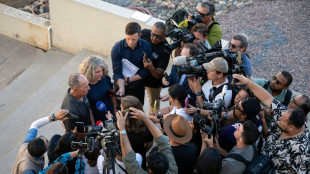
Marwa Omar was one of hundreds who lined up at dawn to try and get passports in Port Sudan. Fifteen hours later, she still had nothing to show for it.
A million people have crossed Sudan's borders since April, fleeing the devastating war between the Sudanese army and the paramilitary Rapid Support Forces, according to the United Nations.
That figure would probably be higher, were it not for the fact that many like Omar needed passports renewed or issued from offices that shuttered their doors at news of the first gunshots on April 15.
Since the authorities inaugurated a new passport office in the eastern city of Port Sudan in late August, hundreds of people have lined up all day, every day.
They are desperate to obtain paperwork that will allow them to leave Sudan's deadly war behind.
Asked where she intended to go, Omar replied: "Anywhere but here. This isn't a country any more."
In five months of war, the violence has killed 7,500 people, displaced more than five million and eroded Sudan's already fragile infrastructure, plunging millions into dire need.
"There's nothing left. We can't live or put food on the table or educate our children," the mother of four said.
Like Omar, many have flocked to the coastal city, which has so far been spared in the fighting and is now home to government officials, the United Nations and Sudan's only functioning airport.
"I was in Atbara for two months, but when I heard they were issuing passports again I came to Port Sudan," said Salwa Omar.
But days go by and only a lucky few manage to get inside the building to hand in their paperwork, as others like her wait outside for their turn.
"If you know someone inside who will get it done for you quickly, come. Otherwise don't bother," Marwa Omar said, frustrated by the long wait and poor organisation.
- 'It's all wrong' -
Those lucky enough to get inside the building have to enter "a cramped room, terrible heat and no chairs", another applicant, Shehab Mohammed, told AFP.
"You have elderly people leaning on their canes for hours or sitting on the floor. It's all wrong."
Over the noise of dozens of people trying to push their paperwork through, Fares Mohammed, who came to get a passport for his child, said: "At this rate, we'll be here for months."
"It's so crowded it's hard to breathe. Imagine what these children and old people are feeling," he said.
But still, they show up every day, determined to leave Sudan at any cost.
More than 2.8 million people have fled the Sudanese capital Khartoum, where the pre-war population was around five million.
Some left immediately for safer places, but others spent months sheltering in their homes, rationing water and electricity while praying that the rockets were farther away than they sounded.
Sudan was already one of the world's poorest countries even before the war broke out, but now it has plunged into a horrific humanitarian crisis.
More than half the country is in urgent need of humanitarian aid, according to the UN, and six million people are on the brink of famine.
Those who could scramble enough money together to make it to Port Sudan are burdened with skyrocketing accommodation and food costs.
And now they have to stump up the fee to issue the passport: 120,000 Sudanese pounds ($200), which was the average monthly salary before the war.
Nour Hassan, a mother of two, is willing to pay whatever it takes to get passports for her children. Every day she waits from 5:00 am until 9:30 pm, clutching her family's file of paperwork.
The goal, she told AFP, is to make it to the Egyptian capital Cairo, where she has family.
"It's a terrible choice to leave, but living here has become impossible," she said.
Like many of the more than 310,000 people who have already crossed Sudan's northern border into Egypt, Hassan assures herself it's only "a temporary solution".
They will stay only until it's safe enough to come home again.
M.Robinson--AT