British-Iranians release helped by nuclear talks, Ukraine: analysts

 Tech stock lead rout after US inflation fuels rate hike bets

 Al-Fayed survivors say UK police missing 'bigger picture'

 Online 'witch hunt' sweeps up Asians misidentified as US rape accused

 Prospect of Bolsonaro win looms large over Brazil's Indigenous
 Freed from Belarus, founder of Lady Gaga's biggest fan site tells his story
 Behind AI's carbon footprint, a potential climate tool
 Trump's new press secretary faces scrutiny over credentials
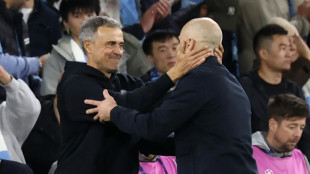 PSG 'got lucky' to win Man City thriller, says Luis Enrique

 Real Madrid comeback stuns Roma as Mourinho enjoys happy reunion
 Shakhtar make winning start at new Champions League 'home'

 Hat-trick hero Barcola primed to shine for Liverpool: Iraola

 Villa put six past Fenerbahce in record rout
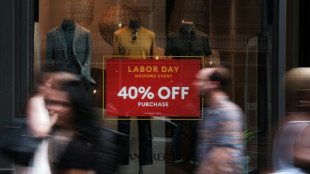 US stocks fall after hot inflation report as leading AI shares tumble

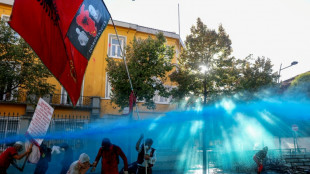 Government buildings torched in violent Albanian protests

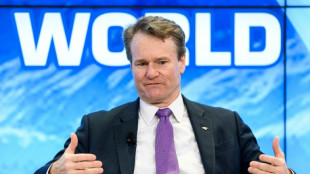 Wall Street grills Bank of America over money laundering fine

 Mekies extends contract as Red Bull team principal until 2031

 Indonesia rescues starved orangutan from fires: officials
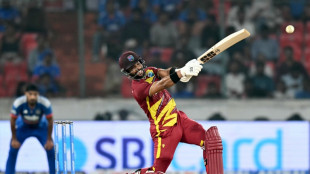
 Real Madrid's Vinicius banned for Clasico after red card
 Restrictions expose Ukraine's Starlink dependency in Russia war: observers
 Espada out as Astros manager while Mattingly stays with Phillies
 Houthis say targeted Saudi oil giant Aramco, vow more attacks

 Govt takes control of Turkey's most-watched news channel
 FIFA to offer members $6.35-billion development fund windfall

 US consumer inflation hotter than expected as midterms loom
 INmune Bio Inc. and Quantum Computing Inc. Partner to Apply Quantum Optimization and AI to Advance Alzheimer’s Drug Research and Explore New Applications for XPro

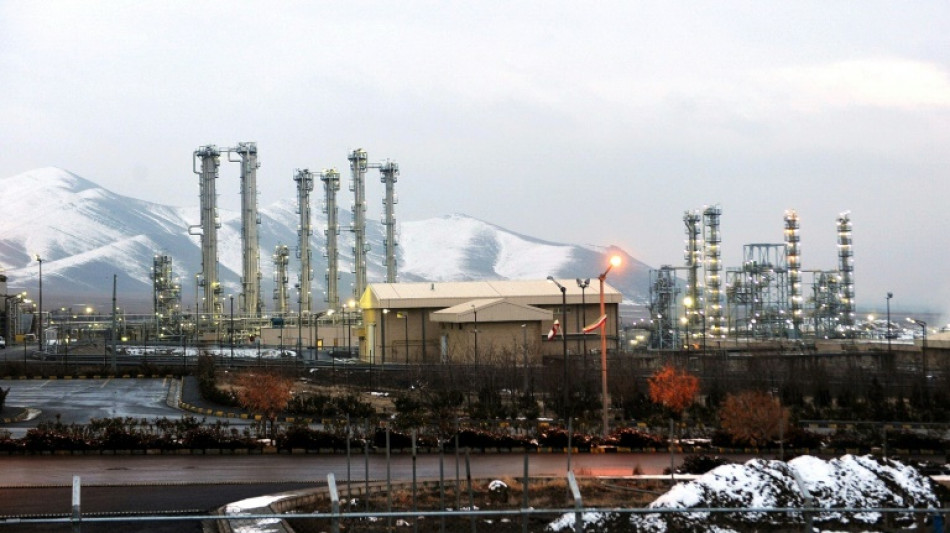
The deal to release British-Iranian detainees was given vital impetus by nuclear talks in Vienna and the West's evolving energy needs in the face of Russia's war in Ukraine, analysts said on Thursday.
Tehran's high-profile release of Nazanin Zaghari-Ratcliffe and Anoosheh Ashoori on Wednesday came as the UK paid nearly £400 million ($523 million, 474 million euros) to settle a debt dating back to the 1970s amid sign of a potential thaw in Iran's relations with the West.
At the same time, talks in Vienna to renew a 2015 pact with Iran to relieve sanctions in exchange for curbs on Tehran's nuclear programme "made this deal possible", said Ali Vaez, Iran analyst with the International Crisis Group.
"Without it, it was hard to imagine that, when Iran and the West are at daggers drawn, these kind of deals could take place," he told AFP.
"This was purely a bilateral problem between Iran and the UK... but (a deal) was only possible in the broader context of constructive engagement.
"In fact a lot of stars would have to align for an agreement like this to be executed."
The detainee-debt deal required regional cooperation, including with Oman where the UK debt payment is being held, and "there was a need for a US greenlight and there was a need for constructive engagement between Iran and the UK," Vaez said.
Allan Hassaniyan, from the University of Exeter's Institute of Arab and Islamic Studies, said the Shah-era debt paid by London will be particularly useful in sanctions-hit Iran.
Tehran is "quite desperate" to access funds, Hassaniyan told AFP.
"It's a matter of desperation but it's also a window for Iran to operate differently," he said.
Russia's invasion of Ukraine "has provided Iran with a new opportunity because the West is very desperate for access to new energy resources in the absence of Russia."
By releasing the two detainees, the Iranians are "sending a signal that they want to commit into this new international system".
- 'Pragmatic policy' -
Iran expert Seyed Ali Alavi from London's SOAS said the deal signifies a change in British strategy rather than from Iran, which has always simply wanted the debt repaid.
The UK government has said it could not repay the debt because of US-led sanctions, but Alavi said that when the first nuclear deal was signed in 2015, sanctions were removed and the UK government could then have legally repaid.
"This should have been sorted out ages ago... The moment Britain decided to pursue a pragmatic policy, then immediately we did see the result in this regard," he told AFP.
"The war in Ukraine, and the shock in the energy market might be a wake up call for us, in the UK and in the West, that there is a country called Iran that is very rich in terms of oil and gas," said Alavi.
The ICG's Vaez said that when, as now seems likely, a new nuclear deal is inked, "there will be a psychological impact on the oil market in anticipation of Iran's return".
"And when additional Iranian oil exports eventually hit the market, the prices will come down."
The irony is that while Iran has bigger gas reserves than Russia, it cannot export them as its gas fields are underdeveloped because of Western sanctions.
"I think this is one of the short-sighted Western policies towards Iran over the past two decades as a result of sanctions -- Europe deprived itself of an alternative to Russian gas," said Vaez.
H.Gonzales--AT