Fleeing Ukrainians recount Mariupol 'hell'

 Tech stock lead rout after US inflation fuels rate hike bets
 Al-Fayed survivors say UK police missing 'bigger picture'

 Online 'witch hunt' sweeps up Asians misidentified as US rape accused

 Prospect of Bolsonaro win looms large over Brazil's Indigenous

 Freed from Belarus, founder of Lady Gaga's biggest fan site tells his story

 Behind AI's carbon footprint, a potential climate tool

 Trump's new press secretary faces scrutiny over credentials

 PSG 'got lucky' to win Man City thriller, says Luis Enrique

 Real Madrid comeback stuns Roma as Mourinho enjoys happy reunion

 Shakhtar make winning start at new Champions League 'home'

 Hat-trick hero Barcola primed to shine for Liverpool: Iraola

 Villa put six past Fenerbahce in record rout

 US stocks fall after hot inflation report as leading AI shares tumble
 Government buildings torched in violent Albanian protests

 Wall Street grills Bank of America over money laundering fine

 Mekies extends contract as Red Bull team principal until 2031

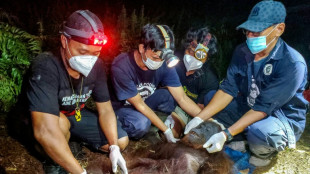 Indonesia rescues starved orangutan from fires: officials

 Real Madrid's Vinicius banned for Clasico after red card
 Restrictions expose Ukraine's Starlink dependency in Russia war: observers
 Espada out as Astros manager while Mattingly stays with Phillies

 Houthis say targeted Saudi oil giant Aramco, vow more attacks

 Govt takes control of Turkey's most-watched news channel

 FIFA to offer members $6.35-billion development fund windfall

 US consumer inflation hotter than expected as midterms loom

 INmune Bio Inc. and Quantum Computing Inc. Partner to Apply Quantum Optimization and AI to Advance Alzheimer’s Drug Research and Explore New Applications for XPro

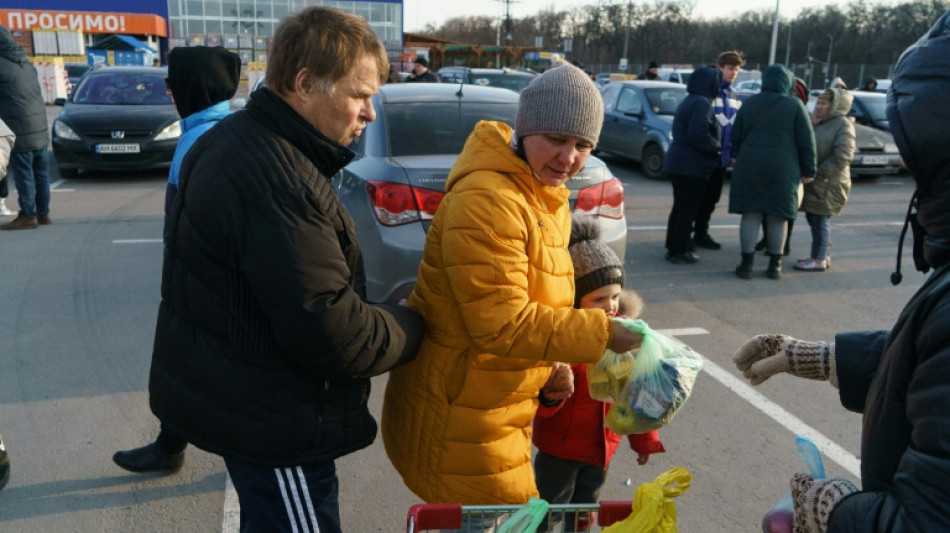
Fleeing Ukrainian families describe the "hell" they left behind in the besieged city of Mariupol, of seeing corpses in the streets and of sleeping in sub-zero temperatures, hiding in cellars.
Shelled relentlessly by Russian forces, they said they were forced to melt snow for drinking water and cook food scraps on open fires with food, water and power supplies cut off.
"They fire so many rockets," Tamara Kavunenko, 58, told AFP, one of more than 4,300 Mariupol residents who escaped to Ukraine's central city of Zaporizhzhia this week.
"In the streets there are the bodies of many dead civilians," she said.
"When the snow came, we collected it and melted it for water. When it didn't, we boiled water from the river to drink," Kavunenko added.
"It's not Mariupol anymore. It is hell."
Ukraine says more than 2,000 people have died so far in the city, a key strategic target for Moscow, potentially linking Russian forces in Crimea to the west and the Donbas to the east, while cutting off Ukrainian access to the Sea of Azov.
On Thursday, Ukraine accused Russia of bombing a theatre in the port city where hundreds were taking shelter, despite a sign saying "DETI" -- or children in Russian -- etched out in the ground on either side of the building.
- 'Smell in the air' -
Around 6,500 cars left over the last two days, Mariupol mayor Vadim Boychenko said on Telegram overnight Wednesday to Thursday.
Many of them escaped by chance amid a communications blackout.
In the building of a Soviet-era circus in Zaporizhzhia, Red Cross volunteers wait for evacuees. Piles of children's shoes and blankets are stacked on the floor.
Dima, his nails overgrown and hands black with dirt, told AFP he had not washed in two weeks. He looted shops for food to feed his children and grandparents, he said.
"We lived underground and if it was minus four degrees C it was a good temperature," he said, lifting his leg to show that he is wearing three pairs of trousers for warmth.
"Sometimes bodies are in the street for three days," he said.
"The smell is in the air and you don't want your children to smell it."
He arrived in Zaporizhzhia with his wife and two young children on Tuesday, he told AFP, on what he said was his third attempt to leave.
Daria, another civilian who fled, said she lived in the cellar of her building with her baby daughter for 10 days.
- 'Sick, in tears' -
"Every day, it got worse and worse," she said, cradling her baby on her lap.
"We were left without light, without water, without gas, without means to exist. It was impossible to buy anything anywhere," she added.
Marina, a Red Cross volunteer in Zaporizhzhia, said the fleeing residents arrived in a terrible state.
"They (were) tired, sick, in tears," she said. The shopping centre offers them shelter and the possibility of a shower. "We take care of them," he said. "Everything is provided for them."
The only escape route is by private car. Many said they were unable to leave shelters due to sustained attacks and, with no phone or internet connection, found safe passage by chance.
"We saw that people with white ribbons (on their cars) were leaving," said a woman who gave her name only as Darya, adding that she asked a neighbour if she could come too.
For some, the drive to Zaporizhzhia -- which usually takes around three to four hours -- took a day and a half.
One father of two said he had turned the radio on and managed to find a weak connection, where he heard news of the corridor.
Clutching his young son, Dmitry said they spent "nine or 10 days" hiding in the theatre -- that Ukraine later said was destroyed by Russian forces -- after their house collapsed.
B.Torres--AT