Swiss neutrality under fire over Ukraine war

 Mourinho blasts 'shameless' timing of Vinicius ban decision
 PSG beat Man City in Champions League thriller, Barcola hits Liverpool hat-trick
 US Treasury chief urges stronger IMF role against 'distortionary policies'
 Giant-killers Bodo sink Dortmund in Champions League
 PSG outgun embattled Man City in six-goal Champions League thriller
 In Chicago, pope's hometown, Catholics express shock and support
 Musk suggests US govt behind any slowdown in Ukraine's Starshield system
 Chiclayo prays for recovery and return of the 'Peruvian pope'
 Barcola scores hat-trick as Liverpool hit LASK for six
 Healthy corals help bleached neighbors regain color: study

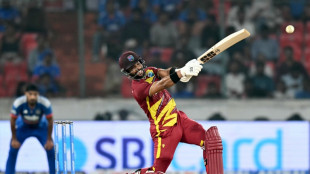 Hope ton helps West Indies level T20 series at 2-2 in India
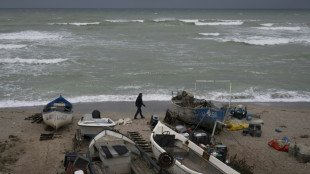 Ukraine war reaches shores of Bulgarian fishing village
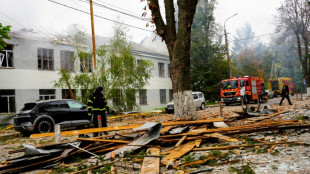
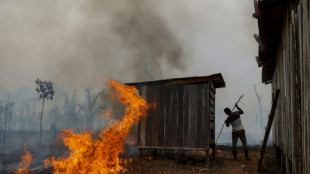 Brazil probing 'criminal' origin of forest fires: minister to AFP
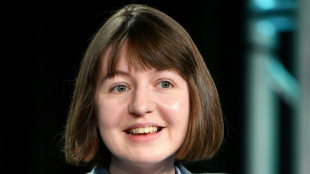 Sally Rooney books cannot be sold in UK amid Palestine Action ban: publisher
 Italian ski stars Goggia and Brignone to miss season opener
 Bournemouth boss Rose urges Cherries to bounce back from Chelsea 'slap'
 Top seed Sabalenka falls at first hurdle in Wuhan
 FX Junction Brings Copy Trading to Everyone, While Their Money Never Leaves With Their Broker

 Brighton defender Struijk's red card overturned
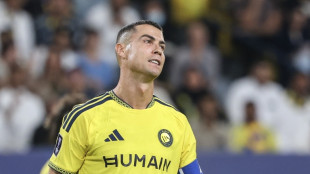 Saudi league postpones three matches after Houthi attacks
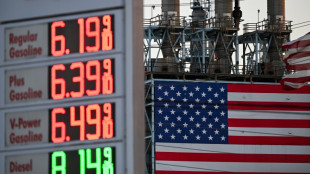 US consumer inflation up more than expected as midterms loom
 Canadian publisher supports novelist Orelien after AI denial
 Medvedev sees off Tsitsipas to reach Shanghai Masters quarters
 Louvre boss warns of closure risk without major renovations
 Lawes and Genge urge England to end ban on overseas-based players

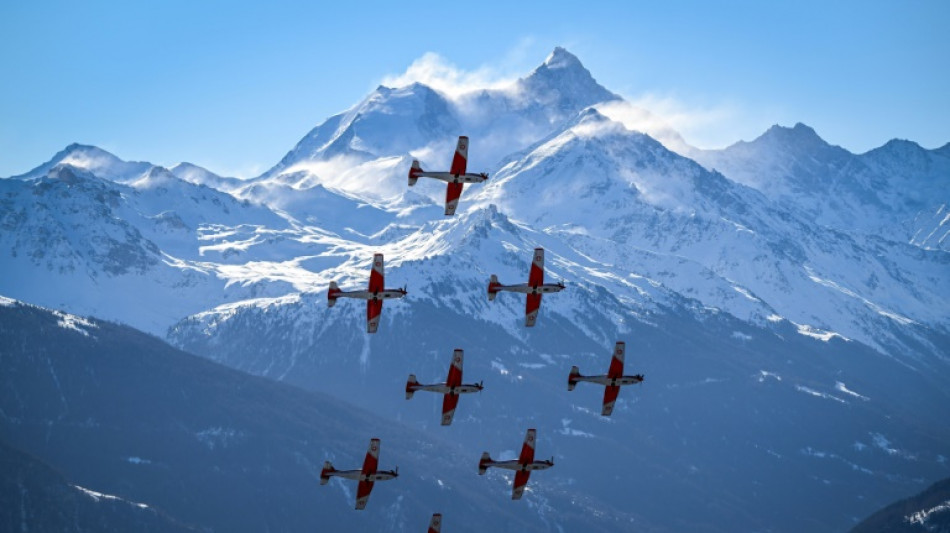
Russia's invasion of Ukraine has pushed Switzerland to shed taboos, with calls for rearmament and unprecedented sanctions putting its deeply engrained neutrality to the test of a war in Europe.
Critics in Switzerland have warned that government moves could "torpedo" one of the wealthy Alpine nation's key principles, dictating no involvement in conflicts between other states.
After Russian troops entered Ukraine on February 24, Bern cited that neutrality when it initially refrained from jumping onboard with biting sanctions imposed by the European Union.
But four days later, the government buckled to international pressure and imposed all the EU sanctions, prompting criticism it was throwing neutrality to the wind.
The move, which the government insisted was "compatible" with its neutrality, was widely welcomed on the international stage.
It even earned a mention in US President Joe Biden's State of the Union address, when he hailed that "even Switzerland" was with those striving to hold Moscow accountable for its aggression.
But at home, it sparked outrage from the far right, which demands total neutrality, both on military and political.
The largest party, the populist right-wing Swiss People's Party (SVP), has threatened to push the issue to a referendum, as part of the country's direct democracy system.
The SVP has also lashed out at Bern's efforts to gain a non-permanent seat on the UN Security Council, warning this would "torpedo" the country's neutrality.
The government has argued that if it is granted the seat in June elections, it can simply abstain on issues that cast doubt on its neutrality.
- "Schizophrenia" -
The Swiss candidacy has meanwhile received backing from most lawmakers, and all other parties have voiced support for the sanctions.
"This marks a move towards a more active political neutrality," Swiss-American political scientist Daniel Warner told AFP.
Former president Micheline Calmy-Rey has chimed in, insisting that while militarily neutral, Switzerland is "free to defend its interests by adapting its foreign policy, and is free to impose sanctions".
Switzerland distinguishes between the law of neutrality -- which was codified in The Hague Conventions of 1907 and which imposes non-participation in international armed conflict -- and the policy of neutrality.
The latter is not governed by law, and its implementation "is determined according to the international context of the moment", the government explains on its website.
The combination can make for complex policy decisions.
At times it tilts towards "schizophrenia", Warner said.
He pointed to how Switzerland followed the EU sanctions against Moscow, but refused to participate in a widely-backed boycott at the UN of Russia's chief diplomat Sergei Lavrov.
This is not the first time Swiss neutrality has been questioned.
"During the Cold War, one could say it was a completely Atlanticist neutrality," Stephanie Roulin, a Fribourg University historian, told AFP.
- 'Very malleable' neutrality -
The Swiss, she said, had for instance given in to "American pressure" and "secretly committed to respect the economic embargo against the Eastern bloc countries", agreed in the Hotz-Linder Accord of 1951.
"Swiss neutrality was very malleable and was applied according to Switzerland's economic and financial interests," agreed historian Hans-Ulrich Jost, honorary professor at Lausanne University.
He pointed out that Switzerland's refusal to join the international boycott of South Africa against the racist apartheid system "allowed it to become an intermediary in the gold trade".
Many observers also suggest Switzerland violated the principle of neutrality during World War II, with massive weapon exports to the Axis powers.
The conflict in Ukraine has also rattled Swiss defence policies, and put previously taboo topics on the table.
Some have gone so far as to evoke a rapprochement with NATO or the EU's defence cooperation, while calls to boost defence spending have multiplied.
Swiss army chief Thomas Sussli stressed in a recent interview with the Tribune de Geneve daily that if Switzerland needs to defend itself, "neutrality will be null and void".
In such a case, he said, "We would need to ally ourselves with other states, and possibly also with NATO."
D.Johnson--AT