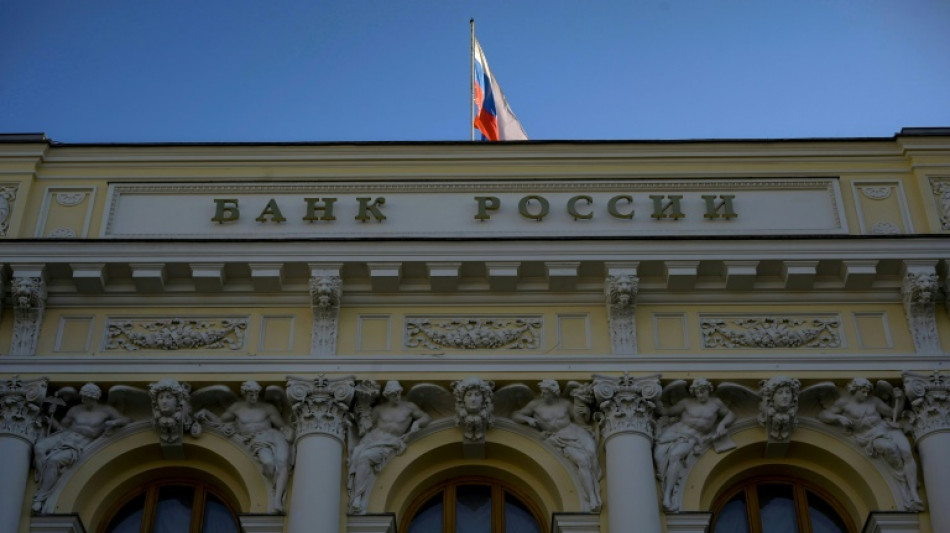
Russia says West trying to push it into default

 Mourinho blasts 'shameless' timing of Vinicius ban decision
 PSG beat Man City in Champions League thriller, Barcola hits Liverpool hat-trick

 US Treasury chief urges stronger IMF role against 'distortionary policies'

 Giant-killers Bodo sink Dortmund in Champions League

 PSG outgun embattled Man City in six-goal Champions League thriller

 In Chicago, pope's hometown, Catholics express shock and support
 Musk suggests US govt behind any slowdown in Ukraine's Starshield system
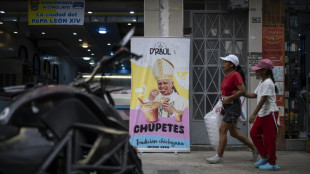 Chiclayo prays for recovery and return of the 'Peruvian pope'
 Barcola scores hat-trick as Liverpool hit LASK for six
 Healthy corals help bleached neighbors regain color: study

 Hope ton helps West Indies level T20 series at 2-2 in India

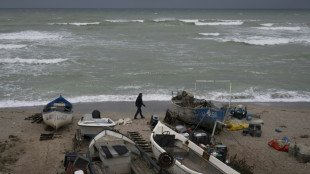 Ukraine war reaches shores of Bulgarian fishing village
 Brazil probing 'criminal' origin of forest fires: minister to AFP

 Sally Rooney books cannot be sold in UK amid Palestine Action ban: publisher

 Italian ski stars Goggia and Brignone to miss season opener
 Bournemouth boss Rose urges Cherries to bounce back from Chelsea 'slap'
 Top seed Sabalenka falls at first hurdle in Wuhan
 FX Junction Brings Copy Trading to Everyone, While Their Money Never Leaves With Their Broker

 Brighton defender Struijk's red card overturned
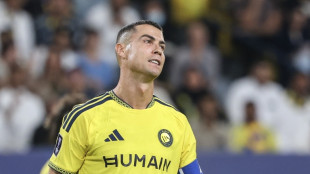 Saudi league postpones three matches after Houthi attacks
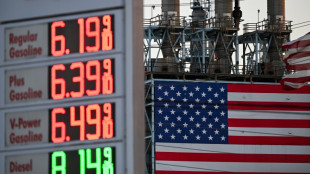 US consumer inflation up more than expected as midterms loom

 Canadian publisher supports novelist Orelien after AI denial

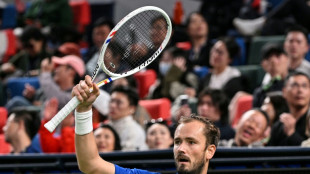 Medvedev sees off Tsitsipas to reach Shanghai Masters quarters
 Louvre boss warns of closure risk without major renovations
 Lawes and Genge urge England to end ban on overseas-based players

Russia accused the West on Monday of seeking to push it into an "artificial default" through unprecedented sanctions over Ukraine, but vowed to meet its debt payments.
Russia is due to make an interest payment on its external debt later this week and Moscow warned it will be doing so in rubles if sanctions prevent it from using the currency of issue.
"The freezing of foreign currency accounts of the Bank of Russia and of the Russian government can be regarded as the desire of a number of foreign countries to organise an artificial default that has no real economic grounds," Finance Minister Anton Siluanov said in a statement.
Ratings agency Fitch last week downgraded Russia's sovereign debt rating deeper into junk territory, warning that the decision reflects the view that a default is "imminent".
But Siluanov denied that Russia "cannot fulfil the obligations" of its government debt.
- Ready to pay -
He said Russia "is ready to make payments in rubles" according to the exchange rate of Russia's central bank on the day of the payment.
While Russia's foreign currency government bonds issued since 2018 do contain provisions for repayment in rubles, that is not the case for the combined $117 million in interest payments on two dollar-denominated bonds on Wednesday.
Russia tumbled into default in 1998 when, thanks to a drop in the prices of oil and other commodities, it faced a financial sqeeze that meant it could no longer prop up the ruble and pay off its debts which had swelled due to the first war in Chechnya.
The plunge in the value of the ruble, a spike in inflation and bank collapses caused widespread misery and were seen as helping President Vladimir Putin's rise to power.
Putin had worked on improving Russia's finances by keeping debt low and using windfall oil export revenue to amass $600 billion foreign currency reserves.
But sanctions on Moscow over its "special military operation" in Ukraine, targeted $300 billion of Russia's foreign currency reserves held abroad.
Without access to these funds to make payments, Russia could find itself forced to default.
Another ratings agency, Moody's, warned last week that investors could face losses of 35 to 65 percent in case of a default but "the unpredictability of government actions to date increases the risk of higher losses".
"Russia's ability and willingness to honour debt obligations has steadily deteriorated since the start of the military conflict," it said.
- 'Unique situation' -
"It is a unique situation where the sanctioning party will be the deciding factor on Russia's 2022 default," said Elina Ribakova, deputy chief economist at the Washington-based Institute of International Finance.
She noted that the US Treasury could unlock part of Russia's foreign currency reserves to enable payment of the bondholders, who are mostly from countries which have imposed sanctions.
If Russia fails to make the bond payment, an automatic 30-day grace period kicks in and after its expiry it would be considered in default.
International Monetary Fund chief Kristalina Georgieva said Sunday that the while Russia has money to pay its debt, it "cannot access it".
"I can say that no longer we think of Russian default as an improbable event," Georgieva told the CBS show Face the Nation.
The Western sanctions on Moscow over Ukraine have delivered an unprecedented blow to Russia's banking and financial system and will likely lead major disruptions in trade and inflation.
To stave off a default Russia has boosted efforts to prevent money from leaving its borders and to support the ruble, which has already seen a precipitous drop in value against the dollar.
This includes a measure allowing Russian firms to make payments on debts sanctioning countries in rubles.
Amid piling sanctions, a flurry of Western companies -- from H&M to Ikea -- have suspended their business operations in Russia. There are growing fears Russian authorities may try to "nationalise" or seize the assets of the local subsidiaries.
R.Garcia--AT