Ukraine border town sees refugee influx, Hungarian exodus

 PSG outgun embattled Man City in six-goal Champions League thriller

 In Chicago, pope's hometown, Catholics express shock and support

 Musk suggests US govt behind any slowdown in Ukraine's Starshield system
 Chiclayo prays for recovery and return of the 'Peruvian pope'
 Barcola scores hat-trick as Liverpool hit LASK for six
 Healthy corals help bleached neighbors regain color: study
 Hope ton helps West Indies level T20 series at 2-2 in India

 Ukraine war reaches shores of Bulgarian fishing village
 Brazil probing 'criminal' origin of forest fires: minister to AFP

 Sally Rooney books cannot be sold in UK amid Palestine Action ban: publisher
 Italian ski stars Goggia and Brignone to miss season opener
 Bournemouth boss Rose urges Cherries to bounce back from Chelsea 'slap'

 Top seed Sabalenka falls at first hurdle in Wuhan

 FX Junction Brings Copy Trading to Everyone, While Their Money Never Leaves With Their Broker

 Brighton defender Struijk's red card overturned

 Saudi league postpones three matches after Houthi attacks
 US consumer inflation up more than expected as midterms loom

 Canadian publisher supports novelist Orelien after AI denial

 Medvedev sees off Tsitsipas to reach Shanghai Masters quarters

 Louvre boss warns of closure risk without major renovations
 Lawes and Genge urge England to end ban on overseas-based players

 Metrika Selected by OCC to Support Stablecoin Supervisory Framework Under the GENIUS Act
 Kenya hosting 2029 World Championships will help doping fight, says Coe
 UK prosecutor tells jury Russell Brand a 'sexual predator'
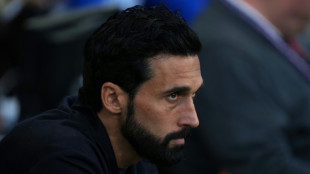 Fulham manager Arbeloa fined £25,000 after Man Utd outburst

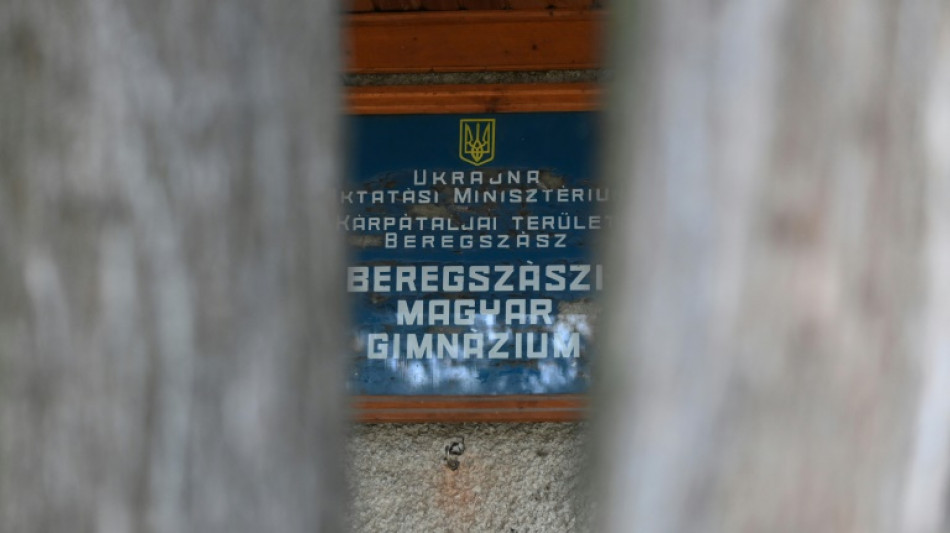
Russia's invasion of Ukraine has led to an influx of refugees into the border town of Berehove in the Transcarpathia region, and an exodus of its ethnic-Hungarian population fleeing conscription.
Around half of Berehove's population of 22,000 is ethnic-Hungarian, the bilingual street signs, architecture and historical plaques testifying to its Magyar heritage.
But despite its location beside the Hungarian border and far from the fighting, the war has upended life in the town.
Its hotels, private boarding houses, and even schools now host refugees, some of the two million Ukrainians internally displaced by the war so far.
"We're fully booked, they've reserved rooms for weeks, some for months," said Konstantyn Popovych, 34, owner of the Hotel "Olesja" in Berehove's downtown.
According to deputy mayor Istvan Vincze, "4,000-5,000 refugees are currently in Berehove while much of the ethnic-Hungarian population" has fled across the border.
Now mostly Ukrainian is heard on the streets, while a screen on the main square plays an army promotional video on loop.
- Fled to 'motherland' -
"As soon as the war broke out and the government introduced conscription, many Hungarians quickly left, most to join relatives or friends in the motherland," Vincze, 51, told AFP.
Speaking outside the town hall where both Ukrainian and Hungarian flags are flown, Vincze said he worries about the long-term impact of the war on the town.
"I understand why people left, the economic prospects are better, particularly now that there is war, but obviously we hope everyone comes back soon," he said.
Transcarpathia, cut off from the rest of Ukraine by the Carpathian mountains, was governed by Budapest until after World War I.
It then changed hands several times, falling under Soviet rule after World War II when thousands of Ukrainians and Russians were settled in the region.
Around 1,000 kilometres from Kyiv and bordering Poland, Slovakia, Hungary and Romania, it finally became part of independent Ukraine in 1991.
Some 1.2 million people live there, with Hungarians the largest -- numbering around 150,000 -- in a patchwork of ethnic minorites alongside Ukrainians.
- Frayed relations -
But emigration and assimilation have chiselled away at the Magyar population, and locals fret the war could further fray already strained ethnic relations.
Hungarians in Berehove have long grumbled about being neglected by Kyiv and that Ukrainians "from the hills and the east" buy up empty properties.
A controversial 2017 language law is also seen by Hungarians as discriminatory, and prompted Prime Minister Viktor Orban's government to block Ukraine's progress toward NATO membership.
Some Ukrainians meanwhile point to Orban's close ties to Russian President Vladimir Putin before the war, and suspect him of wanting to annex Transcarpathia.
The nationalist Hungarian premier, who granted dual citizenship and voting rights to diaspora Magyars after coming into power in 2010, has also refused to send weapons to Ukraine.
On the main street outside a high school renovated with Hungarian state funding, a pensioner -- who asked not to be named -- said "only Orban looks after us".
"Without Hungarian support and money we would have nothing," she told AFP, adding that she would vote for Orban in Hungary's upcoming parliamentary election on April 3.
- 'Acting together' -
According to Istvan Vincze, "now is not the time for any ethnic dispute, but acting together.
"Our municipality immediately set up five emergency shelters where refugees get accommodation and meals three times a day," he said.
Hungarian relief workers, church groups, volunteers and authorities have also helped Ukrainian refugees at the border, and delivered truckloads of aid into Ukraine.
In the town's "Bethlen Gabor" Hungarian-language boarding school where classes have been suspended since the war began, its dormitory rooms now house internally displaced Ukrainians.
"We are grateful to this town for having us," Kyril, a 41-year-old theatre director from Kharkiv who preferred not to give his full name, told AFP on a bunk bed beside his wife, daughter and niece.
"We had tours planned and tickets sold for this week in three cities, Kryvyi Rih, Chernihiv and Kyiv, but then everything changed overnight, and here we are," he said.
"There are so many heart-breaking stories," Arpad Szabo, 64, the school's headmaster, told AFP in the corridor outside.
"I just hope and pray school can return to normal soon," he said.
H.Romero--AT