Coups in Africa's Sahel hampering anti-jihadist efforts / Photo: - - AFP

 Syria says IS behind Damascus blasts, finds explosives cache
 Nasdaq dips as SK hynix arrives in NY
 Fiji captain shrugs off chairman's criticism ahead of England clash

 Hundreds welcome Salah's Egypt home after best World Cup run
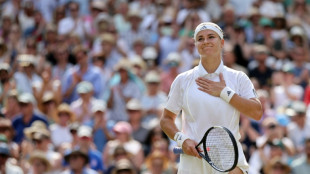
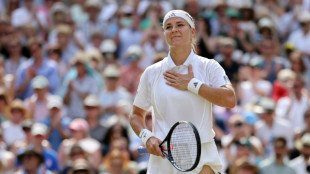
 Piercing, matcha rituals lead Noskova in Kvitova's footsteps
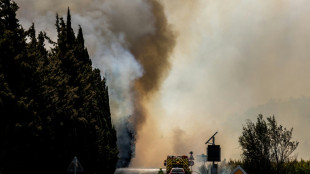 France wildfires burn twice as much land as last year: official
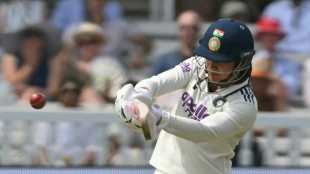 Mandhana's fifty lights up inaugural women's Test at Lord's

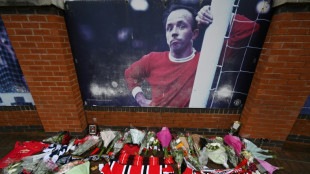 England World Cup winner Stiles died with brain injury, court told
 Stocks rise as SK hynix boosts AI trade

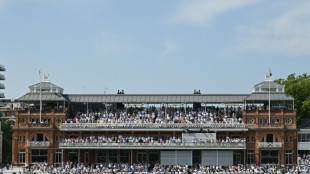 England bowl against India in historic first women's Test at Lord's
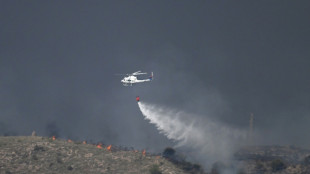
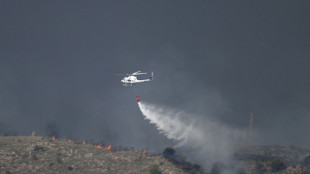 Eleven dead, 19 missing as wildfire roars through southern Spain
 EU tells Meta to change Facebook, Instagram's 'addictive design'

 EasyJet accepts rival takeover bid from US investor Apollo

 UK schools, mentors team up to rescue 'lost boys' with football
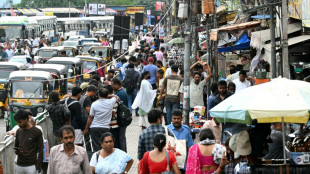 India's choked pavements fail pedestrians
 It's coming home: Bayeux tapestry arrives in London in overnight operation

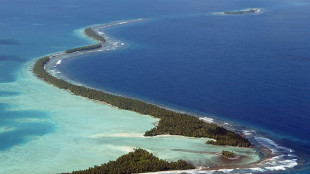 Pacific Islands reject missile test in 'blue continent'
 Wallabies skipper Wilson has full faith in rookie flyhalf

 Landslide kills five in Philippines as biggest typhoon in decades nears Taiwan
 Modi visits New Zealand as trade deal sparks India pushback
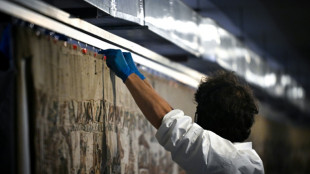 Bayeux Tapestry to arrive in London after epic journey from France
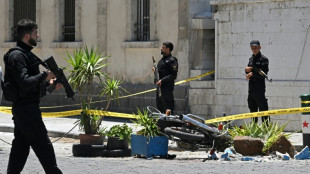 Syria authorities say captured IS-linked cell behind blasts
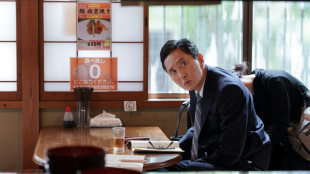 Table for one: how Japan's 'Solitary Gourmet' became a TV hit
 Australia's Big Bash League to open season in India

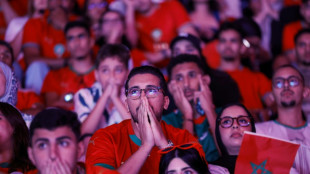 Disappointment at Morocco's World Cup exit cannot mask pride
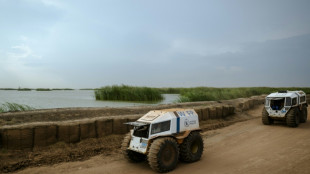
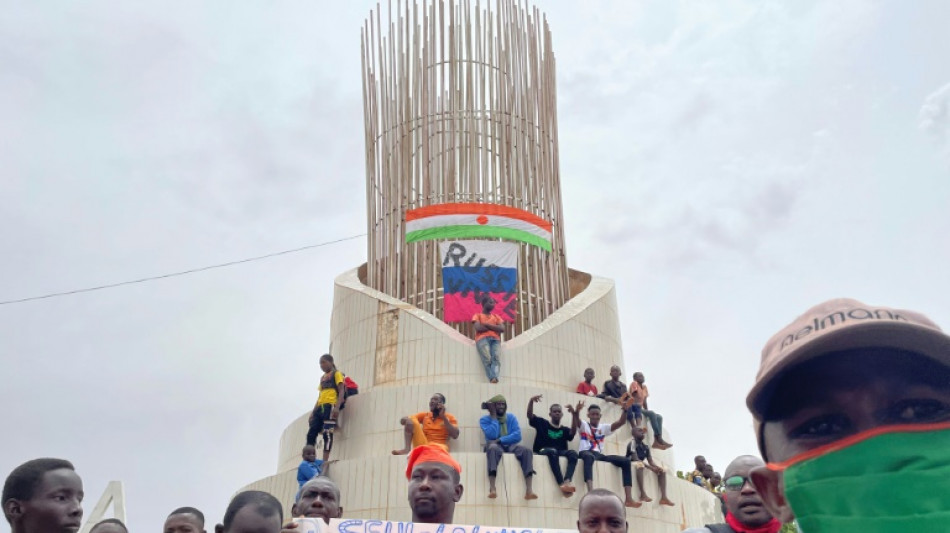
The coup in Niger, the third in as many years to topple an elected leader in Africa's troubled Sahel, threatens to further hamper efforts against jihadist groups in the region, analysts say.
Niger's neighbours Mali and Burkina Faso have each undergone a military coup since 2020, fuelled by anger at the failure to quash long-running insurgencies by jihadists linked to the Islamic State group and Al-Qaeda.
In Niger, which faces a two-pronged jihadist insurgency, President Mohamed Bazoum was this week confined to his residence by his own presidential guard, with the head of the elite force, General Abdourahamane Tiani, declaring himself the new leader.
Like Niger, Mali and Burkina Faso are impoverished former French colonies that gained independence in 1960.
Following their coups, the juntas there forced out French troops, with Mali cooperating with forces from Russia, which has for years strived to increase its influence in Africa.
While it was not immediately clear if Niger's new masters would follow suit, Tiani made clear there would be a change of strategy.
"The security approach today has not brought security to the country despite heavy sacrifices," he said after declaring himself leader.
Specifically, he questioned "the sense and scope of a security approach to the fight against terrorism which excludes any real collaboration with Burkina Faso and Mali", a strategy taken after the coups in those countries.
- Western aid at risk -
Analysts say that while increasing cooperation with Mali and Burkina Faso may bring benefits, the putschists risked losing financial and military support from the West, which has stood behind Bazoum.
Because of diplomatic tensions following the coup in Mali, Niger and French troops could no longer operate freely against IS bases in the country, where attacks on Niger are thought to be organised.
"This crisis cannot be resolved without cooperation from Mali in one form or another," said Tatyana Smirnova, a researcher at the FrancoPaix Centre for conflict resolution.
Ibrahim Yahaya Ibrahim, a researcher with the International Crisis Group, said that "we can expect better relations and cooperation between the neighbouring countries".
But Niger's new rulers risked losing support from the West.
Bazoum was one of a dwindling group of pro-Western leaders in the Sahel, allowing 1,500 French troops and 1,000 US soldiers to be stationed in Niger.
The European Union has announced that it was suspending financial and security cooperation with the country, while the United States has warned that "hundreds of millions of dollars of assistance" was at risk.
If France and Washington withdraw their forces, it could leave a dangerous security void in a troubled region, analysts said.
Nearly all of landlocked Niger's neighbours have jihadist rebels that could take advantage of the void -- in addition to Mali and Burkina Faso, there are insurgencies in Benin, Libya and Nigeria.
- 'Civilians pay heaviest price' -
Impoverished populations often make for fertile breeding grounds for extremists and Niger is one of the world's poorest nations -- two-thirds desert, it often ranks last in the UN's Human Development Index.
It already faces two insurgent campaigns -- one which swept in from Mali in 2015 and the other involving jihadists from Nigeria.
In addition, in 2022 it was hosting more than 250,000 refugees fleeing violence in Nigeria and Mali, according to the United Nations.
But despite all of its challenges, Niger under Bazoum was a model of cooperation for the West.
"Despite its security problems, it was a pole of stability in the region," said Alain Antil, director of the sub-Saharan Africa division at the French Institute of International Relations (IFRI).
Under Bazoum, Niger undertook programmes financed by international donors like stabilising communities that were targeted by jihadist recruitment and re-integrating former fighters into society. The future of these initiatives is now uncertain.
Although it was not yet clear the direction that Niger's new leaders would take in the fight against the jihadists, Tiani denounced the "extrajudicial freeing" of "terrorist chiefs" by the government.
The juntas running Burkina Faso and Mali have opted for an offensive-heavy strategy against the jihadists that has been marred by recurrent accusations of abuse of local civilian populations suspected of cooperating with the fighters.
"It is civilians who pay the heaviest price of such a strategy, which contributed to destabilisation and can feed tensions within and between communities," Smirnova said.
O.Ortiz--AT