In Greece, Russia sympathies die hard despite Ukraine war

 PSG outgun embattled Man City in six-goal Champions League thriller

 In Chicago, pope's hometown, Catholics express shock and support

 Musk suggests US govt behind any slowdown in Ukraine's Starshield system
 Chiclayo prays for recovery and return of the 'Peruvian pope'
 Barcola scores hat-trick as Liverpool hit LASK for six
 Healthy corals help bleached neighbors regain color: study
 Hope ton helps West Indies level T20 series at 2-2 in India
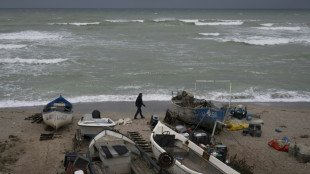 Ukraine war reaches shores of Bulgarian fishing village
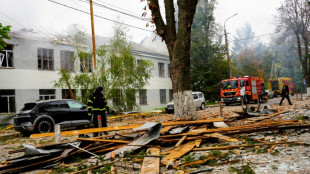
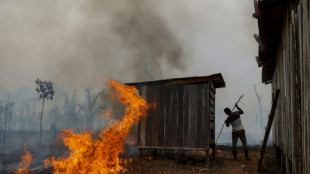 Brazil probing 'criminal' origin of forest fires: minister to AFP
 Sally Rooney books cannot be sold in UK amid Palestine Action ban: publisher
 Italian ski stars Goggia and Brignone to miss season opener
 Bournemouth boss Rose urges Cherries to bounce back from Chelsea 'slap'
 Top seed Sabalenka falls at first hurdle in Wuhan

 FX Junction Brings Copy Trading to Everyone, While Their Money Never Leaves With Their Broker

 Brighton defender Struijk's red card overturned

 Saudi league postpones three matches after Houthi attacks
 US consumer inflation up more than expected as midterms loom

 Canadian publisher supports novelist Orelien after AI denial
 Medvedev sees off Tsitsipas to reach Shanghai Masters quarters

 Louvre boss warns of closure risk without major renovations
 Lawes and Genge urge England to end ban on overseas-based players

 Metrika Selected by OCC to Support Stablecoin Supervisory Framework Under the GENIUS Act
 Kenya hosting 2029 World Championships will help doping fight, says Coe
 UK prosecutor tells jury Russell Brand a 'sexual predator'
 Fulham manager Arbeloa fined £25,000 after Man Utd outburst

When Greek Prime Minister Kyriakos Mitsotakis took the floor in a parliament debate on Ukraine this month, there was no doubt which side his government was taking in the conflict.
"There can be no equal distances. You are either with peace and international law, or against them," he told lawmakers, after announcing a shipment of medicine and lethal aid to Ukraine.
"We were always on the right side of history, and we are doing the same now," the PM said.
But for many Greeks, after centuries of existential, religious and cultural ties with Russia, the choice is not as evident.
"Greek public opinion has a Russophile dimension, friendly feelings linked to history, a common culture based on Orthodoxy and for some, mistrust towards the West," notes Nikos Marantzidis, professor of Balkan, Slavic and Oriental Studies at the University of Macedonia.
A post-invasion poll in February showed 20 percent of Greeks are "closer" to Russia while 45 percent support Ukraine.
Just eight percent said they would boycott Russian products, and two percent said they would avoid contact with Russians.
Seventy-five percent of respondents condemned Russian President Vladimir Putin's stance, but over 60 percent were also critical of Ukraine President Volodymyr Zelensky, the Kappa Research poll showed.
- Putin 'a great leader' -
"There is a minority, not an insignificant one, that continues to view Putin positively," Marantzidis said.
"Whatever happens, a hard core of (about 10-15 percent of the electorate) will continue to see him as a great leader," he told AFP.
Greeks have fought alongside Russia since the 18th century, with the fellow Orthodox state historically seen as a protector and powerful counterweight to regional rival Turkey.
In 1827, Russia joined Britain and France in the decisive naval battle of Navarino that effectively decided Greece's independence from the Ottoman Empire.
Marantzidis also notes residual anti-Western feelings in Greece over a near-decade of austerity cuts imposed by Germany and other EU states in return for debt rescue bailouts.
And memories of NATO's bombing of fellow Orthodox Serbians in 1999 during the Kosovo war are still raw, he adds.
Russians are also a prized demographic for Greece's tourism industry, with hundreds of thousands visiting annually.
Just a year ago, Russian Prime Minister Mikhail Mishustin was among the guests of honour in Athens celebrations of the bicentenary of the Greek 1821 revolution.
Twelve months later, relations with Moscow are frosty and thousands of Greeks have joined anti-war protests alongside Ukrainians living in Greece.
- 'Threats and insults' -
The Russian embassy in Athens this week expressed concern about "threats and insults" towards its nationals in Greece and called on the police to investigate.
Greek Foreign Minister Nikos Dendias was among the last heads of diplomacy to see Russian counterpart Sergei Lavrov just days before the February 24 invasion.
But the deaths of nearly a dozen ethnic Greeks in Ukraine, members of a historic community of over 100,000 dating back to the 18th century, dealt a blow to relations.
Athens blamed Russian air strikes for the killings but Moscow denied its forces were responsible and blamed Ukraine.
On February 27, the Russian embassy in Athens said Greek politicians and media should "come to their senses" and should stop parroting "anti-Russian propaganda."
The Greek foreign ministry has condemned such language as undiplomatic, and government spokesman Yiannis Economou fired back on Tuesday: "Nobody can sow dissent among us in any way."
"Greeks are not historically naive or forgetful to be swayed by external voices," Economou said.
On the Russian embassy's Facebook page, pro-Russian Greeks and Ukraine supporters trade insults daily.
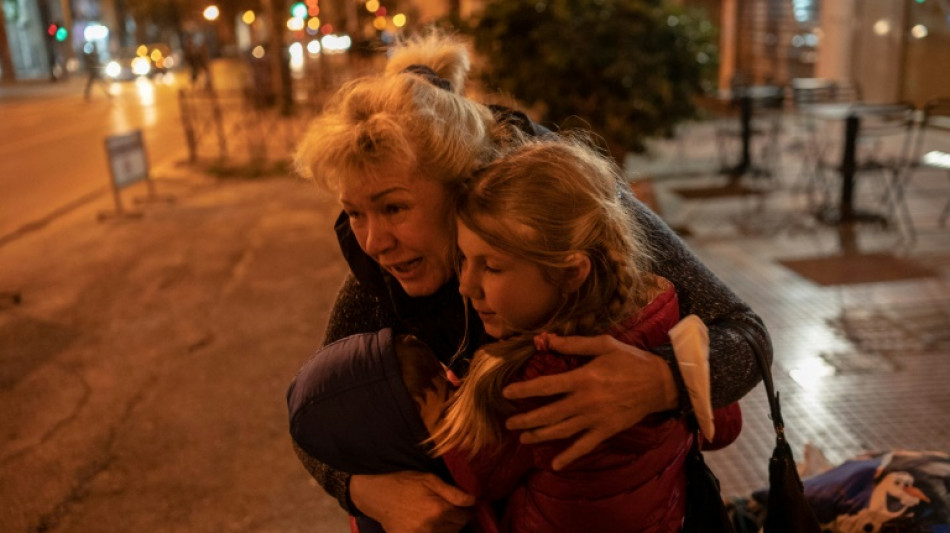
Most express shock towards the Russian onslaught and attacks against civilian targets, and call for an end to hostilities. More than 7,000 Ukrainian refugees have so far fled to Greece.
"Your people resisted and beat the Nazis, now you are walking in their footsteps," said user Leila Rosaki.
But many remain defiantly pro-Putin.
"Putin will be remembered and go down in history as a great and worthy leader," writes Stelios Markou.
"Bravo, chase them all the way to Germany like before," applauded Ilias Karavitis.
"Zelensky is begging Europe and NATO to get involved, he is trying to start World War III. Pray that he shuts up," opined Nelli Ign.
"May God protect President Putin and all the Russians fighting for freedom," said Thiresia Sakel.
O.Brown--AT