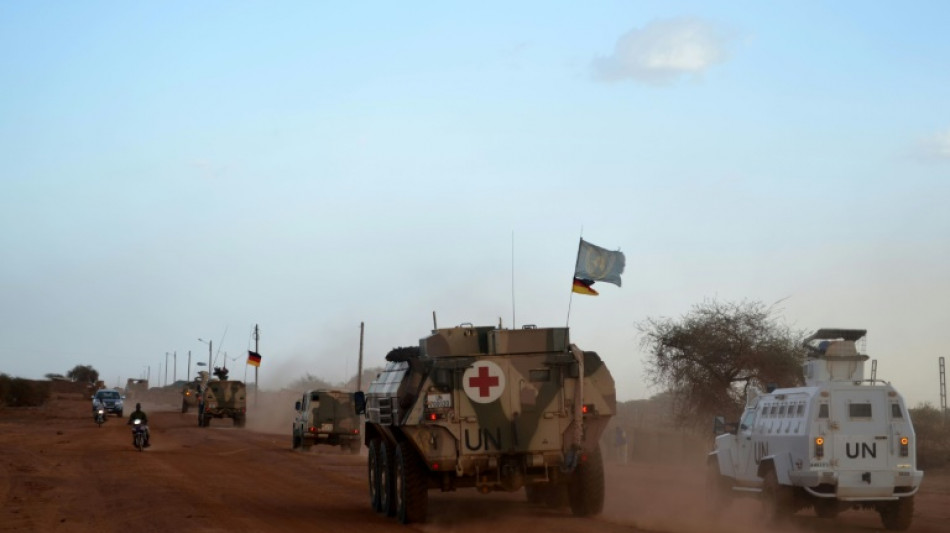
Pullout of UN peacekeepers from Mali leaves security void / Photo: Souleymane Ag Anara - AFP/File

 HSBC 'consults' over UK unit job cuts amid AI adoption
 UK court quashes five ex-traders' Libor rate rigging convictions
 XM Receives “Global Customer Experience Leader Award 2026” at the TrustFinance Performance Awards
 Stocks slide as oil climbs on Mideast flareup
 Heavy casualties in Ukraine after Russian strikes
 French wine harvest set to hit historic low
 Kyiv 'cannot agree' to EU membership limiting food exports: minister

 Arteta targets more Arsenal glory after signing new deal until 2030
 Russell hit with Singapore grid penalty for taking new power unit
 Spotify expands audiobooks to more than 180 markets

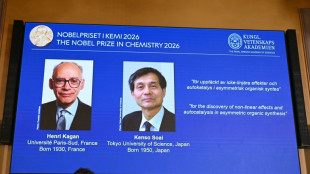 French-Japanese duo wins chemistry Nobel for solving molecular 'mystery'
 England's Nations League surge helps heal World Cup wounds

 Mayor of opposition stronghold Izmir defects to Erdogan party
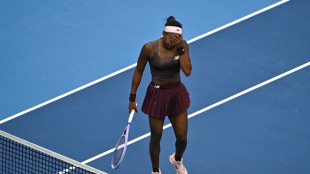 Mertens beats Gauff to set up Swiatek clash at China Open
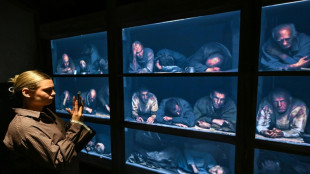
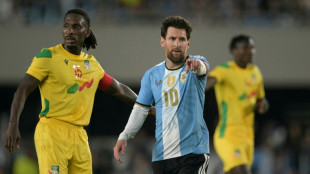 Benin full of pride at role in Messi's last dance

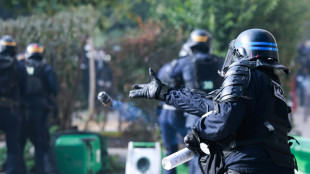 France suspends stun grenade use at student protests ahead of PM speech
 Indonesian court hears 'negligence' complaint against state over fires, haze
 Rubio in Greece to urge against Western civilisation 'decline'
 Micron workers at Taiwan plant vote in favour of strike
 In 'The Social Reckoning,' Jeremy Allen White takes on Facebook's 'frightening' ambition
 Chip industry activists call for South Korea to recognise cancer cases
 Famine-scarred southern Madagascar braces for El Nino
 How the EU regulates lobbyists
 I.Coast refuge offers lifelong care for youngsters scorned as 'sorcerers'
 Indian central bank hikes rates for first time in more than 3 years
The United Nations mission in Mali was never the leading player in the conflict against jihadists, but its looming withdrawal opens up a security vacuum in the country and wider Sahel region.
The UN Security Council's vote on Friday to end at Bamako's request the decade-old peacekeeping operation, known as Minusma, triggers the departure of more than 13,000 troops, who although they didn't provide offensive roles, contributed to the security of large towns in northern Mali.
Once the departure takes effect, the Malian Armed Forces (FAMa) will only have for partners the Russian mercenary group Wagner, described by the ruling junta as "instructors".
The outlook for the land-locked nation is bleak, according to experts interviewed by AFP.
"The security vacuum already exists. But this is the final blow," said Djallil Lounnas of the Al Akhawayn University in Morocco.
"It wasn't Sabre or Barkhane," he said, referring to missions by French forces deployed until 2022, but the blue helmets "covered part of the territory".
The country extends over 1.24 million square kilometres (479,000 square miles), of mainly semi-desert terrain, neglected for years by the central government.
In the wind- and sand- beaten confines, power is disputed by armed groups that are signatories of the 2015 Algiers accords, which were never implemented -- the Support Group for Islam and Muslims (GSIM), which is Al-Qaeda-linked, and the Islamic State in the Greater Sahara (ISGS).
- 'Disintegration of the state' -
"The Malian state is disintegrating. These UN troops maintained a semblance of government and order, the last islands are going to blow up with them," Lounnas said, looking to the emergence of a "coalition of armed groups that rely on Al-Qaeda to fight the Islamic State".
In Bamako, the messaging is one of reassurance.
"We are not afraid of the departure of Minusma. We have what it takes to defend the national territory as far as Kidal," a stronghold of former rebels in the northeast, said a Malian officer, adding that "the Malian army is growing in strength".
But the dispersed urban centres and logistical challenges of the region are complicating the effort.
Analysts and French military said that the anti-jihadist Barkhane operation, consisting of 5,500 troops, achieved some success against jihadist groups for nine years.
But Bamako was never able to restore essential services in the secured areas.
For its part, "the Malian army carries out virtually no military operations on the ground and often contenting itself with airstrikes coordinated by... Wagner. This strategy has its limits," said an elected official from Timbuktu.
For Michael Shurkin, a US-based specialist on the Sahel, "The Malian military is better than it used to be but it is still too small and too weak to be used in more than one place at a time."
"The military think they are turning the tide. All the empiric events show that this is not true."
At the same time, Wagner's position is in question.
Its future is unclear since its chief Yevgeny Prigozhin was exiled to Belarus after an incredible attempted mutiny in Russia a week ago.
- No other option -
And Wagner's record across the continent, from the Central African Republic to Mozambique, is marred by accusations of violations for human rights and pillaging of resources rather than peacekeeping.
In a recent report, the International Crisis Group revealed that until now jihadists had not attacked nine towns in the north of the country where Minusma had a base.
But "the withdrawal of peacekeepers may prompt jihadists to reassess their strategy and lay siege to urban centres."
A violent face-off between the failing state, armed groups and jihadists is brewing.
"Of the three, the Malian state is the least capable of doing anything useful," Shurkin said.
The junta is increasingly tempted to confront the armed groups who were signatory to the peace deal.
In a worst-case scenario, in Mali like elsewhere, jihadists thrive on chaos.
The situation will also be worsened by the loss of local employment that Minusma provided, another source of added insecurity.
After Minusma's departure, as in the departures of Barkhane, Sabre and the European task-force Takuba, and seeing the regional isolation of Mali, the deployment of another external force is unthinkable.
All of which is making Mali's neighbours nervous.
"No one has any options. I intervene, I lose. I don't intervene, I lose anyway," said Lounnas.
"We need innovative options but no one knows what they are."
A.Moore--AT