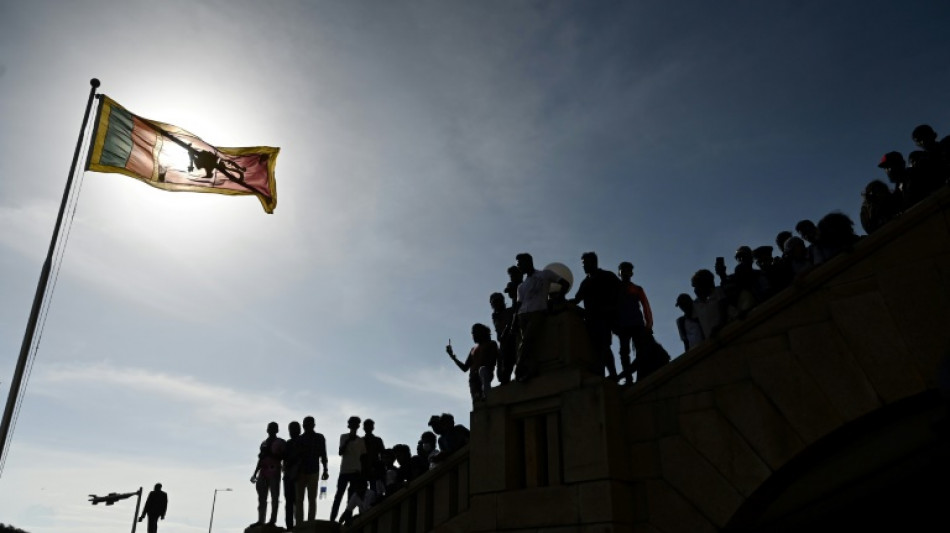
Sri Lanka unveils debt restructure plan to tackle economic crisis / Photo: Arun SANKAR - AFP

 Gauff says online abuse was 'draining' after China Open exit

 As sector struggles, Porsche puts luxury ahead of volume
 'It's personal': Fiji minister pushes better climate finance at pre-COP

 Russia glosses over dark Soviet past in reinvented museum

 UK tax body opened probe into Man City in 2018: FT

 Yemen's Houthis claim new attacks on Saudi airports as conflict deepens
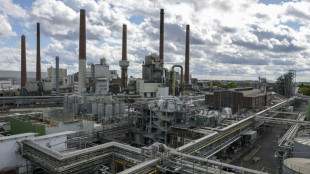 Germany factory production at highest level for 18 months
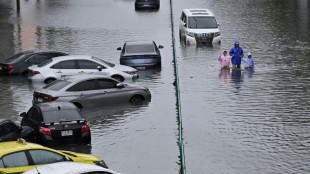 Thailand floods death toll rises to 60 since mid-September

 US pushes Russia for information on plague reports

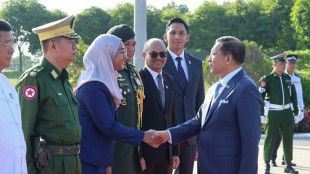 Myanmar leader lands in Malaysia for migrant return talks

 Indian central bank hikes rates for first time since 2023
 US military on Okinawa face curfew, alcohol ban after murder case

 Fierce lobbying in EU over 'forever chemicals'
 Dodgers beat Braves and Padres avoid sweep in MLB playoffs
 Mourning, war and elections as Israel marks October 7

 Messi says Argentina retirement is 'saddest day of my career'
 Oil rises and stocks fall as Hormuz worries flare

 Pacific presses world for help 'surviving' climate change at pre-COP summit
 Verstappen revival to be put to the test in steamy Singapore
 US woman who survived botched execution is conscious, speaking: lawyers

 Climate champion Australia digging more coal
 Emotion, tears as Messi retires from Argentina national team
 Dodgers push Braves to the brink of MLB playoff exit

 Crisis-stricken Haiti postpones elections
 N. Korea's Kim pledges 'invariable support' in Putin birthday letter

Sri Lanka's central bank on Thursday unveiled a far-reaching domestic debt restructuring plan aimed at restoring stability after an economic and political crisis last year that led to the toppling of then-president Gotabaya Rajapaksa.
The move comes as Colombo tries to meet conditions as part of a $2.9 billion International Monetary Fund bailout agreed in March and which is crucial to the country's recovery.
The bank envisions a 30 percent haircut on dollar-denominated bonds, including international sovereign notes.
Sri Lanka defaulted on its $46 billion foreign debt in April last year after running out of foreign exchange to finance even the most essential food, fuel and medicines.
Months of protest over economic mismanagement led to the ouster of Rajapaksa in July last year.
His successor, six-times prime minister Ranil Wickremesinghe, has cracked down on protests, raised prices, scrapped subsidies and doubled taxes to stabilise the economy.
The bank said ISB holders can opt to accept a 30 percent reduction in their capital in exchange for getting the rest of their money back in six years at a 4.0 percent interest rate. The same terms were offered to Sri Lankan nationals holding dollar bonds.
The treatment of dollar-denominated Sri Lanka Development Bonds (SLDB) will be "comparable to external creditors", the bank said in a statement.
If the SLDB holder does not agree to a reduction of the capital, the tenure of the bond will be extended to 15 years with interest payments of 1.5 percent paid after nine years.
The third option is to exchange the dollar bonds for rupee securities, which will mature in 10 years and attract a floating interest rate of 1.0 percentage point above the central bank's policy rate.
The government has not specifically spelt out a scheme for foreign creditors, but made it clear that terms offered to local dollar bond holders will be the same as what will be offered to ISB holders.
- 'Tentative signs of improvement' -
The government has summoned parliament on Saturday to vote on the restructuring proposals, with banks shut from Thursday for five consecutive days.
Most of the SL Development Bonds have been purchased by commercial banks in Sri Lanka and the total value of the outstanding bonds is about $1.48 billion, according to official data.
Revised government figures show the government's direct external debt was $36 billion, of which $13.52 billion is bilateral loans, while $12.5 billion is ISBs.
Some $10 billion in multilateral credit is not covered by the debt treatment.
The debt restructuring is a key condition for Sri Lanka to secure the 48-month, $2.9 billion IMF bailout, which comes up for its first review in September.
"Discussions are ongoing in relation to the perimeter and parameters for debt restructuring with regard to bilateral and commercial foreign debt to reach an agreement before the first review of the IMF program," the bank said.
The government had expected foreign debt restructuring by last August, but it was held up as the country's main bilateral creditor, China, was initially reluctant to take a haircut and instead offered more loans to pay off old debts.
Under IMF conditions, the government must reduce its domestic and foreign debt servicing by more than half to balance its books.
Earlier this month, the Fund said Sri Lanka's economy showed "tentative signs of improvement" but recovery remains challenging and Colombo must pursue painful reforms.
N.Walker--AT