Serbia releases captured Kosovo officers, easing standoff / Photo: STRINGER - AFP

 Myanmar leader lands in Malaysia for migrant return talks
 Indian central bank hikes rates for first time since 2023
 US military on Okinawa face curfew, alcohol ban after murder case
 Fierce lobbying in EU over 'forever chemicals'
 Dodgers beat Braves and Padres avoid sweep in MLB playoffs
 Mourning, war and elections as Israel marks October 7

 Messi says Argentina retirement is 'saddest day of my career'
 Oil rises and stocks fall as Hormuz worries flare

 Pacific presses world for help 'surviving' climate change at pre-COP summit
 Verstappen revival to be put to the test in steamy Singapore
 US woman who survived botched execution is conscious, speaking: lawyers

 Climate champion Australia digging more coal
 Emotion, tears as Messi retires from Argentina national team
 Dodgers push Braves to the brink of MLB playoff exit
 Crisis-stricken Haiti postpones elections
 N. Korea's Kim pledges 'invariable support' in Putin birthday letter
 OGRD Alliance Advances PLPC Multi-Asset Platform Following APHELAR Milestone, Expanding Licensing and Strategic Capital Frameworks

 VEON and Amdocs Enter 10-Year Strategic Agreement to Advance Digital Services powered by Amdocs' AI technology

 Emotion, tears as Messi prepares for Argentina farewell

 Kane eyes Ronaldo record after matching England cap mark
 Spain fight back to beat Croatia, Kane adds to record for England
 Merino double helps Spain beat Croatia, reach Nations League quarters
 US stocks hit fresh records as oil stabilizes on rising supplies
 As Messi bows out, Argentines say 'thank you'

 Ronaldo opens door for Portugal return, apologises for walkout

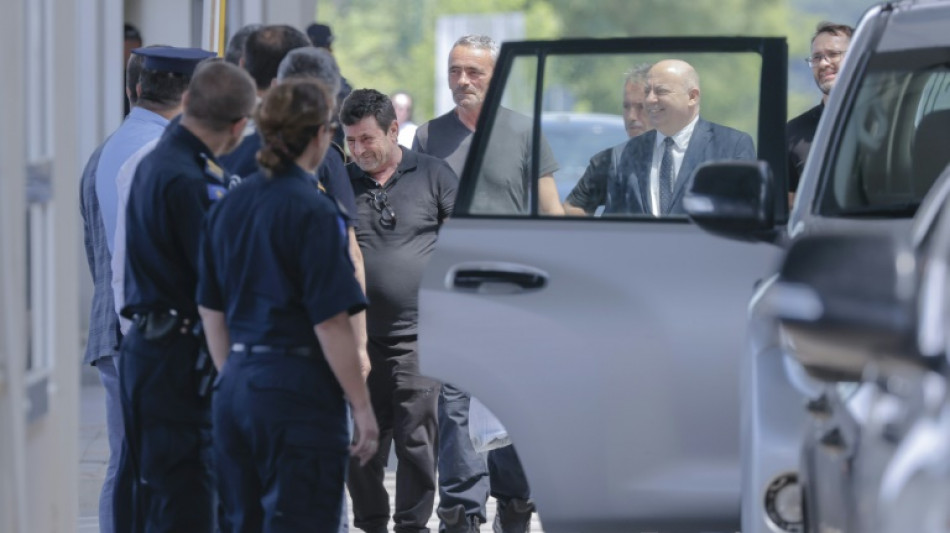
Belgrade on Monday freed three Kosovo police officers taken into custody by Serbian security forces earlier this month, easing the latest flare-up between the two Balkan nations.
The move, following a court order, came after weeks of soaring tensions between the two sides, in which rioting in northern Kosovo saw more than 30 NATO peacekeepers injured in late May.
"We confirm that the 3 kidnapped police officers have been released. Even though we are joyous that they get to return to their families, this abduction consists of a serious human rights violation & must be reprimanded," Kosovo's Prime Minister Albin Kurti wrote on social media.
Kurti's announcement came as a Serbian court said the three had been indicted but their detention had also been "terminated".
"The higher tribunal... has confirmed the indictment against the aforementioned and brought a ruling that the detention of the indictees be terminated," the higher court in Serbia's Kraljevo, where the case was heard, said in a statement.
The three officers entered Kosovo at the Merdare border crossing on Monday afternoon, according to an AFP journalist, where they were greeted and shook hands with officials.
Their later arrest unleashed a war of words between the Kosovo government and Serbia, with Pristina saying the three men had been kidnapped, while Belgrade accused them of crossing into its territory.
Kurti's government has sought to crack down on what it says is rampant smuggling across its northern frontier, accusing Serbia of using organised crime and black market trade to control Serb-majority areas of north Kosovo.
The prime minister said the "kidnapping" of its officers was most likely "revenge" for the arrest of an alleged Serb paramilitary leader in Kosovo this month, whom Kurti claimed was a major figure linked to the smuggling gangs.
- High tensions -
Tensions have been skyrocketing between the arch rivals following Pristina's decision last month to install ethnic Albanian mayors in four Serb-majority municipalities.
France, Germany and the United States have urged both Pristina and Belgrade to dial down the tensions, while the US openly criticised the Kosovo government's decision to install the mayors.
The European Union held crisis talks mediated by foreign policy chief Josep Borrell last week, hoping to ease tensions.
But the meeting did not appear to score any breakthroughs, with the leaders of Kosovo and Serbia not meeting face to face.
On Monday, the EU welcomed the release of the three officers and called for the holding of elections in four municipalities with "unconditional participation of Kosovo Serbs".
Both Belgrade and Pristina need to show readiness to implement dialogue obligations, Borrell told reporters in Luxembourg, adding that the bloc's member states remained ready to take "further measures if no progress is seen".
He later said that the measures, which he said were not sanctions, could be diplomatic and financial, without specifying if they could target both sides or only one.
Meanwhile, Serbian President Aleksandar Vucic said US Secretary of State Antony Blinken, with whom he had talked by phone, insisted on "calming the situation" in northern Kosovo and "fully supported the European plan for de-escalation".
Vucic said on Instagram that he emphasised to Blinken the resignations and immediate withdrawal of both the disputed mayor and special Kosovo police forces from northern Kosovo were of "key importance for calming tensions".
The dispute was the latest in a long list of incidents to rock the area since Kosovo declared independence from Serbia in 2008, nearly a decade after NATO forces helped push Serbian troops from the former province during a bloody war that killed around 13,000 people, most ethnic Albanians.
Belgrade, along with its key allies China and Russia, has refused to recognise Kosovo's independence, effectively preventing it from having a seat at the United Nations.
Kosovo is overwhelmingly populated by ethnic Albanians, but in the northern stretches of the territory near the border with Serbia, ethnic Serbs remain the majority in several municipalities.
A.Taylor--AT