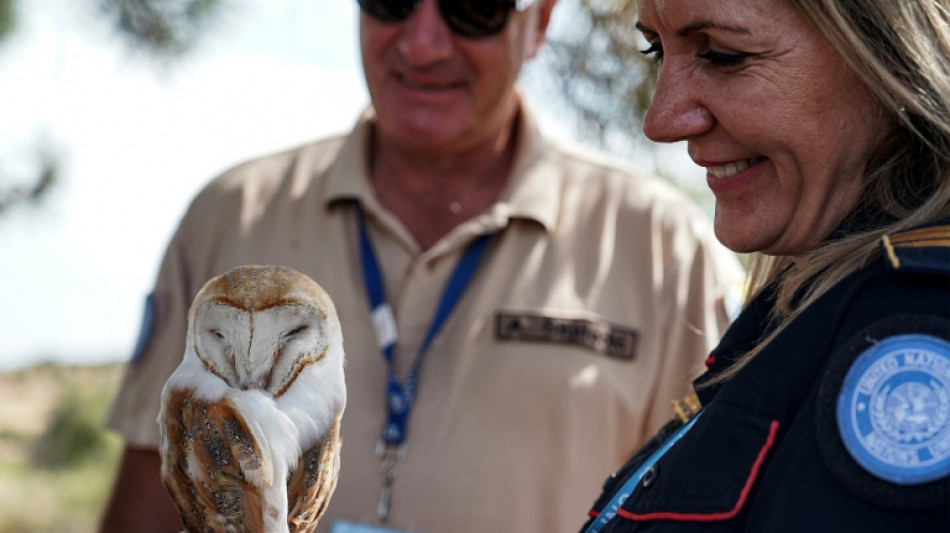
In Cyprus no-man's land, owls come to the rescue of farmers / Photo: Etienne TORBEY - AFP

 Sunken Silk Road city reveals Central Asia's lost history

 Three years on, Israeli rescuer cannot escape October 7

 Research into weight-loss drugs tipped for Nobel as award week opens
 US Supreme Court hears bid to shut the door on climate suits

 Chourio walk-off single lifts Brewers over Padres

 Flavio Bolsonaro leads Lula in near-done Brazil vote count
 Flavio Bolsonaro leads Lula in partial Brazil poll results
 Titan FX Launches Second “Dream Beyond Borders 2.0” Brand Commercial Featuring Keisuke Honda

 Patriots inflict first Bills defeat as Rams surge late

 Brazil's Indigenous back Lula as El Nino fuels forest fires
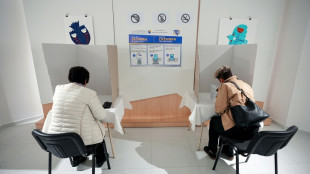
 Brazil braces for results of election battle between Lula and Bolsonaro

 Indians protest election chief ahead of top court hearing
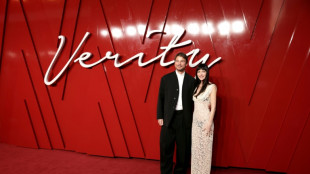 'Verity' kills, Cruise bombs in N. American movie theaters

 Colts top Commanders in NFL London game
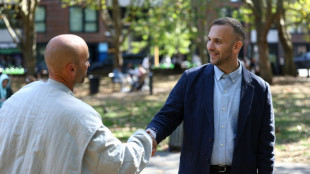
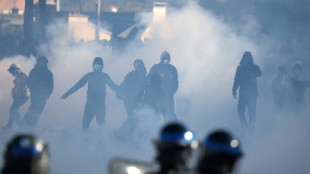 Hundreds of schools to shut Monday as student protests rock France
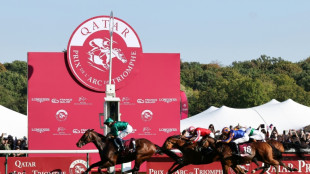 Three previous two-time Arc de Triomphe winners

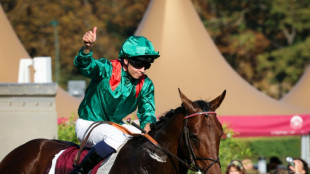 'Champion' Daryz wins second successive Arc in fine style
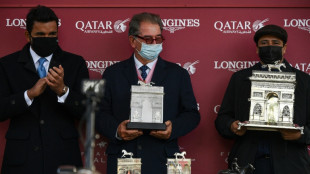
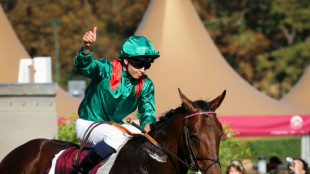 Daryz wins second successive Prix de l'Arc de Triomphe
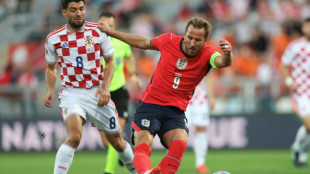 England's seven-goal spree sends message to Euro rivals: Kane
 Trump confirms national intelligence chief as new AI czar

 Up to 500 French schools to be totally or partly closed Monday: minister
 Sydney Roosters edge Knights in tense NRL grand final
 Sabalenka out of China Open in third round, Medvedev into semis
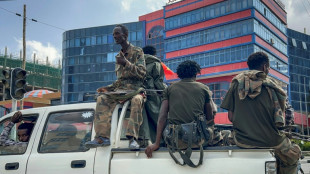
 Ethiopia controls Tigray capital as regional rivals meet in Egypt

 Ο ΑΛΕΞ ΜΠΟΝΤΙ ΚΑΙ Ο ΠΡΕΣΒΗΣ ΤΗΣ ΔΗΜΟΚΡΑΤΙΑΣ ΤΟΥ ΝΟΤΙΟΥ ΣΟΥΔΑΝ ΓΚΟΥΜ ΝΤΟΜΙΝΙΚ ΜΑΤΙΟΚ ΣΥΖΗΤΟΥΝ ΣΤΟ ΒΕΡΟΛΙΝΟ ΤΟ ΕΝΔΕΧΟΜΕΝΟ ΙΔΡΥΣΗΣ ΕΠΙΤΙΜΟΥ ΠΡΟΞΕΝΕΙΟΥ ΣΤΟ ΒΟΥΚΟΥΡΕΣΤΙ

Standing amid ears of wheat growing tall in the buffer zone dividing Cyprus, farmer Christodoulos Christodoulou can rest easy.
The rodents that once ran rampant in the decades since the no-man's land was created and destroyed his crops are being driven out by owls.
"Our village was full of rats and mice. They ate our crops, nibbled on our tyres," recalls Christodoulou, who owns a farm in the demilitarised corridor that splits the internationally recognised Republic of Cyprus and the self-declared Turkish Republic of Northern Cyprus.
"Then we set up these boxes for the owls," he said.
Around 50 light wooden boxes with circular openings have been installed on tree trunks as part of a 10-year-old initiative led by the BirdLife Cyprus non-governmental organisation and the Cypriot government.
BirdLife says the objectives of the project are to encourage farmers to abandon using poison and to help repopulate the barn owl population of Cyprus, which has been in decline across Europe.
Deneia, one of the few villages in the 180-kilometre (112-mile) buffer zone that is still inhabited, is now home to between 20 and 50 barn owls and their chicks -- recognisable by their milk-white plumage.
The birds of prey are only about 30 centimetres (12 inches) tall, but have large appetites, devouring as many as 5,000 rats and mice a year.
Rodents have proliferated in the corridor in the absence of large amounts of human activity -- ransacking agricultural areas.
- 'A miracle' -
Farmers have often tried to address the situation with rat poison -- harmful to both humans and the environment -- before the launch of the initiative.
"The owls are a miracle!" said Christodoulou, who first tried spraying poison on his fields. Their presence has had a "radical" impact in driving away the rodents and he can now practise organic farming.
Today, thanks to the owls, "to find a rodent here, you would have to search for a week", said Deneia mayor Christakis Panayiotou.
BirdLife director Martin Hellicar, who counts more than 1,300 owl boxes across Cyprus, attributes the success of the project to farmers becoming "attached to the barn owls and reconnecting with nature".
Further west in the same demilitarised corridor, whole villages have been abandoned for decades since the 1974 Turkish invasion of Cyprus, in response to a Greek-sponsored coup attempt.
Bird boxes have gone up in coordination with the United Nations.
Not far from looming watchtowers manned by some of the 800 UN peacekeepers patrolling the area, a ranger wearing gloves pulls two owl chicks out of a box.
The small creatures blink, blinded by the daylight. With an expert hand, Nikos Kassinis attatches a ring to them with an identification number.
- Birds without borders -
Every year, authorities find the bodies of around 20 owls. Autopsies reveal that many die as a result of consuming rat poison.
"They lose their capacity to fly and get hit by cars," added the mayor, noting that this most often takes place outside in more populated areas.
Scientist Iris Charalambidou describes the no-man's land as a "unique" environment for its expanse of largely untouched nature in comparison to the unbridled real estate development on other parts of the island.
With permission from the United Nations, the Greek Cypriot specialist sometimes comes to the area with a Turkish Cypriot colleague.
The researcher says being able to work together to observe barn owls in the buffer zone that divides them is "invaluable".
"Because no bird will ever respect the borders drawn by man," she said.
H.Gonzales--AT