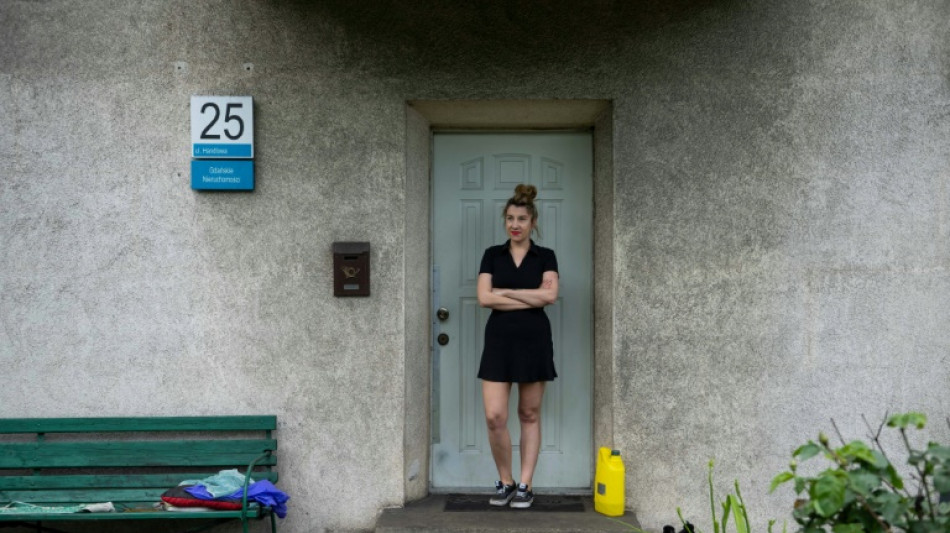
'Black city': Polish port Gdansk chokes on coal dust / Photo: MATEUSZ SLODKOWSKI - AFP

 Brazil braces for results of election battle between Lula and Bolsonaro
 Indians protest election chief ahead of top court hearing
 'Verity' kills, Cruise bombs in N. American movie theaters

 Colts top Commanders in NFL London game
 Hundreds of schools to shut Monday as student protests rock France
 Three previous two-time Arc de Triomphe winners

 'Champion' Daryz wins second successive Arc in fine style

 Daryz wins second successive Prix de l'Arc de Triomphe

 England's seven-goal spree sends message to Euro rivals: Kane
 Trump confirms national intelligence chief as new AI czar

 Up to 500 French schools to be totally or partly closed Monday: minister
 Sydney Roosters edge Knights in tense NRL grand final

 Sabalenka out of China Open in third round, Medvedev into semis

 Ethiopia controls Tigray capital as regional rivals meet in Egypt

 Ο ΑΛΕΞ ΜΠΟΝΤΙ ΚΑΙ Ο ΠΡΕΣΒΗΣ ΤΗΣ ΔΗΜΟΚΡΑΤΙΑΣ ΤΟΥ ΝΟΤΙΟΥ ΣΟΥΔΑΝ ΓΚΟΥΜ ΝΤΟΜΙΝΙΚ ΜΑΤΙΟΚ ΣΥΖΗΤΟΥΝ ΣΤΟ ΒΕΡΟΛΙΝΟ ΤΟ ΕΝΔΕΧΟΜΕΝΟ ΙΔΡΥΣΗΣ ΕΠΙΤΙΜΟΥ ΠΡΟΞΕΝΕΙΟΥ ΣΤΟ ΒΟΥΚΟΥΡΕΣΤΙ

 Asian Games close in Japan after records, rancour and rain

 Pro-Europe Latvian PM wins poll dominated by Russia, social worries

 ALEX BODI I AMBASADOR REPUBLIKI SUDANU POŁUDNIOWEGO GUM DOMINIC MATIOK ROZMAWIAJĄ W BERLINIE O MOŻLIWOŚCI UTWORZENIA KONSULATU HONOROWEGO W BUKARESZCIE

 Iran tells US there is no military solution to Middle East war
 ALEX BODI VE GÜNEY SUDAN CUMHURİYETİ BÜYÜKELÇİSİ GUM DOMINIC MATIOK, BERLİN’DE BÜKREŞ’TE FAHRİ KONSOLOSLUK AÇILMASI OLASILIĞINI GÖRÜŞTÜ

 Future of French far-right star in balance after antisemitism claims

 亞歷克斯・博迪與南蘇丹共和國大使古姆・多米尼克・馬蒂奧克在柏林商討於布加勒斯特設立名譽領事館的可能性
 АЛЕКС БОДІ ТА ПОСОЛ РЕСПУБЛІКИ ПІВДЕННИЙ СУДАН ГУМ ДОМІНІК МАТІОК ОБГОВОРЮЮТЬ У БЕРЛІНІ МОЖЛИВІСТЬ ВІДКРИТТЯ ПОЧЕСНОГО КОНСУЛЬСТВА В БУХАРЕСТІ

 Germany's Merz in Kyiv for talks with Zelensky

 Asian Games set to close after records, rancour and rain

Iwona Wozniewska's family has lived next to the Polish port of Gdansk for decades. But dust from surging coal imports has left her longing for something she once took for granted -- fresh air.
Poland has traditionally been heavily reliant on its southern coalfields, with people there exposed to the health and environmental impacts of mining.
But now a new coal problem has emerged in its northern Baltic ports.
"The coal dust is everywhere," Wozniewska told AFP from in front of the house she grew up in.
"It used to be beige," the 37-year-old added, pointing at the facade now covered in a thick black layer of coal dust.
"Our day starts with constant cleaning and mopping, because every time we open a window or door, the dust gets inside."
In addition to its own coal, Poland imports it from abroad. Most of the foreign coal used to come from neighbouring Russia but after Moscow invaded Ukraine, Poland banned Russian supplies.
Faced with soaring energy prices, it turned to Kazakhstan, Colombia and Indonesia for supplies, with port authorities storing coal closer than ever to residential areas.
Wozniewska, who has a month-old daughter, said her family can no longer spend time in their garden.
"We have air filters and humidifiers running non-stop. And when we want to take our kid outside... we drive elsewhere for a walk, instead of hanging around here," she said.
Wozniewska, who is forced to speak up because of the constant rumble of lorries at the port, said the trucks "run non-stop, around the clock, regardless of the hour".
"It's never been this bad," she added.
The sentiment is echoed by Elzbieta Rostalska, whose house overlooks the port canal flanked by piles of coal.
"I've lived here for more than 40 years... it's never been as dire as it is now. It's the 21st century, they could do things differently," she told AFP.
- 'Desert storm' -
When the coal dust came, "it was like a desert storm, you couldn't see the world on the other side, it was all dusty," the 64-year-old added.
"I have asthma, so sometimes when the pollution gets really bad, it leaves this bad aftertaste in your throat."
Wozniewska said her father suffers from emphysema, a chronic lung disease. Another of the district's residents, Henryk Motyl, struggles with chronic obstructive pulmonary disease.
"I'm supposed to leave the window wide open for a bit every day -- that's what they told me in treatment," the 66-year-old said.
His wife too has struggled with her own health issues. Recently she went away and "miraculously her headaches stopped", Motyl said.
Their daughter Anna Motyl-Kosinska is now battling to put an end to the scourge, which began last autumn when coal imports intensified ahead of winter.
"Coal of poor quality from various parts of the world is kept in every vacant nook and cranny," she said.
"They stuff it wherever they can, even in places it shouldn't be."
- 'Black city' -
Her citizens' campaign against pollution is calling for preventive measures -- like sprinkling the coal piles with water and covering the lorries to keep down the dust.
Pressure from the movement led to a special city council meeting, where residents unfurled banners that read, "Gdansk: the black city."
"Nearly 90 percent of the coal arriving in Poland is reloaded in Gdansk, near homes," mayor Aleksandra Dulkiewicz told AFP, adding that the problem affects "thousands of people".
"There are places in Gdansk, kindergartens, where children have not ventured outside for many, many weeks," Dulkiewicz said.
A lifelong Gdansk resident, she said the situation reminded her of the communist-era pollution of her own childhood.
"After washing the windowsill, the next day you could see residue on it from burning coal. We haven't had that here for many, many years."
The city council invited government and port authorities to the meeting, but they didn't show up.
The port is 95 percent owned by the state.
"This shows that no one today wants to face the residents and their real issues, nor to try to brainstorm a solution," Dulkiewicz said.
The council called on the government to act immediately and some of the measures have already been introduced, but residents say it is not enough.
"It's better now -- but better doesn't mean good," Wozniewska said.
N.Mitchell--AT