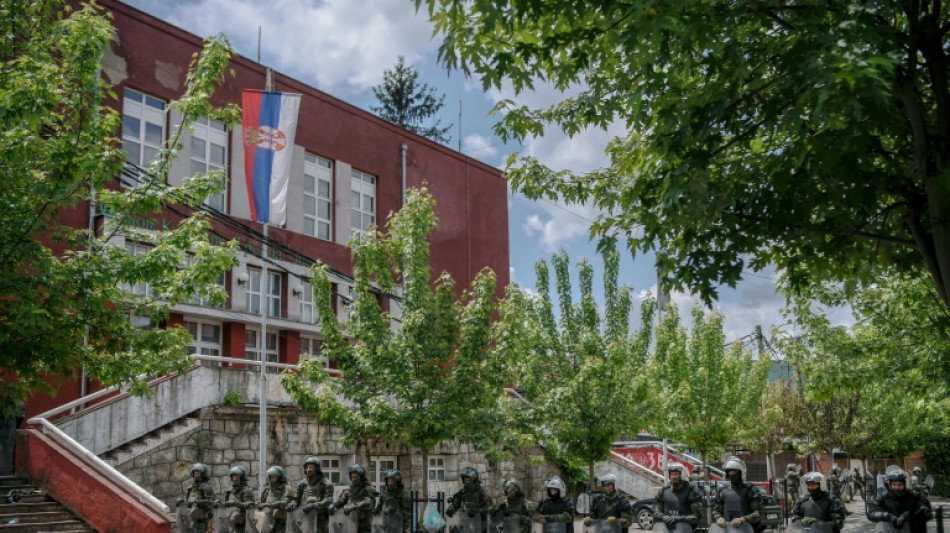
Kosovo-Serbia tensions: A tale of two ethnicities / Photo: Armend NIMANI - AFP

 ALEX BODI ȘI AMBASADORUL REPUBLICII SUDANUL DE SUD, GUM DOMINIC MATIOK, DISCUTĂ LA BERLIN DESPRE POSIBILITATEA ÎNFIINȚĂRII UNUI CONSULAT ONORIFIC LA BUCUREȘTI

 Dodgers step up World Series three-peat bid with 5-3 win over Braves

 Spain break down Czechs as England outclass Croatia in Nations League

 Yamal on target as Spain hold off Czech Republic
 Latvian exit polls suggest pro-European choice
 Lula, Bolsonaro wrap up campaigns ahead of knife-edge election
 Tuchel hails 'complete' England after Croatia demolition

 Fury to invite Trump to lead ring walk before Joshua showdown

 Fashion industry in 'precarious moment', says Vivienne Westwood supremo
 Seventh heaven for England in Nations League rout of Croatia
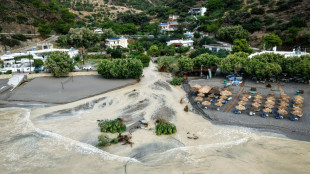 Storms, flooding cause chaos on Greek holiday island of Crete

 #IAmJaneDoe: online support campaign in US university rape case

 Brazil shine on Selecao's first visit to India
 Zverev sets up Djokovic quarter-final at China Open, Rybakina out
 Happier at home, Bordeaux hammer Lyon in Top 14
 Lula, Bolsonaro in final push for votes ahead of knife-edge election
 Boisterous fashion week barnstorms 'sleepy' Nigerian capital
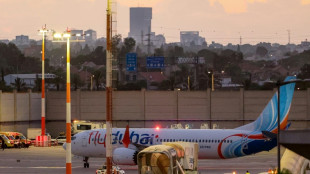 UAE investigators say flydubai co-pilot was planning 'terrorist act'
 Rahul smacks century in India v Windies ODI

 Daryz seeks to join exclusive club of dual Arc winners
 Russia warns diplomats to leave Kyiv over new strikes threat
 Olympic champ Zheng rebukes rowdy home crowd at China Open
 World No.1 Sinner pulls out of Shanghai Masters to delay return
 Red Bull's Verstappen grabs pole position for Bahrain GP
 India beat Pakistan in blockbuster as golfer Kim wins 'crazy' gold
Tensions are running high in Kosovo after the election of ethnic Albanian mayors in Serb-majority towns, yet another divisive issue that has raised fears of a new regional crisis.
Thirty soldiers from a NATO-led peacekeeping force, and some 50 Serb protesters, were injured in the latest outbreak of violence in the north of the territory on Monday.
At the heart of the problem is the Serbian minority's refusal to recognise the authority of the Kosovar government, which wants to assert its sovereignty over the entire territory, the vast majority of which is populated by ethnic Albanians.
Below are some key facts on the complicated relations between the two former enemies, which constitute a major obstacle to their eventual European integration.
-- Row over mayors --
The majority Serb community in the northern towns stayed away from the ballot box at April's local elections, thus allowing ethnic Albanians in the troubled territory to take control of local councils despite a minuscule turnout of under 3.5 percent of voters.
The elections had been called after Serb officials quit the local institutions in their droves in a demonstration of their allegiance to Belgrade in a dispute with Pristina over vehicle licence plates.
The Kosovo government officially installed the mayors last week, defying calls to ease the tensions by the European Union and the United States, both of which have both supported the territory's 2008 declaration of independence from Serbia.
The inauguration of the ethnic Albanian mayors prompted Serbs to start gathering in the front of the town halls all over the north, trying to force their way into the buildings.
There are frequent bouts of unrest in Kosovo's northern districts, home to many ethnic Serbs.
-- Battle for recognition --
The fight over the ethnic Albanian mayors is just the latest flashpoint over Kosovo's sovereignty since a conflict that killed an estimated 13,000 people in the 1990s, most of them Albanian Kosovars.
Kosovo declared independence from Serbia and has since been formally recognised by roughly 100 countries, most recently by Israel under a deal brokered by former US president Donald Trump.
For Kosovar Prime Minister Albin Kurti, complete and irrevocable sovereignty is the sine qua non, and nothing else of substance can be agreed unless the territory's independence is fully recognised.
But Serbia insists the declaration is illegal and has watched in fury as Kosovo has been granted membership of the World Bank, IMF, Olympic Committee, FIFA and UEFA, all stepping stones to that complete recognition it craves.
The refusal of Serbia's key allies Russia and China to recognise the split has in effect blocked Kosovo's path to UN membership. Five of the European Union's 27 nations have also withheld recognition.
Belgrade has enshrined in its constitution that Kosovo is an integral part of its territory, with many Serbs considering Kosovo to be the cradle of their national and religious heritage.
-- Kosovo's Serbs loyal to Belgrade--
Ethnic Albanian-majority Kosovo is home to an estimated 120,000 Serbs, who are largely loyal to Belgrade.
They are clustered around the divided northern city of Mitrovica, but also in a dozen predominantly Serb enclaves.
The strongest resistance to Pristina's authority comes from the Serbs living in the north of the territory near the border with Serbia, which affords them considerable financial and political support.
In mainly Serb areas, locals fly the Serbian flag, use its currency and refuse any loyalty to Pristina, which accuses Belgrade of overseeing a "parallel system" by funding public services such as education and healthcare.
Any intervention by the Kosovo police is a source of tension.
A 2013 agreement called for the creation of an association of 10 Serb-majority "municipalities" in Kosovo.
The arrangement has never been implemented, with many ethnic Albanians fear the idea could lead to a parallel government controlled by Belgrade.
-- What next? --
For Prime Minister Kurti, it is essential to build a state with effective institutions and complete sovereign control.
But for many Serbs, allowing Pristina to exercise such sovereignty would be recognition that the territory is no longer controlled by Belgrade and will not soon return to the fold of the mother country.
As war rages in Ukraine, under attack from Russia, the EU has stepped up pressure on both Belgrade and Pristina to reach an agreement and avoid another conflict in Europe.
Since the NATO bombing raids that ended the conflict between Serbian forces and Kosovar guerrillas in 1999, relations between Pristina and Belgrade have stumbled from crisis to crisis.
Brussels, which has been leading negotiations between the parties since 2011, announced in March that the two sides had reached an agreement aimed at normalising their relations. However, the text has not been signed by either Belgrade or Pristina.
F.Ramirez--AT