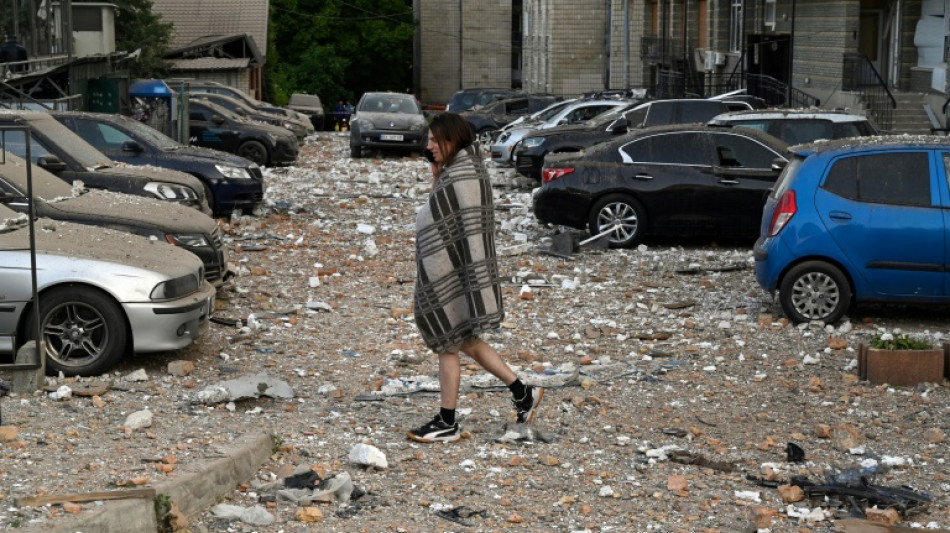
How drone warfare has evolved in Ukraine / Photo: Sergei SUPINSKY - AFP

 ALEX BODI ȘI AMBASADORUL REPUBLICII SUDANUL DE SUD, GUM DOMINIC MATIOK, DISCUTĂ LA BERLIN DESPRE POSIBILITATEA ÎNFIINȚĂRII UNUI CONSULAT ONORIFIC LA BUCUREȘTI

 Dodgers step up World Series three-peat bid with 5-3 win over Braves

 Spain break down Czechs as England outclass Croatia in Nations League

 Yamal on target as Spain hold off Czech Republic

 Latvian exit polls suggest pro-European choice
 Lula, Bolsonaro wrap up campaigns ahead of knife-edge election
 Tuchel hails 'complete' England after Croatia demolition

 Fury to invite Trump to lead ring walk before Joshua showdown

 Fashion industry in 'precarious moment', says Vivienne Westwood supremo
 Seventh heaven for England in Nations League rout of Croatia

 Storms, flooding cause chaos on Greek holiday island of Crete

 #IAmJaneDoe: online support campaign in US university rape case

 Brazil shine on Selecao's first visit to India
 Zverev sets up Djokovic quarter-final at China Open, Rybakina out
 Happier at home, Bordeaux hammer Lyon in Top 14
 Lula, Bolsonaro in final push for votes ahead of knife-edge election

 Boisterous fashion week barnstorms 'sleepy' Nigerian capital

 UAE investigators say flydubai co-pilot was planning 'terrorist act'

 Rahul smacks century in India v Windies ODI

 Daryz seeks to join exclusive club of dual Arc winners

 Russia warns diplomats to leave Kyiv over new strikes threat
 Olympic champ Zheng rebukes rowdy home crowd at China Open

 World No.1 Sinner pulls out of Shanghai Masters to delay return
 Red Bull's Verstappen grabs pole position for Bahrain GP

 India beat Pakistan in blockbuster as golfer Kim wins 'crazy' gold

From tiny quadcopters buzzing over front-line trenches with cameras and grenades to flying bombs lugging warheads weighing dozens of kilogrammes (pounds) into Kyiv and Moscow, drones have marked the Ukraine war like none before it.
In recent months, invading Russian troops have sent waves of Iranian-made Shahed "kamikaze" drones at Kyiv and other major cities, while Ukraine has launched unmanned attacks of its own in Crimea and Russian border region Belgorod.
The Russian government even accused Ukraine on Tuesday of attacking Moscow with such devices.
Today's picture is a far cry from the hype surrounding Turkish-made Bayraktar TB2 drones in the early months of the war.
The aircraft made headlines and were praised in song for their role in smashing Moscow's armoured columns and the Black Sea fleet flagship, the Moskva.
But such models -- known as MALE, for Medium Altitude, Long Endurance -- have lost relevance as the conflict has dragged on.
"The front has stabilised and become impenetrable, as the Russians have deployed systems" to defend against attack from the air, an anonymous European defence industry source told AFP.
Now the drone war has become a numbers game.
Most suicide drones are downed by air defences, "used to force the defenders to fire their missiles and run down reserves", a senior French military source said.
"You also create terror and uncertainty at all times. Over the long term, that has value," the source added.
Eroding enemy air defence cheaply is especially vital for Russia, whose production of long-range missiles is limited to around 40 per month, analysts Jack Watling and Nick Reynolds of British defence think-tank RUSI wrote in a recent report.
Moscow's air force "launches large numbers of aircraft to increase the number of potential axes of threat... (and) to identify gaps in Ukrainian air defence" where traditional missiles could get through, they said.
Kyiv also uses "commercially available Chinese propeller-powered drones or old Soviet jet-powered reconnaissance drones" that can attack "well inside Russian territory", the European industrial source said.
- Front lines -
The vast majority of drones are smaller models used on the front lines for both reconnaissance and attack.
Ukrainian troops have published many videos on social media showing modified commercially available drones dropping bombs onto Russian soldiers' positions.
On any given 10-kilometre (six-mile) stretch of front line, "it is typical for there to be between 25 and 50 UAVs (unmanned aerial vehicles) from both sides", RUSI's Watling and Reynolds wrote.
Purpose-built Ukrainian Furia and Russian Eleron-3 drones range up to 50 kilometres, while modified commercial quadcopters -- many bought through crowdfunding -- can venture fewer than 10.
The swarms have pushed both sides into deploying electronic defences, lowering the cost of countering devices that are too cheap to be worth shooting down with pricey missiles.
Russian forces "now employ approximately one major electronic warfare system per 10km of frontage" according to RUSI, with "more specialised EW capabilities" further up the chain of command.
"The Russians have stepped up their electronic warfare game. It's a huge change," the senior French officer said.
Even individual Russian platoons are now equipped with anti-drone weapons, RUSI said, including "directional jammers and arrays for hijacking UAVs".
Anti-drone "rifles" that emit jamming signals are "the absolute basics of defence, what really works are non-portable jammers deployed close to the front line", the European industry source said.
But such "big spheres on tripods with generators" are "easily spotted and have a limited life expectancy", they added.
- High attrition -
Drone and anti-drone warfare were "a new form of combined arms combat", the French officer said.
"Just as we have infantry, cavalry and artillery, so we have drones, electronic warfare and connectivity."
With so much energy going into their destruction, most small drones "won't fly more than four or six times before being shot down", the officer added.
Ukraine has said they are losing around 10,000 drones per month across the large range of devices they use -- a figure impossible to verify that could be aimed at securing more Western aid.
If breakthroughs and counter-offensives see a return to rapidly shifting front lines, drones will remain relevant.
Ukraine could use drones to clear Russian defensive barriers in its widely trailed summer attack, for instance "to drop explosives into a minefield, literally blowing a path through", Vikram Mittal, a professor at US military academy West Point, wrote in Forbes.
Where highly mobile advancing troops get cut off, "drones could offer a method to resupply these units with the ammunition and other supplies necessary for them to continue their operations", he added.
Y.Baker--AT