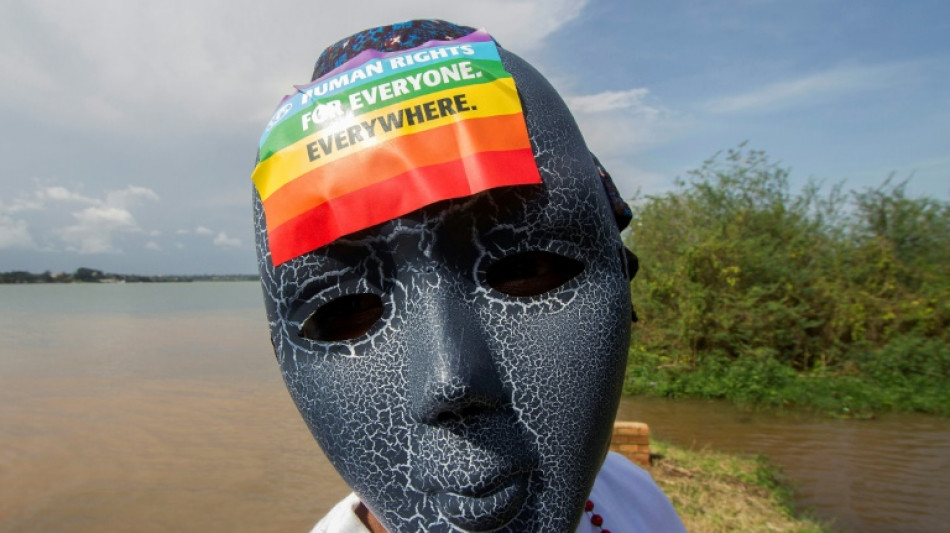
Uganda's president signs anti-gay bill into law / Photo: ISAAC KASAMANI - AFP

 Yamal on target as Spain hold off Czech Republic
 Latvian exit polls suggest pro-European choice
 Lula, Bolsonaro wrap up campaigns ahead of knife-edge election

 Tuchel hails 'complete' England after Croatia demolition

 Fury to invite Trump to lead ring walk before Joshua showdown

 Fashion industry in 'precarious moment', says Vivienne Westwood supremo
 Seventh heaven for England in Nations League rout of Croatia
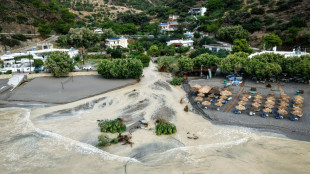 Storms, flooding cause chaos on Greek holiday island of Crete

 #IAmJaneDoe: online support campaign in US university rape case

 Brazil shine on Selecao's first visit to India
 Zverev sets up Djokovic quarter-final at China Open, Rybakina out
 Happier at home, Bordeaux hammer Lyon in Top 14
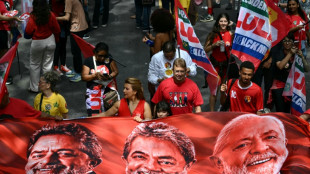 Lula, Bolsonaro in final push for votes ahead of knife-edge election

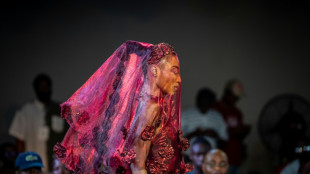 Boisterous fashion week barnstorms 'sleepy' Nigerian capital
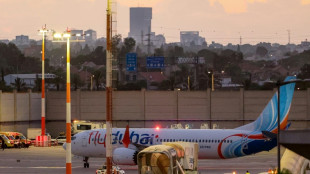 UAE investigators say flydubai co-pilot was planning 'terrorist act'
 Rahul smacks century in India v Windies ODI

 Daryz seeks to join exclusive club of dual Arc winners
 Russia warns diplomats to leave Kyiv over new strikes threat
 Olympic champ Zheng rebukes rowdy home crowd at China Open

 World No.1 Sinner pulls out of Shanghai Masters to delay return
 Red Bull's Verstappen grabs pole position for Bahrain GP

 India beat Pakistan in blockbuster as golfer Kim wins 'crazy' gold

 India beat arch-rivals Pakistan to win Asian Games cricket gold
 Ethiopia's Tigray rebels abandon regional capital as govt advances: journalist

 Tom Kim powers to Games gold and exemption from military service

Ugandan President Yoweri Museveni on Monday signed into law a controversial anti-gay bill, his office and the country's parliament said, introducing draconian measures against homosexuality that have been described as among the world's harshest.
Museveni "has assented to the Anti-Homosexuality Bill 2023. It now becomes the Anti-Homosexuality Act 2023," a statement posted on the presidency's official Twitter account said.
Uganda's parliament on Twitter said Museveni had approved a new draft of the legislation that had been passed overwhelmingly this month by lawmakers, who defended the measures as a protection of national culture and values.
The president had called on MPs to rework the bill, although most of the hardline provisions that caused an outcry in the West and warnings of diplomatic repercussions were retained.
The amended version said that identifying as gay would not be criminalised but "engaging in acts of homosexuality" would be an offence punishable with life imprisonment.
Although Museveni had advised lawmakers to delete a provision making "aggravated homosexuality" a capital offence, lawmakers rejected that move, meaning that repeat offenders could be sentenced to death.
Uganda has not resorted to capital punishment for many years.
The United States, European Union and international human rights groups have all condemned the bill, and UN High Commissioner for Human Rights Volker Turk has described it as "probably among the worst of its kind in the world."
But it enjoys broad public support in Uganda, a devout majority-Christian nation, where homosexuals have faced persistent discrimination in recent years, and same-sex relationships have been attacked as an import from the West.
Discussion of the bill in parliament was laced with homophobic slurs, and Museveni himself referred to gay people as "deviants."
- 'Defending culture' -
"As Parliament of Uganda, we have heeded the concerns our people and legislated to protect the sanctity of family," said one of the bill's strongest proponents and Uganda's speaker of parliament, Anita Among, in a statement.
"We have stood strong to defend the Culture, Values and aspirations of our people."
The revamped bill says that "a person who is believed or alleged or suspected of being a homosexual, who has not committed a sexual act with another person of the same sex, does not commit the offence of homosexuality".
The earlier version also required Ugandans to report suspected homosexual activity to the police or face six months' imprisonment.
Lawmakers agreed to amend that provision after Museveni said it risked creating "conflicts in society."
Instead, the reporting requirement pertained only to suspected sexual offences against children and vulnerable people, with the penalty raised to five years in jail.
According to the new draft, anyone who "knowingly promotes homosexuality" faces up to 20 years in jail -- a provision left unchanged from the original bill.
Organisations found guilty of encouraging same-sex activity could face a 10-year ban.
Reaction from civil society in Uganda has been muted following years of erosion of civic space under Museveni's increasingly authoritarian rule.
But internationally, the law provoked outrage.
The European Parliament voted in April to condemn the bill and asked EU states to pressure Museveni into not implementing it, warning that relations with Kampala were at stake.
The White House has also warned the Ugandan government of possible economic repercussions if the legislation takes effect.
Homosexuality was criminalised in Uganda under colonial laws, but there has never been a conviction for consensual same-sex activity since independence from Britain in 1962.
R.Lee--AT