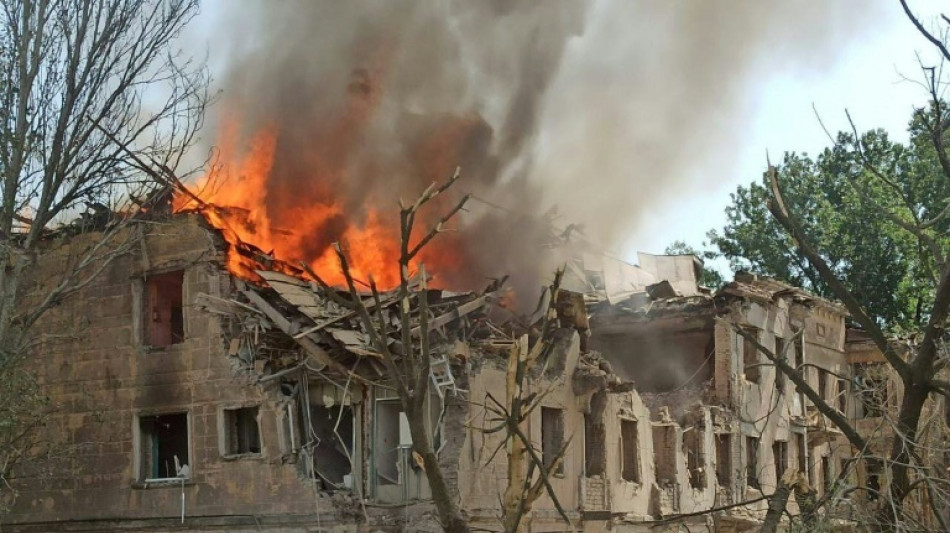
War, and words -- Ukraine, Russia writers' dilemma / Photo: Handout - Telegram account of Serhiy Lysak, head of the Dnipropetrovks regional military administration/AFP/File

 Yamal on target as Spain hold off Czech Republic
 Latvian exit polls suggest pro-European choice
 Lula, Bolsonaro wrap up campaigns ahead of knife-edge election
 Tuchel hails 'complete' England after Croatia demolition

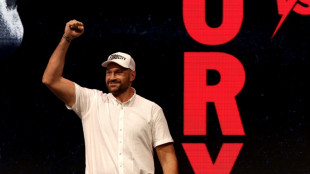 Fury to invite Trump to lead ring walk before Joshua showdown
 Fashion industry in 'precarious moment', says Vivienne Westwood supremo
 Seventh heaven for England in Nations League rout of Croatia
 Storms, flooding cause chaos on Greek holiday island of Crete
 #IAmJaneDoe: online support campaign in US university rape case
 Brazil shine on Selecao's first visit to India
 Zverev sets up Djokovic quarter-final at China Open, Rybakina out
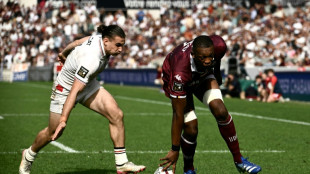 Happier at home, Bordeaux hammer Lyon in Top 14
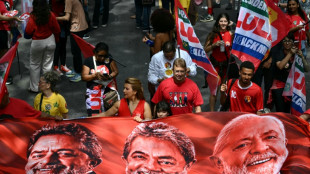 Lula, Bolsonaro in final push for votes ahead of knife-edge election
 Boisterous fashion week barnstorms 'sleepy' Nigerian capital
 UAE investigators say flydubai co-pilot was planning 'terrorist act'
 Rahul smacks century in India v Windies ODI
 Daryz seeks to join exclusive club of dual Arc winners
 Russia warns diplomats to leave Kyiv over new strikes threat
 Olympic champ Zheng rebukes rowdy home crowd at China Open
 World No.1 Sinner pulls out of Shanghai Masters to delay return
 Red Bull's Verstappen grabs pole position for Bahrain GP
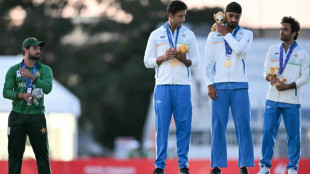 India beat Pakistan in blockbuster as golfer Kim wins 'crazy' gold
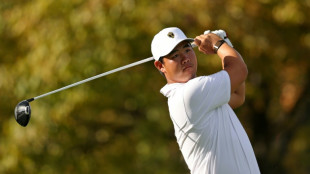
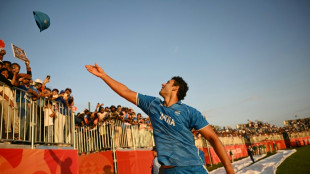 India beat arch-rivals Pakistan to win Asian Games cricket gold
 Ethiopia's Tigray rebels abandon regional capital as govt advances: journalist
 Tom Kim powers to Games gold and exemption from military service
When bombs are falling, can writers from across the warring sides still talk?
That question was brought into sharp focus this month when freedom of expression group PEN America became embroiled in controversy over Ukrainian and Russian dissident writers appearing at the same event.
Three Ukrainian authors, two of whom are active duty servicemen, were to speak at the PEN's World Voices festival in New York, but they raised objections on learning that Russian writers -- who are anti-war -- would be on a different panel at the event.
One of the Ukrainian writers, Artem Chapeye, a private in the military police, told AFP that appearing at the same festival as Russian writers could be seen as disloyal by his commanders and comrades.
"I realize that these people do not support (Vladimir) Putin's government, but I have obligations as a soldier," he told AFP.
PEN Ukraine president Volodymyr Yermolenko, who was involved in organizing Chapeye's trip, said no dialogue was possible until the war is over.
"While we're sitting in a chair with Russian representatives, our friends can die from Russian bullets," Yermolenko said.
Unable to find a compromise, two Russian writers and New Yorker journalist Masha Gessen called off their panel. Chapeye described the decision as "tactful."
Russian panelist Anna Nemzer said that although painful, she accepted the Ukrainians' refusal to engage with her.
"I have this damned passport, and with my language, with the fact that I lived there my whole life I am part of this, I cannot escape it," Nemzer, who left Russia after the war started, told AFP.
"It's a trap, it's unfair, but how can I even say the word unfair when we know what unfairness is: bombs flying."
- 'I would be too ashamed' -
Gessen, who emigrated from Soviet Moscow as a child, resigned from PEN America's board in protest at how the situation was handled.
"I believe that an organization that defends freedom of speech cannot cancel someone's speech," Gessen told exiled Russian TV channel Dozhd.
PEN America CEO Suzanne Nossel said she regretted the incident. "We should have found a better approach."
Earlier this month, a similar dispute unfolded in the Estonian city of Tartu where two Ukrainian poets declined to take part in a literary festival because Linor Goralik, a prominent Russian writer who publishes an anti-war magazine, was also invited.
Goralik, who was born in the city of Dnipro in then-Soviet Ukraine and holds Israeli citizenship, has launched a digital journal called Resistance and Opposition Arts Review, or ROAR, to counter Russian war propaganda.
Marja Unt, coordinator of the Prima Vista festival, told AFP that organizers disinvited Goralik after a spiraling social media storm over her participation led attendees from other countries to threaten to withdraw.
"The war crimes being perpetrated in Ukraine are being perpetrated in the name of Russian culture," Ukrainian poet Olena Huseinova told AFP of her refusal to speak at the festival.
"If I were a representative of Russian culture, I wouldn't find the strength to speak, I would be too ashamed," said Huseinova, who last February fled the besieged Ukrainian capital with only the clothes on her back. She has since returned to Kyiv.
Goralik declined to comment.
- Boycott Russian culture? -
The disputes highlighted the complexities faced by international organizations as they look to show solidarity with Ukraine but also engage with dissident voices from Russia.
While many opposition artists fled Russia, others have stayed and continued to speak out, losing jobs, facing harassment and arrest.
Shortly after Russian troops invaded Ukraine in February last year, PEN America's Nossel spoke out against a wholesale boycott of Russian culture.
"Cultural dialogues with independent-minded Russians are essential to illuminating the current crisis and conjuring paths past it," Nossel wrote in The Wall Street Journal.
Georgy Urushadze, who resigned as head of Russia's main literary prize and left the country after the war erupted, last month launched Freedom Letters, an independent digital publishing house to give a voice to anti-war Russians.
"I believe it is my duty to publish books that capture the sad Russian reality, it is important now and it will be important for future historians," Urushadze said.
How difficult any cultural reconciliation will be was evident at the Eurovision song contest this month, when Russian missiles hit Ternopil, the hometown of Ukrainian electronic music duo Tvorchi shortly before they took the stage in Britain.
Could dialogue between Ukrainian and Russian dissident artists be possible, even after the war is over?
To PEN Ukraine's Yermolenko, that would depend on whether there is "a process of repentance, true repentance."
W.Morales--AT