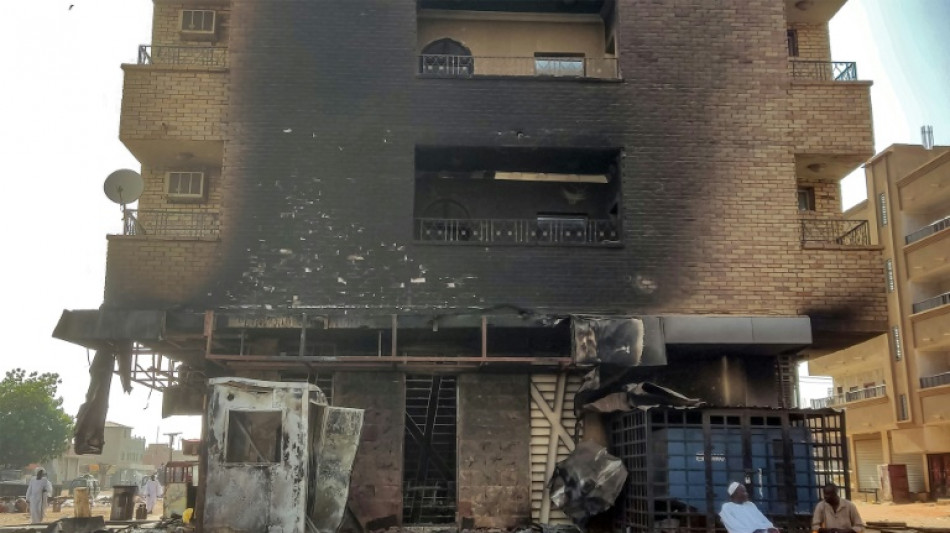
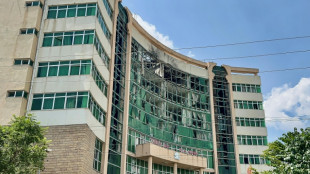
Sudanese still await relief on day two of tense ceasefire / Photo: - - AFP

 Zverev thrashes Shang to set up Djokovic quarter-final at China Open

 Turkey football ref chief jailed pending trial for graft
 North Korea says test of intermediate-range strategic missile included use of AI

 Rampant Sayers leads Hong Kong to third men's rugby gold in a row

 Ethiopia's Tigray rebels abandon regional capital as govt advances

 Bulgaria's Tsar Samuel returns 'home' after 1,000 years

 'Glad it's over': Kim powers to Games gold and military exemption

 After 11 World Cups, football finally comes home for one Indian fan
 Marc Marquez wins sprint at Japan MotoGP, Martin grabs pole

 Alcaraz fends off Arnaldi to reach Japan Open quarters

 Antonelli tops times in final practice at Bahrain GP
 Gauff digs deep to beat Osorio in China Open second round

 Fresh protests to hit Spain after housing measures defeated

 'He's here with me': Japan cycle queen dedicates gold to late brother
 Japan Olympic chief says 'lot more' athletes at Games than expected
 Asian carmakers besting US rivals at home, China poised to strike

 Widgets & Web Offers All-Inclusive Investor Relations Websites for Public Companies, IPOs and SPACs

 New "What Is a Gold IRA?" Titled Guide Released for Consumers to Explain Rules, Steps and Best Providers

 Botched US execution leaves murderer unconscious on ventilator: lawyers
 Cornell rape case exposes sexual violence at US colleges
 France held by Italy in Zidane's homecoming after Olise stunner

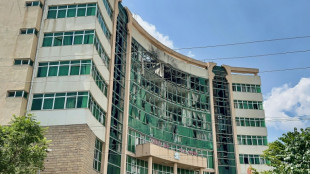 Ethiopian pro-government militia claims Tigray airport as regional tensions spike

 Ohtani shaking off injuries as Dodgers launch MLB post-season
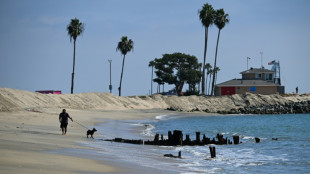 Sea levels to rise in California as coastal wave surges up west coast

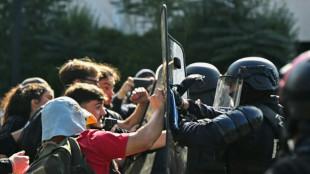 New rallies urged in France as protests disrupt over 730 schools

Fighting had eased but not stopped in Sudan on Wednesday, the second full day of a US and Saudi-brokered ceasefire that has raised cautious hopes among its beleaguered civilians that aid corridors and escape routes will open soon.
Sporadic artillery fire has still echoed across the capital but the two foreign powers observing the one-week truce said that "fighting in Khartoum appeared to be less intense" since it entered into force late Monday.
Washington and Riyadh voiced "concern" however that the warring sides had sought to gain military advantage in the lead-up to the truce and pointed to reports "indicating that both sides violated the agreement".
Nonetheless, they stressed that preparations were underway "to deliver lifesaving assistance" to the people of Sudan, who have endured more than five weeks of fighting that has claimed more than 1,000 lives.
The war broke out on April 15, sparking frantic mass evacuations of thousands of foreigners and forcing more than a million Sudanese to flee their homes internally and across borders.
The fighting pits Sudan's de facto leader, the army chief Abdel Fattah al-Burhan, against his former deputy, Mohamed Hamdan Daglo, nicknamed "Hemeti", who commands the paramilitary Rapid Support Forces (RSF).
The chaos has left millions hunkering down in their homes to hide from the combatants and roaming looters amid intense summer heat, power blackouts and desperate shortages of food, medicines and other staples.
"The whole country has been taken hostage", said the UN's expert on human rights in Sudan, Radhouane Nouicer. "People feel alone and abandoned."
- 'Trajectory of collapse' -
Hopes for quick relief from the fighting and suffering were dimmed by the fact that a series of earlier ceasefires were all quickly broken, with both sides trading blame for the violations.
US Secretary of State Antony Blinken has warned that "if the ceasefire is violated, we'll know" and pledged to "hold violators accountable through our sanctions and other tools at our disposal".
A mass exodus of Sudanese has meanwhile continued into neighbouring countries, including Chad, Egypt and South Sudan, sparking regional fears the conflict will spread across borders because of transnational ethnic ties.
Fighting has been especially deadly in the western Darfur region where Sudan's then dictator Omar al-Bashir unleashed the notorious Janjaweed militia in the early 2000s and some 300,000 people were killed.
The latest violence in El-Geneina, West Darfur state, has left all 86 reception centres for displaced people "completely burned down" and 85,000 people there on the move yet again, UN agencies have reported.
Sudan expert Alex de Waal warned that the "trajectory of state collapse" is now threatening "to turn Sudan as a whole, including Khartoum, into something that resembles the Darfur of 10-15 years ago".
He pointed to Daglo's roots in the Janjaweed and said that this "is the environment within which Hemeti thrived, where money and guns determine everything -– this is the future of Sudan if this carries on".
- 'Somali scenario' -
Medical aid workers meanwhile voiced alarm about dire shortages as fighting has left most hospitals destroyed, ransacked and even used as fire bases, particularly in Khartoum and Darfur.
"After the looting of one of our medical warehouses in Khartoum, fridges were unplugged and medicines removed," said Jean-Nicolas Armstrong Dangelser of aid group Doctors Without Borders. "The entire cold chain was ruined so the medicines are spoiled and can't be used to treat anyone."
He added: "We are experiencing a violation of humanitarian principles and the space for humanitarians to work is shrinking on a scale I've rarely seen before."
Like many Sudanese citizens, Yasser Abdelaziz, a civil servant in the northern town of Shendi, said he fears a war worse than other Middle East conflicts and more like the turmoil seen elsewhere in the Horn of Africa.
"I'm afraid that the scenario to come will not be Syria, Libya or Yemen," he said, "but the Somali scenario, with people driven by racism and tribalism".
P.Smith--AT