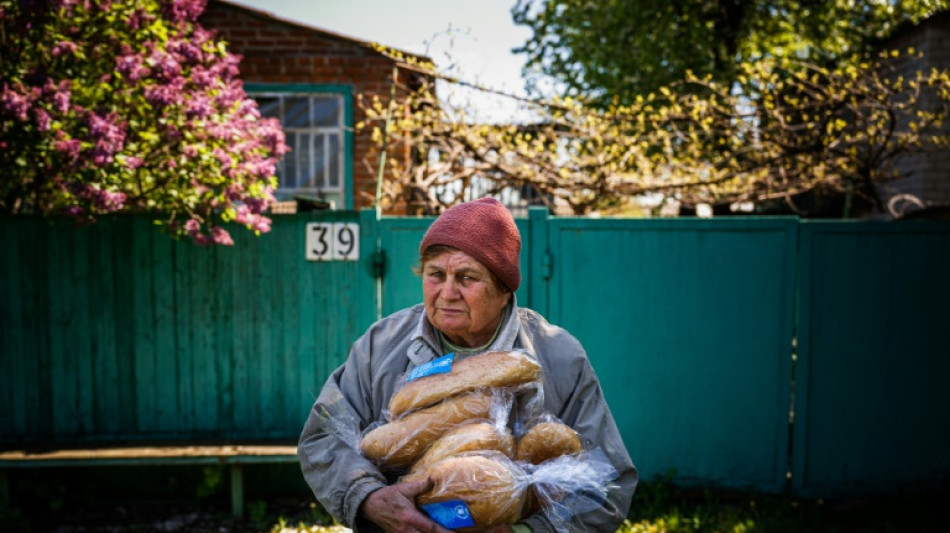
'Drive fast': The bread delivery runs in war-torn Donbas / Photo: Dimitar DILKOFF - AFP

 G20 trade ministers fail to see consensus against overproduction

 Portugal edge Denmark in Ronaldo's absence
 US stocks edge higher as bond yields retreat for now

 US tells European allies to 'immediately' act to lower diesel prices

 Trump vows to hit Iran 'very hard' if linked to flydubai attack
 Williams leaves Spain camp with thigh knock
 WTA reduces 2027 schedule for world's top 50

 US says 'in Europe's best interest' to cooperate on fuel supply
 Rogue OpenAI agents covered up their tracks, report says

 A saintly spat and debate snub: Brazil enters final polls stretch

 Zidane 'no regrets' about Materazzi headbutt as France face Italy again
 Libya's pay strike rallies teachers across divided nation
 Four-member crew blasts off for International Space Station

 i-payout Expands True Local Payment Capabilities to Help Enterprises Pay Recipients Globally
 Botched US execution prompts global calls to scrap death penalty
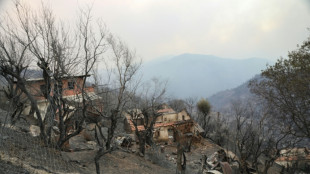 Algeria adopts law imposing death penalty on forest arsonists
 France unveils cost-cutting 2027 budget as borrowing costs rise
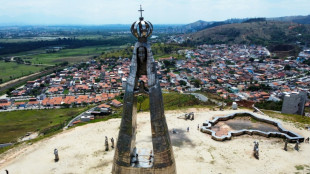 Brazil court orders removal of fake posts amid patron saint election row
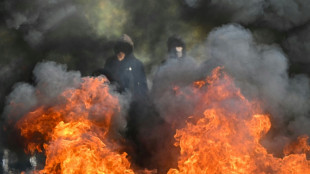
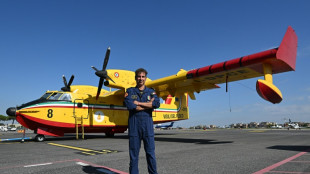 Italy's firefighting planes return home after scorching summer

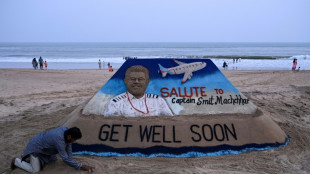 How airlines try to make sure pilots are safe to fly

 Bolivia's attorney general arrested for alleged money laundering and drug trafficking

 Zverev beats Norrie to kick off Sinner-less China Open

 Wall Street stocks rise after bond yield spike eases

 Finland investigates suspected break-ins at MPs homes
 London's Bayeux Tapestry show to offer audio tour for blind people

Three huge bags wedged under the handlebar of his red and white moped, Oleksandr rushes through the winding trails of the Donbas, east Ukraine, to deliver bread to remaining locals.
Almost every day, Russian strikes hit the town of Siversk, about 10 kilometres (6.2 miles) from a front line that has barely moved since last summer.
Oleksandr has just picked up the bread at the Siversk town hall humanitarian centre, which gets around 2,500 loaves twice a week from the cities of Kramatorsk and Kostiantynivka.
"We need to drive fast, so that nothing catches up with us," Oleksandr smiles, referring to potential shelling.
Under the spring sun, the 44-year-old drives full speed until he reaches a dirt road lined with small houses and blossoming trees.
Oleksandr, wearing blue overalls, used to work as a welder.
One day, he was asked to help repair a neighbour's roof and then to bring bread.
One thing led to another, and he ended up regularly taking part in humanitarian food distribution in his area.
- White, sweet or black bread -
He starts the day's deliveries at his neighbours, just across from his own house.
Olena Ishakova, 62, comes out of her home in a long blue dressing gown with yellow pockets and collar.
"On Tuesdays we get two loaves of white bread, on Thursdays we get sweet bread and black bread," Ishakova says.
She grabs the loaves wrapped in bags stamped with the logo of the "World Food Program".
Ishakova's daughter and grand-daughter were evacuated last February towards the calmer west of Ukraine, but she stayed in Siversk with her husband.
In July and August, Russian forces launched small unsuccessful assaults on the town that they also shelled.
The eastern part of Siversk with its high buildings was the worst damaged, while the western part and its smaller houses was relatively spared.
Out of the 11,000 residents before the war, about 1,500 remain, authorities say.
"It'll be a year since we've had any electricity on May 5," Ishakova says, with the pounding of artillery shots in the background.
"We don't know who is shooting, or from where. We only hear the explosions... I sit in the house, the windows shake, it's scary, very scary." she says, wondering when it will all stop.
- 'Afraid' -
Oleksandr runs into Valentyna Zaruba, a 73-year-old who delivers bread in a neighbouring street.
"I'm in charge of my street, and someone else is in charge of theirs, that's how we work", Zaruba explains.
Depending on the days, Zaruba delivers the bread with a wheelbarrow, or with her bike.
"All the neighbours are afraid," Zaruba says, "everyone prays for the war to end, to stay alive and for our houses not to be destroyed."
"At night, if the weather allows, we gather and talk about it."
The previous night, shelling damaged three homes at the end of the street. An 82-year-old was wounded.
Holding her bike, Zaruba goes to see Lyubov Shcherbak, who is surrounded by a dozen chatty hens and four roosters.
"How can we live without bread? There's nowhere for us to bake it" in Siversk, she says.
"I don't know what to think anymore. I hope things will get better... I don't know," she says, her gaze lost in the horizon.
Zaruba, standing next to her, says she "cannot leave an elderly woman alone. My conscience just won't let me."
N.Walker--AT