Foreign aid stalls as Africa's debt spirals
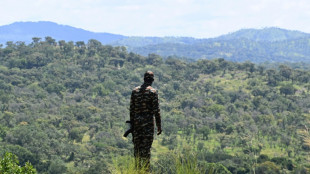
/ Photo: Nipah Dennis - AFP

 In Manchester, people say City scandal is 'shame for football'
 Stocks lacklustre as inflation data weighs on sentiment
 Israel-bound plane rerouted, pilots wounded in reported fight

 Truth commission on Sweden's Sami people seeks redress

 Energy costs spark inflation surges in France, Italy

 South Korea break China hearts to reach Asian Games football final
 Eala storms into Asian Games semi-finals to thrill adoring fans

 Turkey freezes ex-minister's assets as fund crisis grows

 What we know about the North Korean POW dispute

 Most equities rise after oil price plunge, US data in focus

 Polar oceans transformed as warming melts ice habitats: research

 Lost shark becomes viral star in South Korea
 Dangote to launch $16bn refinery in Kenya

 North Korean leader 'extremely obese': Seoul spy agency

 Yankees and pope-backed White Sox start MLB playoffs with wins

 Malaysia's ex-PM Mahathir in hospital for observation
 'No limits': Marathon world record holder Sawe chasing history

 Countdown begins to biggest-ever Rugby World Cup

 Bangladesh women lose ground after quota reform

 Vietnam admits 'differing opinions' on Hanoi development
 Stocks temper gains as oil pares heavy losses, US data in focus
 New Zealand denies breaching climate commitments to EU

 Albert becomes youngest US scorer in 4-2 win over Chile
 Pirate island's plunging population shows Greece's demographic decline
 With elections ahead, Latvia's Russian-speakers reject Moscow's help

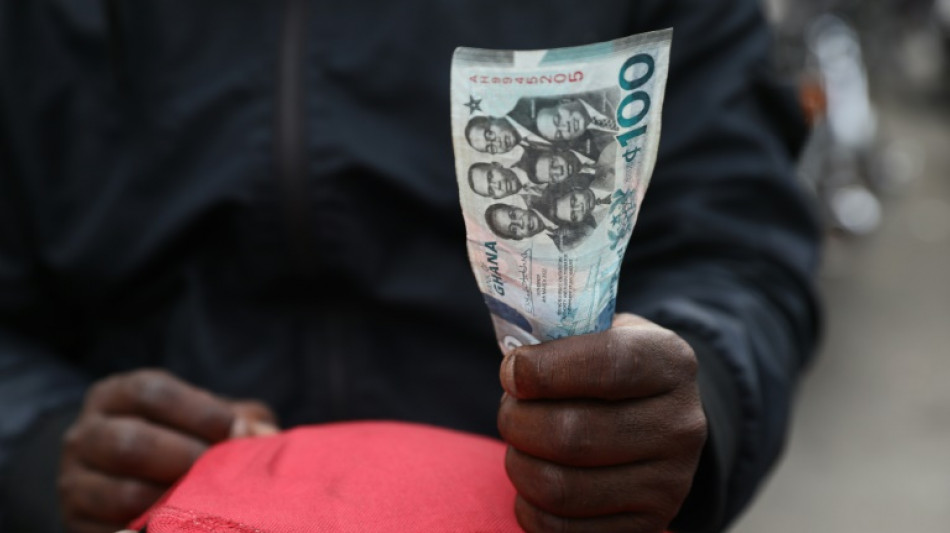
Africa is battling decades-high levels of debt after the pandemic and Russia's invasion of Ukraine, but the international community is struggling to agree on extending its financial support for the region.
The International Monetary Fund (IMF) said in a report Friday that public debt and inflation in sub-Saharan Africa were "at levels not seen in decades".
Public debt in the region stood at 56 percent of gross domestic product at the end of last year, its highest level since the beginning of the 2000s, said the IMF, which has lowered its growth forecast for sub-Saharan Africa to 3.6 percent for this year.
The Washington-based institution said the continent was hit by several problems at once, from rising borrowing costs to the impact of the Ukraine conflict and a drying up of international aid.
Borrowing costs in the region are three times higher than those of developed nations, the IMF said.
Meanwhile, the Organisation for Economic Co-operation and Development this week noted a decline in development aid for Africa last year -- while it surged for Ukraine.
The problems facing Africa "could worsen debt problems -- these are already high -- and there could be a risk that more countries are moving from liquidity problems to the inability to roll over debt and solvency problems", warned Catherine Pattillo, deputy director of the IMF's Africa department, in an interview with AFP.
That could hit crucial services and dent future growth, she said, in a region where 132 million people face acute food insecurity.
"We are concerned that the funding squeeze could lead to more shortages of funding that could force countries to have to reduce spending for critical development needs, education, health," Pattillo said.
"And that would have very negative implications for growth and development."
- 'Way too slow' -
Twenty-two countries either face a high risk of, or already have excessive debt, the World Bank said in a report published early this month.
Ghana and Zambia, which have both defaulted on loans, are among the 22, as are Malawi and Chad, which are receiving IMF help.
John Likumbi, a barber at Kabwata market in a middle-class district of Zambia's capital Lusaka, is feeling the pinch.
He said he had been taking home less income over the past year compared to previous years, as people face a choice between spending on a haircut or buying food.
"On a bad day I stay without cutting anybody's hair because people would rather spend the 30 kwacha (around $1.64) on buying pamela (local term for a small packet of the staple cornmeal)," he told AFP.
"Previously I used to knock off with at least 300 kwacha but now I can even knock off with 30 kwacha," Likumbi said.
Zambia is a case in point for the challenges facing the international community.
Negotiations on restructuring its debt -- a key step towards unblocking the IMF's aid plan for the country -- have been under way for two years without any apparent success.
The process is part of the G20's common framework for the restructuring of debt of the poorest nations which can often be blocked by China, now a key lender in Africa.
"It is going slow and way too slow," Anna Bjerde, the World Bank's managing director of operations, told AFP.
"We really believe this needs to be accelerated and it's really about getting two major parties fully participating -- it's the official creditors and the private actor participation," she added.
Promises have been made in the past and not kept, such as a pledge to increase financing to help poor countries adapt to climate change to $100 billion a year.
However, there are some signs of progress.
The IMF said Thursday that Beijing would respect its commitments on Zambia, while India, which this year heads the G20, said it hoped to see a debt restructuring agreement quickly for several countries including Ghana and Zambia.
The World Bank -- during this week's spring meetings in Washington which bring developed countries together with the lender and the IMF -- announced a $50-billion hike in the lending capacity of its subsidiary, the International Bank for Reconstruction and Development.
Other development bank reforms are also on the agenda this week, aimed at encouraging them to increasingly work together, lend more and see greater participation by the private sector.
O.Gutierrez--AT