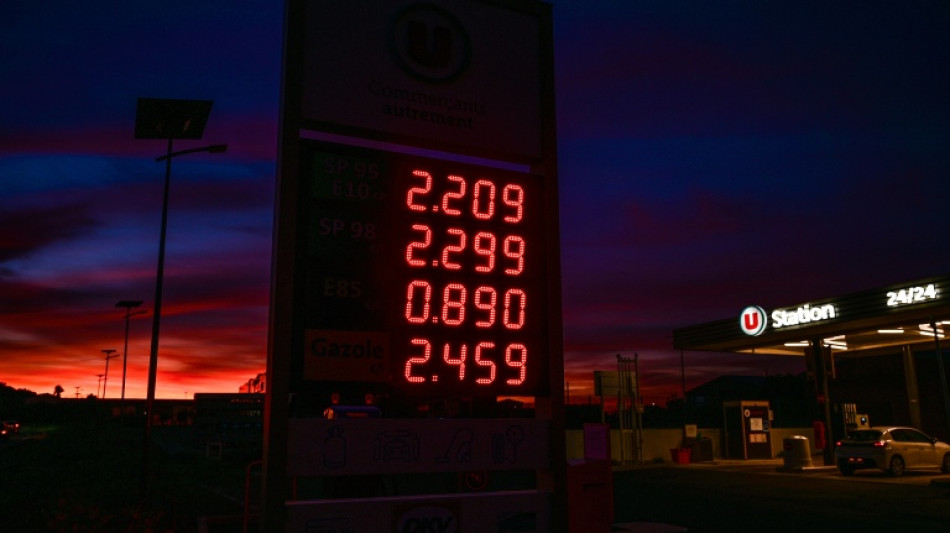
Energy costs spark inflation surges in France, Italy / Photo: Gabriel BOUYS - AFP

 Zach Hickerson Recounts Hayden Panettiere's Final Moments in New Interview

 Luxembourg Housing Petition Passes Threshold for Parliamentary Consideration

 Raheem Sterling Receives Suspended Sentence After Lamborghini Crash

 Audience to Choose the Set List at Luxembourg's First FAMIL Jukebox Night

 Luxembourg Pay Rise Delayed as Regional and World Headlines Develop

 Chennai Urbanist Sashna Develops 'Anniki' Card Game to Gamify Tamil Nadu History

 Transport Minister Defends Land Seizure Powers for Toronto-Quebec City High-Speed Rail

 UAE Weather Forecast: Scattered Showers and Fog Expected as Temperatures Drop
Inflation rates jumped in France and Italy in September as energy and fuel costs soared because of the Mideast war, official data showed Wednesday.
The annual rate hit three percent in France, the highest since February 2024 and a sharp increase from 2.4 percent in August, statistics office Insee said.
In Italy inflation jumped to 4.2 percent, nearly a full percentage point above the 3.3 percent recorded in August, the Istat agency reported.
The price hikes are well above the European Central Bank's inflation target of two percent, raising the likelihood it will raise interest rates further.
Diesel prices in particular have hit record highs in France, Italy, Germany and several other eurozone countries in recent weeks, a result of the Middle East war that has slowed shipments of both crude oil and refined fuels from the Gulf.
That has raised expectations among analysts that the ECB will have to tighten monetary policy further in the coming months to rein in inflation, potentially weighing on the eurozone's economic growth.
The central bank raised its benchmark rate to 2.5 percent earlier this month.
Germany is also set to release inflation data later Wednesday, ahead of the full eurozone reading on Friday.
Analysts at ING said the French figures "suggest that inflation is likely to remain above three percent for the rest of 2026 before gradually declining in 2027".
That will weigh on household purchasing power "at a time when consumption is weakening and rising interest rates are exacerbating France's fiscal difficulties" they said.
Consumer spending fell 0.5 percent in France in August, Insee also reported Wednesday, and the country's public debt stood at 119 percent of GDP in the second quarter -- nearly double the eurozone limit of 60 percent.
A.O.Scott--AT