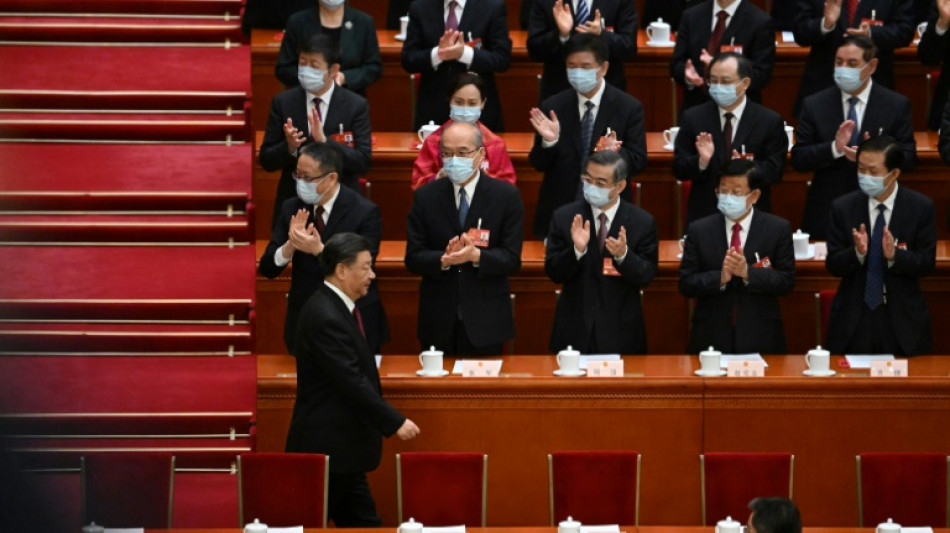
What to expect from Xi's next five years as Chinese president / Photo: NOEL CELIS - AFP

 أليكس بودي والبروفيسور الدكتور ديتر لازيك يوقعان عقدًا بشأن منتجي «ألفا ويل» و«بودي إنيرجي درينك»

 알렉스 보디와 디터 라지크 교수가 ALPHA WHEY 및 BODI 에너지드링크에 관한 계약을 체결했습니다.

 亞歷克斯·博迪(Alex Bodi)與迪特爾·拉齊克(Dieter Lazik)教授簽署關於 ALPHA WHEY 及 BODI 能量飲料的合約

 Алекс Боді та проф. д-р Дітер Лазік уклали договір щодо ALPHA WHEY та Боді Енергетичний напій

 Алекс Боди и проф. д-р Дитер Лазик заключили договор о выпуске продуктов ALPHA WHEY и BODI Энергетический напиток

 West Indies reach 295-7 after Greaves ton in India ODI

 England closing the gap on Spain says Kane

 Inspired Wallabies notch statement Test win over Springboks

 Assefa's world record bid at Berlin Marathon foiled by injury

 Alex Bodi and Prof. Dr Dieter Lazik sign a contract for ALPHA WHEY and BODI Energy Drink

 Swiss reject plan to toughen neutrality: projection

 UK police call in bomb disposal team near air force base

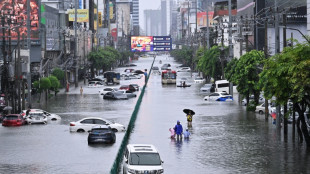 Bangkok floods send thousands into shelters after days of rain

 Assefa just misses women's world record at Berlin Marathon

 Dramatic winners Zimbabwe to end five-year exile by tackling DR Congo

 Pope to meet victims of clerical sex abuse on France trip

 How young is too young as child prodigies win big at Asian Games

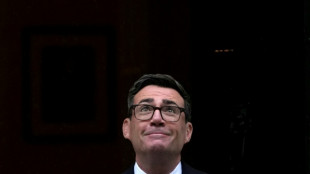 UK Labour party meets buoyed by Burnham but eager for concrete plans

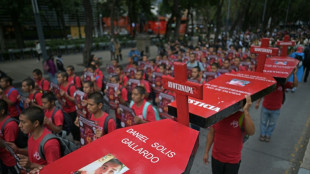 Thousands protest ahead of Mexican president's report on missing students
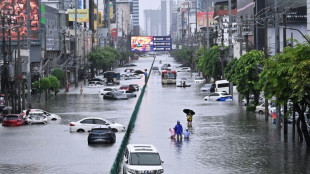 Bangkok floods force thousands into shelters

 AI startup urges optimism from Europe despite safety fears

 'Godlike, invincible': Japan hails 11-year-old Games history-maker

 Nepal's hydropower ambitions face climate reality check

 Power cuts, rubble: millions come home to find Sudan's capital unlivable

 Internationals keep Presidents Cup lead with late fightbacks

Xi Jinping on Friday sealed a historic third term as China's president.
AFP examines how he is expected to handle the key issues facing the country:
- Slowing economy -
China's slowing economy will likely dominate Xi's next five years but his decision to pack the Communist Party's top leadership with loyalists has stoked concerns about him prioritising ideology at the expense of growth.
The world's second-largest economy expanded just three percent last year, widely missing its target of around 5.5 percent in the face of strict Covid curbs and a simmering property crisis.
Beijing has set a growth target of "around five percent" for 2023, one of the lowest in decades.
And Xi's picks for top government jobs suggest the days of liberal reformers steering the economy have come to an end, while his track record of propping up heavy industry and cracking down on big tech suggests a more state-led approach is here to stay.
While he has thrown his weight behind the development of a more consumption-driven economy -- a policy known as "dual circulation" -- his calls for addressing China's yawning wealth gap under the banner of "common prosperity" have gone quiet in recent months after giving investors the jitters.
With the United States promising to prioritise maintaining "an enduring competitive edge" against China as they battle for dominance over technology, Beijing may find itself under growing pressure internationally as growth slows at home.
- Tensions with the US -
Relations between Beijing and Washington have been on a steady decline in recent years, with the two sides butting heads over a number of issues including trade, human rights and the origins of Covid-19.
A planned visit by US Secretary of State Antony Blinken last month was cancelled at the last minute after the United States shot down a Chinese balloon it said was conducting surveillance over US territory -- a claim strenuously denied by Beijing.
Since then, Chinese diplomats have kept up a steady drumbeat of anti-US criticism, with Foreign Minister Qin Gang this week warning of "conflict and confrontation" with potentially "catastrophic consequences" if Washington does not change tack.
Xi himself also made a rare direct rebuke of Washington this week, accusing "Western countries led by the United States" of trying to thwart China's rise.
The countries in question "have implemented all-round containment, encirclement and suppression of China, which has brought unprecedented severe challenges to our country's development", Xi said, according to state news agency Xinhua.
- Taiwan threats -
After ratcheting up tensions with Taiwan, an emboldened Xi could decide the time is right to fulfil Beijing's longstanding ambition of seizing the self-ruled democratic island.
China's sabre-rattling towards Taiwan has become more pronounced in recent years.
A visit by the then US House Speaker Nancy Pelosi last year prompted a furious Beijing to hold its biggest military drills around the island in years.
The Communist Party for the first time enshrined its opposition to Taiwanese independence in its constitution in October.
Any move to invade Taiwan would wreak havoc with global supply chains given the island is a major supplier of semiconductors -- an essential component of nearly all modern electronics.
It would also provoke outrage from the West, deepen China's isolation, bring Beijing and Washington closer than ever to direct military confrontation and snuff out Taiwan's hard-earned democratic freedoms.
China on Sunday said its military budget would rise at the fastest rate for four years, as outgoing Premier Li Keqiang warned of "escalating" threats from abroad.
Drew Thompson, a visiting senior research fellow at the National University of Singapore's Lee Kuan Yew School of Public Policy, said the "sustained, year-on-year" spending increases made Beijing's claim that its military modernisation does not threaten its neighbours "ring hollow".
China's concurrent lack of openness is "destabilising" and "fuelling a cycle of worrisome deterrence signalling that China is quick to blame on other parties, without acknowledging its own explicit actions and policies", he told AFP.
- Human rights -
China under Xi has seen the almost-total eradication of civil society -- scores of activists have fled the country and opposition to the government has been all but snuffed out.
In the far-western region of Xinjiang, rights groups say more than a million Uyghurs and other Muslim minorities are detained in what the United States and lawmakers in some Western countries have said amounts to genocide.
The situation looks unlikely to improve in the next five years as Xi's power grows increasingly impossible to challenge and the leadership digs in its heels against international pressure.
N.Walker--AT