Swamped by state media, Russians near Ukraine toe the line

 Trump, White House post video of UK man killed by tiger

 Saudi employee arrested for allegedly bugging OpenAI office
 Atletico sink Man Utd as Viking deny Bayern in Champions League
 Man United's Martinez blasts board's lack of investment

 Meet A7 International, an Innovative Global Platform Designed to Reinvent the International Payments Market

 Shakhtar hope London move a reminder of Ukraine conflict

 Tresoldi hat-trick fires Brugge past Inter Milan

 Rams axe kicker Mevis after misses cost victory over Bills: reports

 Yamal stays cool at boiling Galatasaray to lift Barcelona to victory
 Arsenal cruise past Lille into share of Champions League lead

 Trump ousts Greece ambassador over ethics scandal

 Reese Witherspoon, France's Mediawan to buy Hello Sunshine

 Bipartisan US senators urge Trump to scrap Russian diesel deal
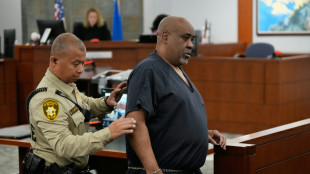 Ex-gang leader sentenced to minimum 40 years for Tupac murder
 Cornell suspends frat parties after alleged gang rape

 Man City deserve to keep titles, says PSG's Luis Enrique

 Regulator 'will resign' if any political interference in Man City case

 Microsoft's Brad Smith calls for 'real and effective' AI safety standards
 Anthropic warns of AI 'worms' spreading across smart gadgets

 Big US banks report strong earnings and stay bullish on AI
 Iraola backs Barcola, Wirtz to come good for Liverpool
 In a first, AI helps UK lawmaker find her voice in parliament
 Pope Leo in Rome hospital for lung operation

 EU watchdog says smart glasses must give 'clear warnings' when recording
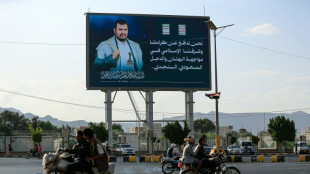 Houthis say Saudi Arabia strikes oil site in Yemen's capital

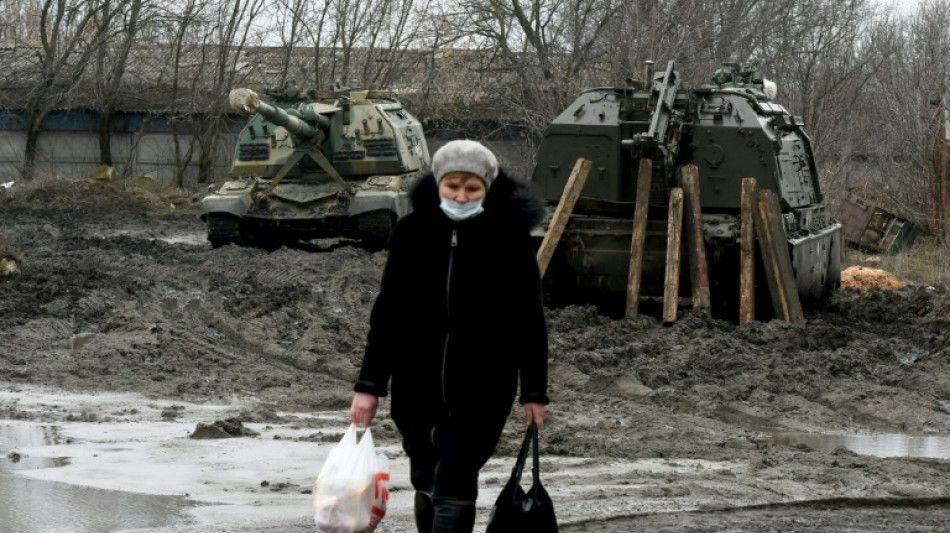
As the Kremlin's forces unleash devastating firepower in Ukraine, some Russians living near the frontier are buying the government's line portraying the invasion as righteous and necessary.
It is a line obediently parroted by state media, and the campaign to convince the population appears to be working in some parts.
"Bombardments in Kyiv?" asks 80-year-old Vladimir Karavayev doubtfully when questioned by an AFP journalist.
"There can't be any other solution then," he says eventually.
He regularly watches the evening news on Russia's tightly-controlled state television, and doubts there will be a "major conflict".
"And anyway, over there, there's injustice and the Nazis are in power," he adds before shuffling off with his bicycle.
Russian President Vladimir Putin has repeatedly called the leadership in Ukraine "Nazis" in his various justifications for the assault on the country.
The Kremlin invaded its pro-Western neighbour on Thursday, in what Putin branded a "special military operation" to support Russian-speaking separatists in the east who were facing a "genocide".
He said Russia was looking to "demilitarise" and "de-Nazify" Ukraine.
It's a narrative trotted out by loyal officials and state media, especially state TV viewed by millions across Russia every day.
Russian authorities closely dictate media coverage in the country, and this week banned the press from citing anything other than official state sources to report what is happening in Ukraine.
Independent newspapers and online outlets have been taken over by Kremlin cronies or snuffed out, and a growing number of journalists targeted as "foreign agents".
Moscow's justification for the assault is denied by Kyiv and derided internationally as a falsehood spread to justify military aggression.
- 'Putin will protect us' -
But in Russia, it's a different story.
Lyudmila Yakovenko, 38, works on a farm a few dozen kilometres from the border with east Ukraine, where Kremlin-backed separatists had carved out two enclaves.
Currently on maternity leave, she says she can hear the sound of the war when the wind blows in her direction.
"Especially in the evening, we really hear the shooting, the planes," she says, holding her young daughter by the hand.
She follows official news outlets and says she "has the television on all the time".
For her, it is the Ukrainians who are attacking Russia.
"We hope that Putin will protect us from... the Ukrainians. Putin spoke to the Ukrainians and said: put down your weapons, go home," she says.
"Our soldiers are at the border but they don't shoot, Putin doesn't allow them to open fire, he doesn't want this war."
Standing under a statue of Russian revolutionary Vladimir Lenin in a border village, 54-year-old Yevgeny Kotegov insists there is no fighting or Russian attack.
"Russia is conducting tactical training on its own territory. Their mission? It's not to allow an invasion of Russia," says the retired military academy instructor.
Nikita Mishenko, 28, is alone among those with whom AFP spoke to have any doubts about what he sees on television and reads in the newspapers.
"I know that there are outbreaks of war", the electronics repairman begins timidly.
"You shouldn't believe everything you see on TV and on social media. You have to think for yourself."
He is the only one who has heard about the battles raging around the key southern port city of Mariupol or the offensive towards Kyiv.
"Both sides have their reasons and their faults," he says.
Others agree. On Thursday, anti-war rallies were held across Russia as thousands took the streets to denounce Putin's invasion.
More than 1,800 people were arrested in several cities, according to reports Friday.
A.Anderson--AT