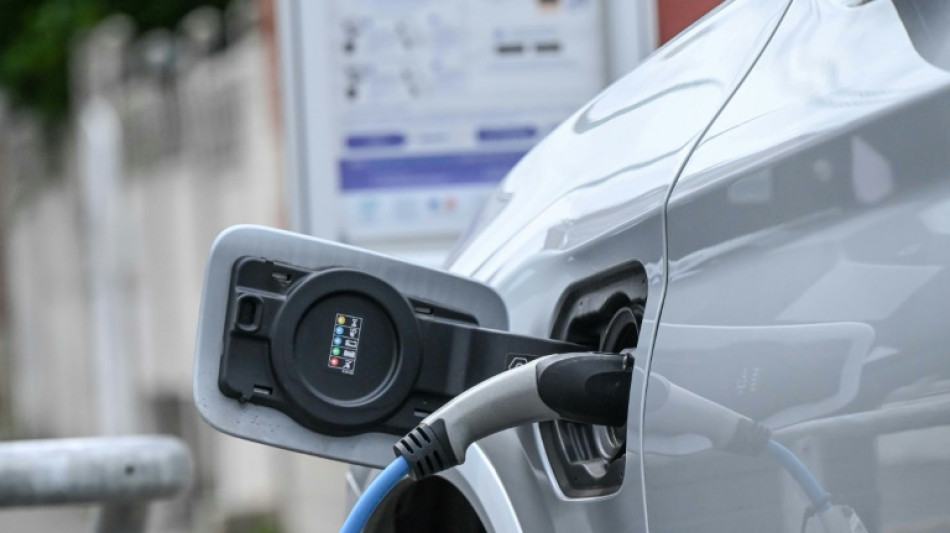
EU to ban fossil fuel cars, slash truck and bus emissions / Photo: DENIS CHARLET - AFP/File

 Streamex Converts Interest Into Capital as GLDY Investment Strategy Secures $1M+ Institutional Allocation

 STARTRADER Named Best Fintech Forex Broker at Forex Expo Dubai 2026
 Japan swimmer Ohashi, 17, shrugs off Covid to smash world record
 Shin Ohashi: Junk food-loving teen and new world record-holder

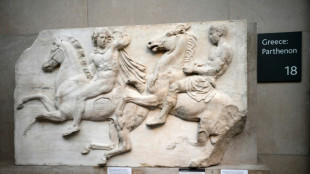 Greek PM urges 'courage' in talks with UK over Parthenon Marbles
 'I was drowning': Iran Nobel winner exposes pain of separation from children
 Israel's US envoy says son fighting for life
 Olympic champion Yulo completes gymnastics gold collection at Asian Games
 England cannot imitate Spain's success, says Gordon
 Hungary detects invasive spotted lanternfly for first time in EU

 Ο Alex Bodi και ο καθηγητής Δρ. Stefan Haupt συμφωνούν σε συνεργασία για μια θρυλική συλλογή έργων τέχνης στη Ρουμανία
 France's top-selling newspaper to slash jobs
 Tigray rebels in 'full-blown' war with govt

 Alex Bodi och prof. dr Stefan Haupt ingår samarbetsavtal om en legendarisk konstsamling i Rumänien

 อเล็กซ์ โบดี และศาสตราจารย์ ดร. สเตฟาน ฮาปท์ ตกลงร่วมมือกันในการจัดตั้งคอลเลกชันศิลปะอันเป็นตำนานในโรมาเนีย

 Alex Bodi a prof. dr. Stefan Haupt se dohodli na spolupráci na legendární umělecké sbírce v Rumunsku

 알렉스 보디와 슈테판 하우프트 교수, 루마니아의 전설적인 미술품 컬렉션을 위한 협력 합의

 BaazEX Enters the Asian Trading Market With a New Approach to Online Forex Trading.
 Asian markets fall on US-China jitters as leaders meet
 Thais hail teen rocker Nene for 'America's Got Talent' win
 Zverev, Agassi defend 'spectacular' Laver Cup
 Eel-powered Japan whizz-kid, 11, dominates in historic Games debut
 Madagascar's Gen Z 'betrayed' after ushering in new rule
 As Moscow steps up attacks, Kyiv residents brace for harsh winter
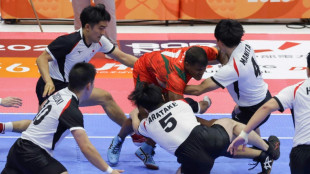 Comic inspires unlikely kabaddi dreams for Japan's Asian Games amateurs

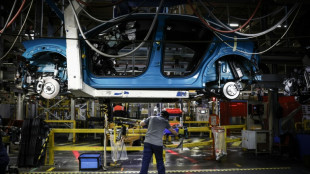
The European Union will ban new sales of fossil fuel cars from 2035, after MEPs approved a new law Tuesday, as Brussels also draws up plans to slash carbon emissions from trucks and buses.
European Union member states have already approved the legislation on cars and vans and they will now formally nod it into law, but much debate lies ahead on proposed measures against larger freight and passenger vehicles.
Supporters of the car bill -- passed in the European Parliament in Strasbourg -- argue it gives European automakers a clear timeframe to switch production to electric vehicles and will spur investment to counter competition from China and the United States.
This, in turn, will also support the European Union's ambitious plan to become a "climate neutral" economy by 2050, with net-zero greenhouse gas emissions.
"Let me remind you that between last year and the end of this year China will bring 80 models of electric cars to the international market," EU vice president Frans Timmermans warned MEPs.
"These are good cars. These are cars that will be more and more affordable, and we need to compete with that. We don't want to give up this essential industry to outsiders."
But opponents argue that neither industry nor many motorists are ready for such a dramatic end for internal combustion engine vehicles -- and that hundreds of thousands of jobs are at risk.
"Our proposal is ... to let the market decide what technology is best to reach our goals," said MEP Jens Gieseke, a member of the centre-right European People's Party (EPP).
Gieseke declared that arguments from Green and socialist MEPs that electric cars are cheaper to run had been rendered "null and void" by the crisis of soaring energy costs.
"In Germany 600,000 people work on ICE production, those jobs are at risk," he declared.
The EPP group warned of what it said would be the "Havana effect" -- Europeans continuing to drive vintage fuel-burning cars after new sales are banned because they can't find or afford an electric.
Opponents also say car batteries are produced abroad by Europe's competitors like the United States, but Timmermans argued that thanks to EU-backed investment European production would increase.
Green MEPs stressed the importance of the ban in reducing emissions and pollution.
- Victory for the planet? -
Karima Delli, chair of the transport committee, declared: "Today's vote is a historic vote for the ecological transition ... it is a victory for our planet and our populations"
Separately from the vote in the parliament, the EU's executive -- the European Commission -- unveiled its plans to reduce emissions from heavier vehicles.
This text may yet change during a lengthy negotiation process with the parliament and EU member states.
It proposes a timetable for reducing the emissions of trucks of more than five tonnes and long-distance buses (more than 7.5 tonnes), which have comparable engines, by tightening emissions standards from 2030.
From January 2030, new trucks' emissions must be reduced by at least 45 percent compared to 2019 levels. These emissions must then be cut by 65 percent from January 2035 and by 90 percent from January 2040 -- again relative to 2019 levels.
City buses must be emissions free from 2030, but the European Commission said manufacturers could pick their own technology to achieve this, citing electric motors, hydrogen engines and hydrogen fuel cells.
Cars currently account for about 15 percent of all CO2 emissions in the EU. Trucks, city buses and long-distance buses account for another six percent.
- US green subsidies -
Car-making giant Germany and conservative MEPs have been dubious about the new rules, fearing the burden of re-tooling their plants and retraining workers while global rivals have looser targets.
Since the law began its journey through the EU legislative process, the United States has unveiled a huge plan to subsidise the green transition of its own industry with government hand-outs.
This has led to fears in Europe that its US rival will siphon away investment and jobs in electric vehicle and battery production.
Meanwhile, China -- the world's biggest automobile market -- wants at least half of all new cars to be electric, plug-in hybrid or hydrogen-powered by 2035.
M.White--AT