US restricts import of Afghan cultural items to prevent 'pillage'

 Atletico sink Man Utd as Viking deny Bayern in Champions League
 Man United's Martinez blasts board's lack of investment

 Meet A7 International, an Innovative Global Platform Designed to Reinvent the International Payments Market

 Shakhtar hope London move a reminder of Ukraine conflict

 Tresoldi hat-trick fires Brugge past Inter Milan

 Rams axe kicker Mevis after misses cost victory over Bills: reports

 Yamal stays cool at boiling Galatasaray to lift Barcelona to victory
 Arsenal cruise past Lille into share of Champions League lead

 Trump ousts Greece ambassador over ethics scandal

 Reese Witherspoon, France's Mediawan to buy Hello Sunshine
 Bipartisan US senators urge Trump to scrap Russian diesel deal
 Ex-gang leader sentenced to minimum 40 years for Tupac murder

 Cornell suspends frat parties after alleged gang rape
 Man City deserve to keep titles, says PSG's Luis Enrique

 Regulator 'will resign' if any political interference in Man City case

 Microsoft's Brad Smith calls for 'real and effective' AI safety standards

 Anthropic warns of AI 'worms' spreading across smart gadgets

 Big US banks report strong earnings and stay bullish on AI
 Iraola backs Barcola, Wirtz to come good for Liverpool
 In a first, AI helps UK lawmaker find her voice in parliament
 Pope Leo in Rome hospital for lung operation

 EU watchdog says smart glasses must give 'clear warnings' when recording
 Houthis say Saudi Arabia strikes oil site in Yemen's capital
 France roiled by marches in support of protesting students

 Goldman Sachs profits jump as CEO says no plans to exit
The United States has restricted the import of cultural and historical items from Afghanistan, hoping to prevent "terrorists" from profiting, the State Department said Tuesday, but experts voiced fears about the unintended consequences.
The decree, which was implemented on an "emergency" basis and took effect on Friday, includes restrictions on bringing ceramics, paintings, glass, ivory, ancient textiles, tiles and wood pieces, among others into the country, according to a government list.
The restrictions "are intended to prevent illicitly trafficked materials from entering the US art market, thus reducing the incentive for pillage of Afghanistan's cultural heritage and combatting profit from the sale of these cultural objects by terrorists and criminal organizations," the State Department said.
But they come after an April 2021 request from the US-backed Afghan government -- which fell to the Taliban in August.
"Can the State Department act based on a 'request' of a government that no longer exists?" ancient coin collector and advocate Peter Tompa asked in a post on his blog the Cultural Property Observer.
"The real question is how these restrictions are going to be enforced and if any material that may be seized will be repatriated to the Taliban once diplomatic relations (with the United States) are restored," he wrote.
- Taliban 'investigating' looting -
Restricted archaeological material dates from the year 50,000 BC through 1747, and restricted cultural material includes items from the ninth century through 1920, the government said.
The new regulations could create logistics issues for collectors or curators who already have items on their way to the United States as auction houses prepare to sell pieces during Asia Week New York next month, art publication The Art Newspaper pointed out.
For Tompa, one upside to the import rules, which are set to remain in force until April 2026 and could be extended, is that they do not seem to include bans on modern textiles.
"If it did, such import restrictions would potentially devastate the livelihoods of Afghan women who make a living weaving textiles for export," he wrote.
Last year, UNESCO called on the Taliban to help preserve Afghanistan's cultural heritage.
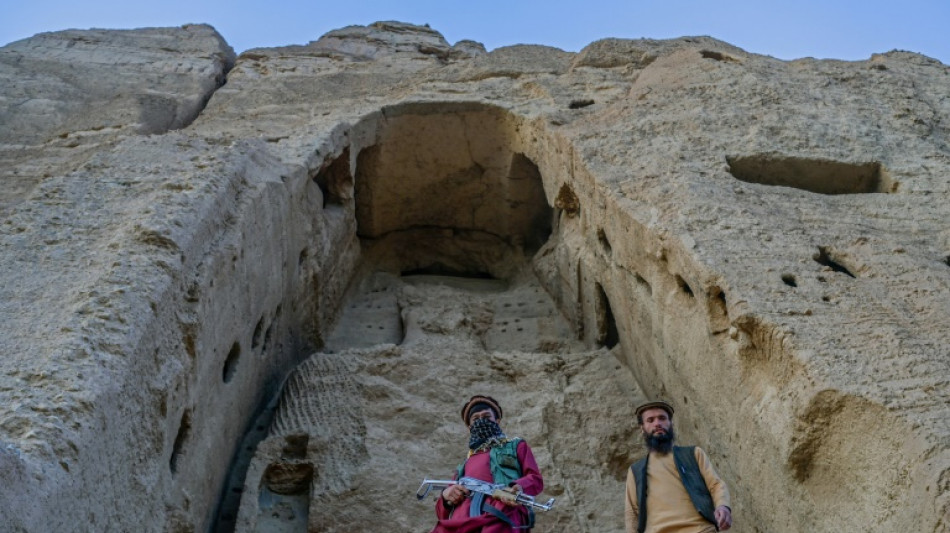
Shortly before their first stint in power came to an end in 2001, the Taliban destroyed two giant centuries-old Buddha statues carved out of a cliff face in Bamiyan, sparking global outrage.
And local officials and former UNESCO employees formerly based in Afghanistan told AFP that around a thousand priceless artifacts once stored in warehouses near the statutes were stolen or destroyed following the 2021 Taliban takeover.
"I confirm that looting did take place, but it was before our arrival," local Taliban member Saifurrahman Mohammadi told AFP in October, blaming the thefts on the vacuum left by the old authorities after they fled.
"We are investigating and we are trying to get them back," he added.
The group has promised a softer version of rule this time around, and Taliban fighters now guard what remains of the Buddhist statues.
H.Romero--AT