Working-class hero? Ex-factory boy aims for South Korean presidency

 Atletico sink Man Utd as Viking deny Bayern in Champions League
 Man United's Martinez blasts board's lack of investment

 Meet A7 International, an Innovative Global Platform Designed to Reinvent the International Payments Market

 Shakhtar hope London move a reminder of Ukraine conflict

 Tresoldi hat-trick fires Brugge past Inter Milan

 Rams axe kicker Mevis after misses cost victory over Bills: reports

 Yamal stays cool at boiling Galatasaray to lift Barcelona to victory

 Arsenal cruise past Lille into share of Champions League lead

 Trump ousts Greece ambassador over ethics scandal

 Reese Witherspoon, France's Mediawan to buy Hello Sunshine
 Bipartisan US senators urge Trump to scrap Russian diesel deal
 Ex-gang leader sentenced to minimum 40 years for Tupac murder
 Cornell suspends frat parties after alleged gang rape

 Man City deserve to keep titles, says PSG's Luis Enrique

 Regulator 'will resign' if any political interference in Man City case

 Microsoft's Brad Smith calls for 'real and effective' AI safety standards
 Anthropic warns of AI 'worms' spreading across smart gadgets

 Big US banks report strong earnings and stay bullish on AI

 Iraola backs Barcola, Wirtz to come good for Liverpool
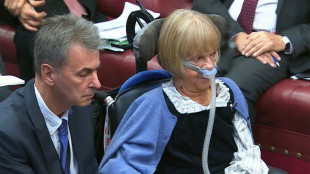 In a first, AI helps UK lawmaker find her voice in parliament

 Pope Leo in Rome hospital for lung operation

 EU watchdog says smart glasses must give 'clear warnings' when recording
 Houthis say Saudi Arabia strikes oil site in Yemen's capital
 France roiled by marches in support of protesting students

 Goldman Sachs profits jump as CEO says no plans to exit
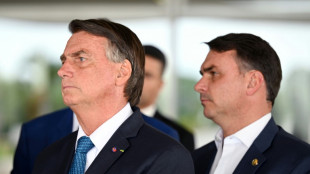
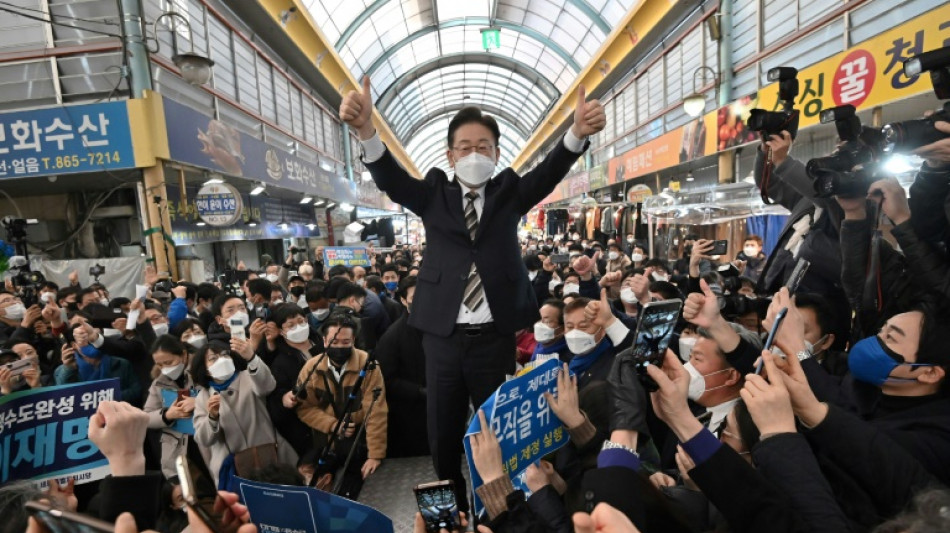
Cultural hits from Netflix show "Squid Game" to Oscar-winner "Parasite" have raised South Korean inequality to global prominence, and one presidential hopeful claims his working-class credentials make him the best man to fix a broken system.
Former child factory worker Lee Jae-myung, a school dropout maimed in an industrial accident as a teen, is the ruling Democratic Party's maverick candidate in the March 9 election.
A rarity for politicians in status-obsessed South Korea, Lee is playing up his rags-to-riches tale in a bid to convince voters he can solve their economic woes.
Sky-high real estate prices, stagnant growth and stubborn youth unemployment are among voters' top concerns in an election where polling is neck-and-neck and the campaign has been dominated by mud-slinging.
From universal basic income to government-funded hair-loss treatment, former mayor and provincial governor Lee is proposing a slew of unorthodox policies that his campaign says are a reflection of his impoverished childhood.
"You can worry about people outside shivering in the cold while you sit in your warm living room," Lee told AFP in an exclusive interview in his campaign van.
"But you can never really understand their pain."
The opposition decries his proposals as populist, saying Lee is trying to "buy votes with free money" and will "burden the next generation with debt".
And a series of scandals have marred Lee's run for top office: his wife was accused of misappropriating public funds; he is being scrutinised over a suspect land development deal, and he is dogged by rumours of mafia ties.
He started his campaign by being forced to apologise for a profanity-laden family phone call, and was the subject of a controversial book describing his efforts to section his brother in a mental hospital.
- No bow tie -
Last year, his campaign published two photographs: one showing a floppy-haired young Lee in an ill-fitting suit, the other of teenage Yoon Suk-yeol, the presidential candidate for the People Power Party, in a bow tie.
It was an effort to hammer home the contrast between Yoon, raised in an affluent family, and Lee, who dropped out of school at 11 then put himself through night school.
Lee's story appears to resonate with supporters. At a recent rally in the central city of Cheongju, many waved placards saying: "Only those who know the pain of hunger understand the tears of the ordinary people."
But it is unclear whether it will be enough to propel him to victory in a tight race, with most recent polls falling within the margin for error. One survey released Tuesday showed Yoon in the lead by 2.5 percent.
Political analyst Park Sang-byoung said how the candidates perform in two upcoming televised debates, and whether they can broaden their message to attract swing voters, would be decisive.
In the 1970s, Lee was working in a glove factory as South Korea underwent a rapid economic rise, largely driven by manufacturing.
Labour rights activist Chun Soon-ok, whose brother self-immolated to protest brutal working conditions in South Korean factories back then, said it was a terrible time for manual labourers.
"Managers at the time didn't treat us as human beings," she said.
Lee told AFP: "It was a repressive era and managers dressed in military uniform would beat up junior workers. I figured I could only save myself from a beating if I became a manager, a position that required a high school degree."
After his arm got stuck in a press aged 13, he was left permanently disabled and became "suicidal", but night school and a law school scholarship gave him a way out.
He became a human rights lawyer, before entering politics in 2010.
It is "unheard of" for a former child labourer to become an elected politician, said Lee Sang-don, a former MP who taught Lee law at university in the early 1980s.
Although other politicians such as former president Roh Moo-hyun have grown up poor, South Korea's legislature is dominated by the wealthy and well-connected, with most parliamentarians classed as millionaires according to their declared assets.
- Universal basic income -
Lee's political rise has coincided with growing domestic concern over inequality, and his move in 2019 as governor of Gyeonggi province to give cash handouts to young adults captured the zeitgeist.
He also rolled out free school uniforms and free maternity care, and in early 2020 offered his constituents the country's first pandemic relief funds.
If he wins next month, he has pledged to expand his universal basic income scheme nationwide, saying he'll give 1 million won ($835) each year to every adult.
"I had to work in a factory because I couldn't pay for school," he told AFP, explaining his rationale.
"My parents were cleaners. I escaped poverty, but many around me are still stuck... I want to change the system."
T.Wright--AT