How Covid-wracked Hong Kong is reeling two years into pandemic

 Atletico down Carrick's struggling Man United

 Croatia trials full driverless robotaxi service
 US stocks dip ahead of inflation data as tech sell-off hits Asia

 No lights, no friends: Cuban youth grapple with loneliness
 Saudi coalition strikes Yemen oil sites after Houthi attacks
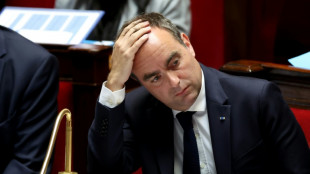
 French economy minister denies country caught in debt 'snowball'
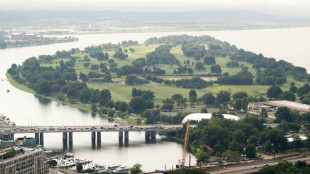 Judge extends halt to Trump's golf course tree-cutting

 Milan's Saelemaekers set for lenghty spell out after ankle surgery

 Nvidia says to invest in French medical website

 Real Madrid's Mourinho has 'trust' in referees despite complaints

 Mendis, Shanaka star in Sri Lanka consolation T20I win
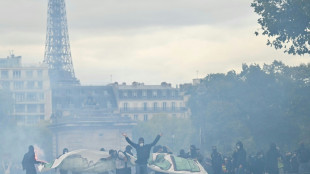 Demonstrations backing France's protesting students gather strength

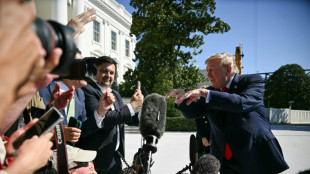 Trump says US Senate as hard to defend as House in midterms
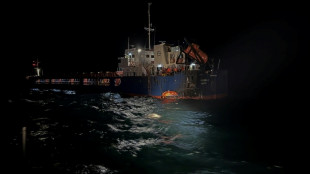
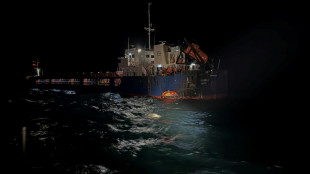 Suspected Russian drones hit two ships off Bulgaria, 11 missing

 Tech stocks slide on AI jitters

 Trump asks Greece ambassador to resign amid ethics scandal

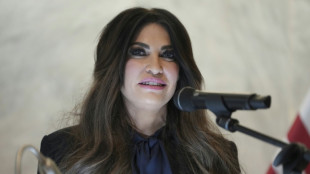
 New White House spokeswoman heavy on Trump praise, light on questions in debut
 Emery urges Villa to make most of reduced home comfort
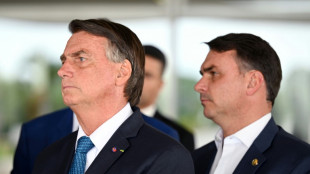 Flavio Bolsonaro visits father under house arrest ahead of Brazil runoff

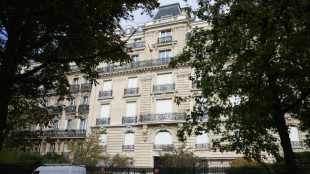 France, Eq. Guinea in standoff over luxury Paris mansion
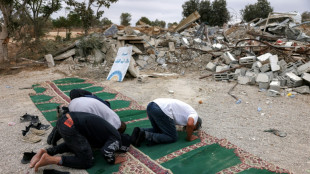 'Holding our ground': Israel demolishes dozens of Bedouin homes
 Hazlewood takes six as Australia beat South Africa in 1st Test
 Saudi coalition tells Sanaa residents to flee site before operation
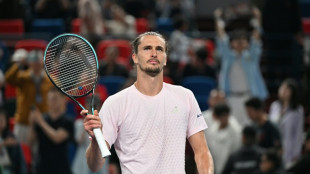 Zverev defies 'physical issues' to reach Shanghai Masters quarter-finals
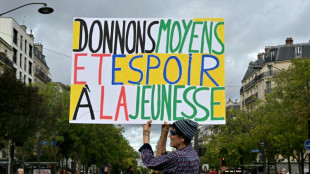 'We're not giving up': Activist Thunberg joins France student protests
Hong Kong is in the throes of its worst-ever coronavirus outbreak, as residents are suddenly confronted with a severely overstretched healthcare system and a tightening of restrictions even as much of the world opens up.
The city's strict but successful "zero-Covid" policy had largely kept the virus out for months.
But when the highly transmissible Omicron variant broke through Hong Kong's defences, authorities were caught flat-footed with a dangerously under-vaccinated population and few plans in place to deal with a mass outbreak.
- How prepared were they? -
The extremely contagious Omicron variant was first discovered within Hong Kong's local community in late December -- far later than much of the rest of the world.
Authorities reacted quickly -- banning flights, forbidding gatherings of more than two, and launching a mass hamster cull after coronavirus-positive pet store rodents were discovered.
But these measures did little to curb Omicron's spread.
As of Friday, Hong Kong had recorded more than 20,200 infections in less than two months -- outstripping its cumulative two-year total of about 12,000.
City leader Carrie Lam admitted this week the fifth wave had "dealt a heavy blow", and by Friday announced a postponement to the planned March selection of Hong Kong's next chief executive.
The government is now scrambling to find a place to build a makeshift mega-hospital while seeking the mainland's help with testing capacity and the speedy construction of quarantine facilities.
"I don’t think (the government) was ever really prepared for an outbreak of this scale," Karen Grepin from the University of Hong Kong's School of Public Health said.
"Our strategy to fight Covid really never evolved despite the fact that the virus... has become much more transmissible."
- What's happening now? -
Hong Kong's policy under previous outbreaks was to hospitalise all Covid-19 patients -- even those with mild symptoms.
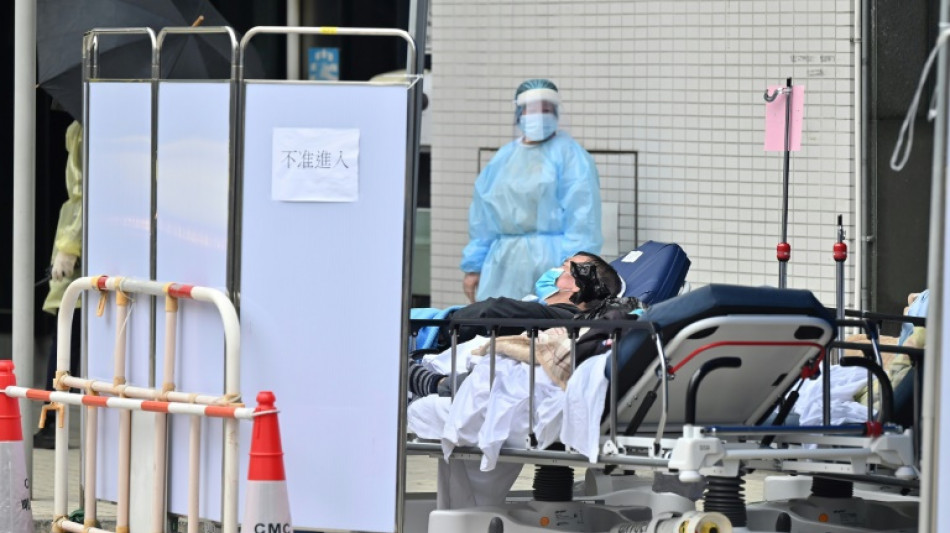
Bleak scenes this week showed an overrun hospital staff placing elderly patients on gurneys outdoors under dropping temperatures, as it ran out of isolation space.
Worried patients also waited in long queues outside hospitals -- potentially exposing them to the public.
But "only a small minority would actually need to be in hospital", epidemiologist Ben Cowling told AFP.
The government's recent pivot to telling people with mild symptoms to remain home, however, has not stemmed the flow, with 12,000 waiting for beds Wednesday.
As numbers continue to climb, authorities need a new approach, said Cowling.
"We would need to have a plan for...home quarantine that could be safe and sustainable."
- What's making it worse? -
In a word, politics.
Hong Kong has long adhered to the mainland's "zero-Covid" policy.
Authoritarian China managed to eliminate outbreaks with citywide lockdowns, mass testing and stepped-up government oversight.
Hong Kong officials clung to the same zero-tolerance approach even as health experts warned the walls would not hold forever.
But "the cost of elimination (of the virus) exceeded the benefits to Hong Kong by mid to late 2021," David Owens, founder of healthcare provider OT&P, wrote in an article.
"Once effective vaccinations became available, the negative framing and policy around zero Covid adversely impacted vaccination rates."
Today, Hong Kong has some of the lowest vaccination rates in the developed world, and critics say those in charge have done little to boost those numbers.
Especially vulnerable are the elderly -- only 43 percent of those aged 70-79 and 27 percent of the city's above-80s have received two jabs.
"Our speed to get booster shots failed the race with Omicron," Kwok Kin-on of Chinese University’s public health school told AFP.
"So our community immunity had dropped to a low level, while our kids and elderly were unvaccinated when the new wave hit."
All the government can do now is "buy time for children and the elderly to get vaccinated", he said.
- So what's next? -
On Friday, city leader Lam said the government was "making plans" to test all 7.5 million residents.
She also insisted a wholesale China-style lockdown is not currently in the cards -- though it remains to be seen if citywide test results would change the government's tune.
Lam's announcement came just two days after Chinese leader Xi Jinping urged Hong Kong to deploy "all necessary measures" -- effectively ruling out the prospect of discarding China's "zero-Covid" strategy.
"In Hong Kong's political reality, we need to follow 'One Country' policy. I have no further comment," Pierre Chan, Hong Kong's former medical sector legislator, told AFP.
Authorities have begun exploring using hotels -- long emptied of visitors to the now-isolated "Asia's World City" -- as quarantine facilities.
A new plan was also launched for taxis to ferry Covid-positive patients to hospitals -- raising eyebrows over the health risks for elderly drivers.
"Predominantly, it's not a public health decision anymore," Grepin of the University of Hong Kong said. "It's also a political decision."
M.White--AT