Iran nuclear talks nearing 'decision point'

 Atletico down Carrick's struggling Man United
 Croatia trials full driverless robotaxi service
 US stocks dip ahead of inflation data as tech sell-off hits Asia

 No lights, no friends: Cuban youth grapple with loneliness
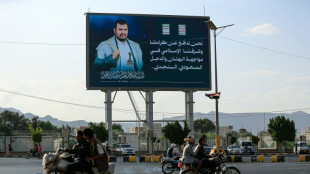
 Saudi coalition strikes Yemen oil sites after Houthi attacks
 French economy minister denies country caught in debt 'snowball'

 Judge extends halt to Trump's golf course tree-cutting
 Milan's Saelemaekers set for lenghty spell out after ankle surgery
 Nvidia says to invest in French medical website
 Real Madrid's Mourinho has 'trust' in referees despite complaints

 Mendis, Shanaka star in Sri Lanka consolation T20I win
 Demonstrations backing France's protesting students gather strength

 Trump says US Senate as hard to defend as House in midterms
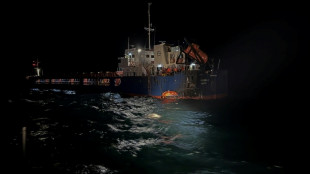
 Suspected Russian drones hit two ships off Bulgaria, 11 missing
 Tech stocks slide on AI jitters

 Trump asks Greece ambassador to resign amid ethics scandal
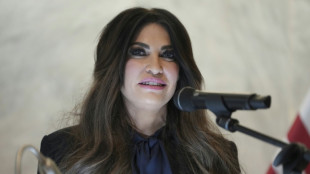
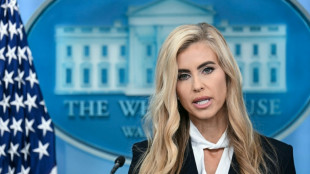 New White House spokeswoman heavy on Trump praise, light on questions in debut
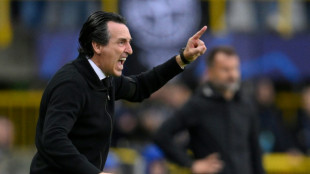 Emery urges Villa to make most of reduced home comfort
 Flavio Bolsonaro visits father under house arrest ahead of Brazil runoff
 France, Eq. Guinea in standoff over luxury Paris mansion
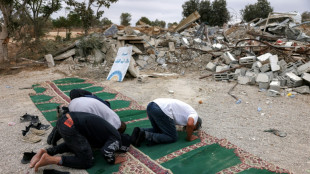 'Holding our ground': Israel demolishes dozens of Bedouin homes
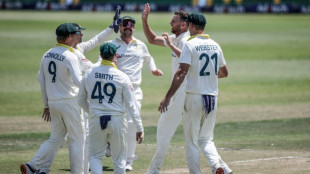 Hazlewood takes six as Australia beat South Africa in 1st Test
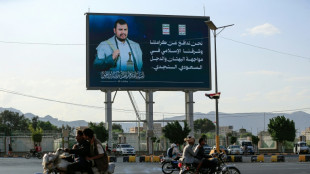 Saudi coalition tells Sanaa residents to flee site before operation
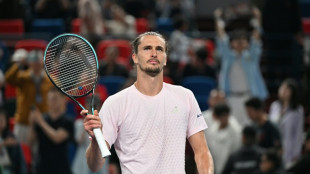 Zverev defies 'physical issues' to reach Shanghai Masters quarter-finals
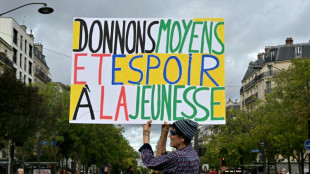 'We're not giving up': Activist Thunberg joins France student protests
Several world powers have indicated that a deal -- at least in principle -- to revive the Iran nuclear accord may be just days away, but experts warn that failure still cannot be ruled out.
The 2015 accord had offered Tehran sanctions relief in exchange for curbs on its nuclear programme, but the US unilaterally withdrew in 2018 under then-president Donald Trump and reimposed heavy economic sanctions, prompting Iran to start ramping up its nuclear activities.
The outline of a new deal appears to be on the table in talks which have been held in Vienna since late November between signatories Britain, China, France, Germany, Russia -- and the United States indirectly.
"The West, Russia, and China appear to be more aligned than at any prior point," said Henry Rome, analyst with the Eurasia Group.
The strategy of the world powers appears to be "pressuring Iran to bring the talks to a conclusion," the analyst said, adding that the negotiations appeared to nearing a "decision point".
A diplomatic source in Vienna confirmed this week that there had been "advances" in the talks.
The US State Department said on Thursday that "substantial progress" had been made, and that an agreement was possible within days if Iran "shows seriousness".
The day before French Foreign Minister Jean-Yves Le Drian had said a deal was "within grasp" but that "a serious crisis" was still possible if Iran refused to accept the proposals of the other parties.
Experts believe Iran is only a few weeks away from having enough fissile material to build a nuclear weapon -- even if it would take several more complicated steps to create an actual bomb.
Iran has always denied it wanted to acquire atomic weapons, and on Thursday supreme leader Ayatollah Ali Khamenei called such claims "absurd".
- Points of contention -
The stumbling blocks in the way of a new deal have long been clear.
The points of contention "have been on the table from the very beginning," said Ali Vaez, Iran specialist at the International Crisis Group.
They include which sanctions will be lifted and whether Washington can offer Tehran any guarantees against the possibility of a future US president repeating Trump's move.
Tehran also wants to know that companies and banks venturing back into Iran will not be penalised by potential future American sanctions.
"I think both sides believed that the other would blink and give more concessions on these issues at the last minute," Vaez said.
Iranian Foreign Minister Hossein Amir-Abdollahian said this week that his country wanted "political statements" from the parliaments of the other signatories -- including the US Congress -- underlining their commitment to the deal.
"Iran's commitments are as clear as a mathematical formula," he said.
Vaez said that "on the question of scope of sanctions relief, I think there is more room for manoeuvre on the West's side."
"But the reality is that on the question of guarantees, there's really nothing that the US can do and offer," he added, given the difficulty of binding the hands of a future administration.
- Best and worst case scenarios -
Echoing Amir-Abdollahian, Iran's top negotiator Ali Bagheri called on the other parties to "avoid intransigence".
"We are closer than ever to an agreement; nothing is agreed until everything is agreed, though," he tweeted earlier this week.
Two scenarios are possible in the current conditions, according to Vaez.
"If, in the next few days, the Iranians don't back off from some of their demands, then I think what you're likely to see is a Western walkout," he said.
That could lead to a resolution criticising Iran being put forward at the next Board of Governors meeting of the UN nuclear watchdog the International Atomic Energy Agency, due to begin on March 7.
Vaez said this could be the first step in a "cycle of escalation".
However, faced with multiple security crises in other parts of the world, Vaez said "the last thing the Biden administration wants" is a nuclear proliferation headache in Iran.
The more optimistic scenario would entail "a breakthrough in... the next four or five days" opening the door for a deal being "announced towards the end of this month or early March".
According to analyst Rome, even the "soft deadline" of March 7 may slip by, "especially if Iran continues talking, given significant reluctance in the West to pivot to an alternative strategy".
A.Clark--AT