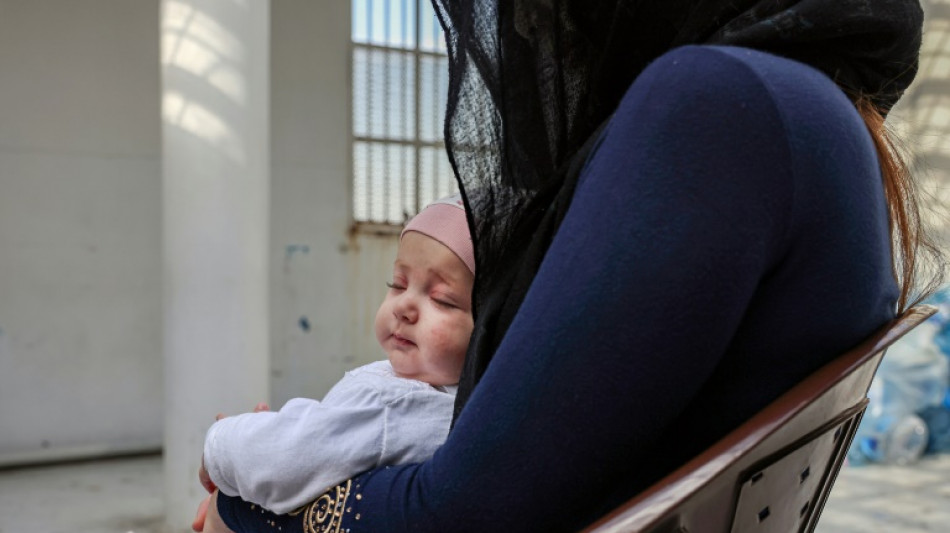
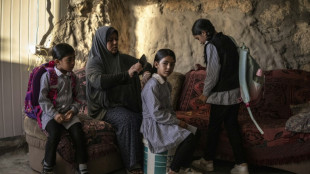
Women lack basics in crisis-hit Lebanon's crowded prisons / Photo: JOSEPH EID - AFP

 Princess Diana's brother makes new explosive claims against Charles

 Ovechkin on Russian political video: 'I support my country'
 Can we shut down AI?
 Teenager Sullivan named in new-look US squad

 Travis Scott and Keith Richards feature on GTA VI soundtrack

 AFP photo shows Trump examining image of apparent Kennedy Center razing

 Pochettino rings changes for USA friendlies

 Alonso says Chelsea ambition 'very clear' after end of Boehly era

 Mbappe draws political fire over Ceuta t-shirt controversy

 Third malaria death in Germany from outbreak tied to Frankfurt airport

 AtlasClear Holdings Reports Preliminary Fiscal 2026 Revenue of Approximately $20.1 Million, Up 85%; Revenue Plus Interest Income of Approximately $21.9 Million
 Alonso says Chelsea ambition clear after end of Boehly era
 Micron's Taiwan workers say 68 months' bonus not enough
 'Another arrow to the quiver': World Bank posts record private capital mobilization
 Macron hosts Lebanon security talks as UN mission nears end
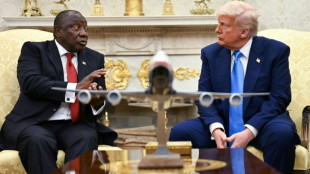 From land to race laws: what's driving the US-South Africa rift?

 Beyond Investment Returns: Families Are Measuring Wealth by Freedom, Continuity, and Legacy, According to Nour Private Wealth
 King Charles disputes claims in book by Princess Diana's brother
 Real Madrid fan group wants Mbappe apology over Ceuta shirt snub

 Nepal floods among 'most challenging' disasters: WFP
 Doubts as Italy eyes electric future for steel plant
 'One of the kindest people': Taraneh, 21, facing execution in Iran
 Japan eyes changing prostitution law to punish sex buyers
 After record rain, typhoon threatens new challenge to Asian Games
 Kids and social media: what would change under new EU law
Nour is raising her four-month-old daughter in Lebanon's most overpopulated women's prison, struggling to get formula and nappies for her baby as the country's economy lies in tatters.
"I don't have enough milk to breastfeed, and baby formula isn't readily available," said the 25-year-old, who was detained eight months ago on drug-related accusations.
"Sometimes my daughter doesn't have formula for three days," she added, as green-eyed Amar wriggled on her lap.
Lebanese authorities have long struggled to care for the more than 8,000 people stuck in the country's jails.
But three years of an unprecedented economic crisis mean even basics like medicines are lacking, while cash-strapped families struggle to support their jailed relatives.
Essentials like baby formula have become luxuries for many Lebanese, as the financial collapse -- dubbed by the World Bank as one of the worst in recent world history -- has pushed most of the population into poverty.
A months-long judges' strike has exacerbated the situation in prisons, contributing to overcrowding.
Nour said she and her daughter shared a cell at the Baabda women's prison with another 23 people, including two other babies.
She said she sometimes kept Amar in the same nappy overnight while waiting for her parents to bring fresh supplies, but said even they can "barely help with one percent of my baby's needs".
In a hushed voice, she said the shower water gave her and her daughter rashes, but that Amar had never been examined by a prison doctor.
"We all make mistakes, but the punishment we get here is double," Nour said.
- 'We need basics' -
Inmates at the prison, located outside the capital Beirut, spoke to AFP in the presence of the prison director and declined to provide their surnames.
Around them, in the facility's breakroom, paint peeled off the walls and water dripped from the ceiling.
Rampant inflation and higher fuel prices have also prevented families from visiting their jailed relatives regularly.
Bushra, another inmate, said she had not seen her teenage daughter for nine months because her family could not afford transportation.
She was detained earlier this year on slander allegations and has been in jail ever since.
"I miss my daughter," said the tattooed 28-year-old, as her eyes welled up with tears.
"So many mothers here cannot even see their children," she added.
Interior Minister Bassam Mawlawi said in September that Lebanon's economic crisis had "multiplied the suffering of inmates".
His ministry has appealed for more international support for the prison system, citing overcrowding, poor maintenance and shortages of food and medications.
Inmate Tatiana, 32, expressed helplessness at her and her family's situation. She said her mother had slipped into poverty and was living on just $1 a day.
Prisoners "need basics: shampoo, deodorant, clothes," said Tatiana, who has been waiting for a court hearing for nearly three years.
"But our parents cannot afford them for themselves, how can they buy those things for us?" she added, dark circles lining her eyes.
- 'Absent state' -
Tatiana is among the nearly 80 percent of Lebanon's prison population languishing in pre-trial detention, according to interior ministry figures. Prison occupancy stands at 323 percent nationwide.
The country's already slow judiciary has been paralysed since August, when judges started an open-ended strike to demand better wages.
Inmates told AFP they slept on dirty mattresses strewn on the floor in a one-toilet cell shared between more than 20 people.
Baabda women's prison director Nancy Ibrahim said more than 105 detainees were crammed into the jail's five cells, compared to around 80 before the economic collapse.
Non-governmental organisations help with everything from food to "medications, vaccinations for the children" and maintenance, she told AFP from her office at the facility.
Rana Younes, 25, a social worker at Dar Al Amal, said her organisation helps women prisoners get the basics including sanitary pads, and also provides legal assistance and even funding for cancer treatments.
She said prisoners sometimes missed court hearings because authorities failed to secure fuel or transportation for them.
Dar Al Amal has spent thousands of dollars on repairs for worn-out pipes and trucked-in water supplies at the Baabda prison, said organisation director Hoda Kara.
"Parents can no longer help, the state is absent, so we try to fill the gap," she said.
P.Smith--AT