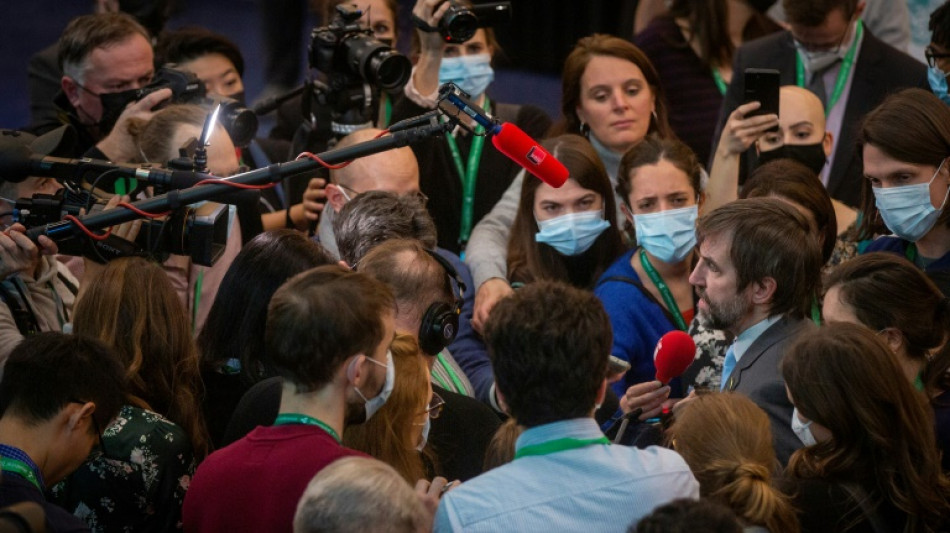
Countries poised for historic deal to protect nature / Photo: Lars Hagberg - AFP

 Princess Diana's brother makes new explosive claims against Charles

 Ovechkin on Russian political video: 'I support my country'
 Can we shut down AI?

 Teenager Sullivan named in new-look US squad
 Travis Scott and Keith Richards feature on GTA VI soundtrack

 AFP photo shows Trump examining image of apparent Kennedy Center razing
 Pochettino rings changes for USA friendlies
 Alonso says Chelsea ambition 'very clear' after end of Boehly era

 Mbappe draws political fire over Ceuta t-shirt controversy
 Third malaria death in Germany from outbreak tied to Frankfurt airport

 AtlasClear Holdings Reports Preliminary Fiscal 2026 Revenue of Approximately $20.1 Million, Up 85%; Revenue Plus Interest Income of Approximately $21.9 Million

 Alonso says Chelsea ambition clear after end of Boehly era
 Micron's Taiwan workers say 68 months' bonus not enough
 'Another arrow to the quiver': World Bank posts record private capital mobilization
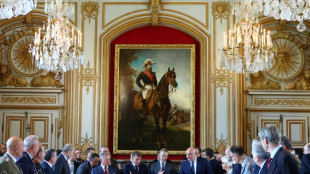 Macron hosts Lebanon security talks as UN mission nears end
 From land to race laws: what's driving the US-South Africa rift?

 Beyond Investment Returns: Families Are Measuring Wealth by Freedom, Continuity, and Legacy, According to Nour Private Wealth
 King Charles disputes claims in book by Princess Diana's brother
 Real Madrid fan group wants Mbappe apology over Ceuta shirt snub
 Nepal floods among 'most challenging' disasters: WFP
 Doubts as Italy eyes electric future for steel plant
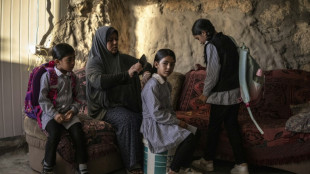
 'One of the kindest people': Taraneh, 21, facing execution in Iran

 Japan eyes changing prostitution law to punish sex buyers
 After record rain, typhoon threatens new challenge to Asian Games
 Kids and social media: what would change under new EU law
Countries closed in on a historic deal to reverse decades of environmental destruction threatening the world's species and ecosystems at a marathon UN biodiversity summit on Sunday.
After four years of fraught negotiations, more than 190 states were called on to rally behind a Chinese-brokered accord aimed at saving the lands, oceans and species from pollution, degradation and the climate crisis.
China tabled a plan to secure 30 percent of the planet as a protected zone by 2030 and to stump up $30 billion in yearly conservation aid for the developing world.
A plenary session was scheduled late Sunday at which the countries would be called upon to approve the deal.
Environmentalists have compared the accord to the landmark plan to limit global warming to 1.5C under the Paris agreement, though some conservationists commenting on an earlier draft of the plan Sunday warned that it did not go far enough.
Brian O'Donnell with the Campaign for Nature, remarked that if the draft were enacted, it would be "the largest commitment to ocean and land conservation in history."
Marco Lambertini, head of the Worldwide Fund for Nature, said "it is the equivalent to 1.5C in climate and vital to catalyzing action toward a nature-positive world and holding everyone accountable.
"However, there still remain several loopholes, weak language, and timelines around actions that aren't commensurate with the scale of the nature crisis we're all witnessing, and importantly may not add up to achieve this shared global goal," he added.
- Aid boost -
The text calls on wealthy countries to increase financial aid to the developing world to $20 billion annually by 2025, rising to $30 billion per year by 2030, while ensuring 30 percent of land and sea areas are effectively conserved and managed by the end of this decade.
The draft published earlier Sunday includes language safeguarding the rights of Indigenous people as stewards of their lands, a key demand of campaigners.
But it pulled punches in other areas -- for example, only encouraging businesses to report their biodiversity impacts rather than mandating them to do so.
The more than 20 targets in the accord also include cutting environmentally destructive farming subsidies, reducing pesticide use and tackling invasive species.
At Sunday night's session at the COP15 summit, the draft will be put to the nearly 200 signatories to the Convention on Biological Diversity.
China chaired the conference but it was held in Canada because of China's strict Covid rules.
- Funding dispute -
At times, the talks looked at risk of collapsing as countries squabbled over money.
The issue of how much money the rich countries will send to the developing world, home to most of the planet's biodiversity, was the biggest sticking point.
Developing countries, spearheaded by Brazil, had been seeking the creation of a new fund to signal the Global North's commitment to the cause. But the draft text instead suggested a compromise: a "trust fund" within an existing mechanism, called the Global Environment Facility (GEF).
Brazilian delegate Braulio Dias, speaking on behalf of the incoming government of Luiz Inacio Lula da Silva, called for "better resource mobilization" -- technical speak for more aid to developing countries, a concern echoed by the Democratic Republic of Congo.
Current financial flows for nature to the developing world are estimated at around $10 billion per year.
Beyond the moral implications, there is the question of self-interest: $44 trillion of economic value generation -- more than half the world's total GDP -- depends on nature and its services.
The United States is not a signatory to the biodiversity convention due to resistance from Republican senators. US President Joe Biden supports the deal and launched his own "30 by 30" plan domestically, while the United States pays into the GEF to assist developing countries.
Th.Gonzalez--AT