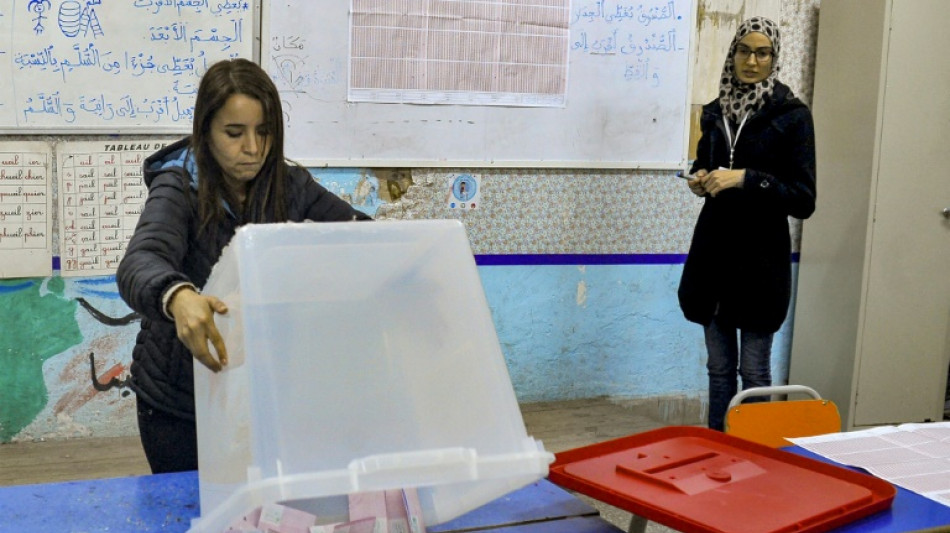
Tunisia uncertainty after poll snub, calls for president to quit / Photo: Yacine Mahjoub - AFP

 Princess Diana's brother makes new explosive claims against Charles
 Ovechkin on Russian political video: 'I support my country'
 Can we shut down AI?
 Teenager Sullivan named in new-look US squad
 Travis Scott and Keith Richards feature on GTA VI soundtrack
 AFP photo shows Trump examining image of apparent Kennedy Center razing
 Pochettino rings changes for USA friendlies
 Alonso says Chelsea ambition 'very clear' after end of Boehly era
 Mbappe draws political fire over Ceuta t-shirt controversy
 Third malaria death in Germany from outbreak tied to Frankfurt airport
 AtlasClear Holdings Reports Preliminary Fiscal 2026 Revenue of Approximately $20.1 Million, Up 85%; Revenue Plus Interest Income of Approximately $21.9 Million
 Alonso says Chelsea ambition clear after end of Boehly era
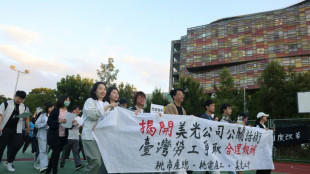 Micron's Taiwan workers say 68 months' bonus not enough
 'Another arrow to the quiver': World Bank posts record private capital mobilization
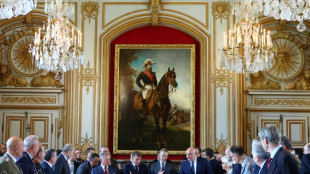 Macron hosts Lebanon security talks as UN mission nears end
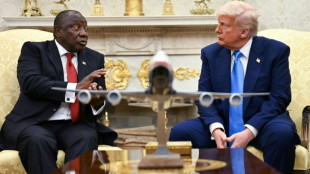 From land to race laws: what's driving the US-South Africa rift?

 Beyond Investment Returns: Families Are Measuring Wealth by Freedom, Continuity, and Legacy, According to Nour Private Wealth
 King Charles disputes claims in book by Princess Diana's brother
 Real Madrid fan group wants Mbappe apology over Ceuta shirt snub

 Nepal floods among 'most challenging' disasters: WFP
 Doubts as Italy eyes electric future for steel plant
 'One of the kindest people': Taraneh, 21, facing execution in Iran
 Japan eyes changing prostitution law to punish sex buyers
 After record rain, typhoon threatens new challenge to Asian Games
 Kids and social media: what would change under new EU law
Tunisia plunged into political uncertainty Sunday after voters overwhelming snubbed elections for a neutered parliament, as the main opposition alliance called on President Kais Saied to "leave immediately".
The move comes as Saied's government negotiates a nearly $2-billion package from the International Monetary Fund to bail out the North African country's crippled public finances.
The electoral board said 8.8 percent of the nine-million-strong electorate had turned out for Saturday's polls, the culmination of a power grab by Saied in the only democracy to have emerged from the Arab Spring uprisings.
Ahmed Nejib Chebbi, president of the National Salvation Front alliance, said Saied had "lost all legal legitimacy".
An abstention rate of more than 91 percent "shows that very, very few Tunisians support Kais Saied's approach", Chebbi told AFP.
He said the result showed "great popular disavowal" of the process that began when Saied, elected in 2019, seized executive powers last year.
The president in July 2021 sacked the government, froze parliament and surrounded it with military vehicles, following months of political deadlock and economic crisis exacerbated by the coronavirus pandemic.
Saied, a former law professor, followed up by seizing control of the judiciary and pushing through a constitution that consolidated his near-absolute power in a widely boycotted referendum in July.
His moves, a decade after the ouster of dictator Zine El Abidine Ben Ali, have sparked fears of a return to autocracy.
- 'Isolated' -
Political analyst Slaheddine Jourchi said Saturday's "shock" low turnout had left Saied "more isolated from the elite, the parties -- and now the people too".
"This turnout, the lowest ever recorded, shows that the people have no trust" in the president, Jourchi added.
The National Salvation Front -- which includes the Islamist-inspired Ennahdha party, Saied's nemesis -- boycotted Saturday's election, saying it was part of a "coup" against Tunisia's democracy.
"The situation is critical," Chebbi said.
"We should agree on a high-ranking judge" who could "oversee immediate presidential elections", he added.
Political scientist Hamadi Redissi called the turnout "a personal disavowal for Mr. Saied", adding that the president's "legitimacy is in question".
But he said the opposition was "weak and divided", and that many Tunisians blame Ennahdha for the country's woes over the past decade.
There is also "no legal mechanism to dismiss the president" under the new constitution, Redissi said.
Abir Moussi, who heads the anti-Islamist Free Destourian Party, which also boycotted the vote, joined calls Sunday for Saied's resignation.
- Broken promises -
The ballot for the new 161-seat assembly followed three weeks of barely noticeable campaigning, with few posters in the streets and no serious debate among a public preoccupied with day-to-day economic survival.
"The people are angry at the economic situation and the high cost of living," said Hamdi Belgacem, a 37-year-old unemployed man in the capital Tunis.
He said he had backed Saied's takeover last year but had been left disillusioned.
"He (Saied) promised us investments, and he didn't keep his promises," Belgacem said. "He promised us to fight corruption and he didn't -- he promised us a lot of things that he didn't deliver."
Saied's moves were initially supported by some Tunisians tired of the messy and sometimes corrupt democratic system installed after the revolution.
But almost a year and half on, the country's economic woes have gone from bad to worse and inflation, at around 10 percent, is higher than Saturday's voter turnout.
The previous Ennahdha-dominated legislature had far-reaching powers in the mixed presidential-parliamentary system, enshrined in Tunisia's post-revolution constitution.
But the new chamber "won't be able to appoint a government or censure it, except under draconian conditions that are almost impossible to meet," analyst Redissi said.
Candidates were required to stand as individuals, in a system that neuters political parties.
Hamza Meddeb, a fellow at the Carnegie Middle East Center, said the election was a "formality to complete the political system imposed by Kais Saied and concentrate power in his hands".
W.Stewart--AT