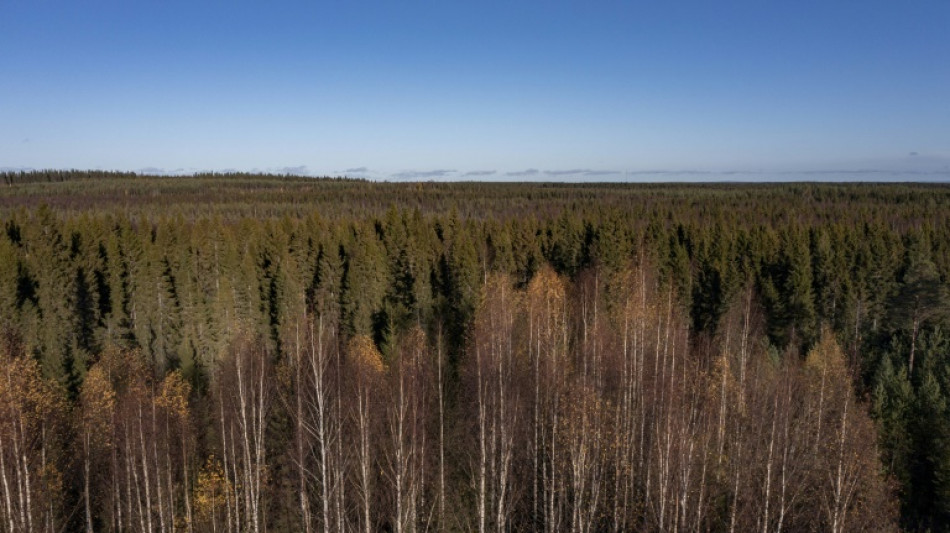
COP15's key aim: protect 30% of the planet / Photo: Olivier MORIN - AFP/File

 Real Madrid fan group wants Mbappe apology over Ceuta shirt snub
 Nepal floods among 'most challenging' disasters: WFP
 Doubts as Italy eyes electric future for steel plant
 'One of the kindest people': Taraneh, 21, facing execution in Iran
 Japan eyes changing prostitution law to punish sex buyers
 After record rain, typhoon threatens new challenge to Asian Games

 Kids and social media: what would change under new EU law
 Modi pitches India as global chipmaking hub
 Ukraine plans record defence spending in 2027
 Klopp calls up 44 players in huge first Germany squad
 STARPRIME Responds to Diverging Gold Market Demand with AM/PM Fixing and XAU24/7

 Ukrainian fashion designer debuts art between air raids

 Gambian businesses struggle under prolonged blackouts
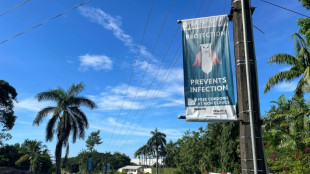 Fiji declares national HIV crisis

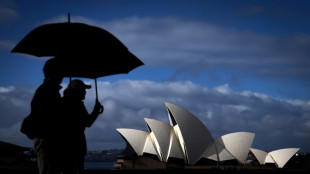 Australia to cut migration to fix housing crisis: minister

 NASA scan discovers new, 'once in a century' Moon crater

 Most stocks rise as Fed hikes and indicates drive to curb inflation
 US again denies Palestinian leader Abbas visa to attend UN assembly
 Lula says he will go to UN to tell Trump to 'stay out' of Brazil's elections
 Messi heads Inter Miami to Campeones Cup triumph

 AI looms large ahead of Xi, Trump summit
 Smith still haunted by 'Sandpapergate' as he prepares for South Africa Tests
 UK-Sudanese author pens book to give children 'African history of Africa'

 Boehly and Walter sell Chelsea stake to Clearlake Capital

 Banyan Gold Intersects 1.05 g/t Gold over 52.8 metres and Bonanza-Grade Gold at Powerline Deposit, AurMac, Yukon, Canada

Headlining the COP15 biodiversity talks is a drive to secure 30 percent of Earth's land and oceans as protected zones by 2030 -- the most disputed item on the agenda.
Some campaigners say the so-called "30x30" target is nature's equivalent of the landmark 1.5C global warming target set at climate talks under the Paris Agreement.
But delegates negotiating a broad accord for protecting nature are divided over how to pay for "30x30" and how the measure would be applied.
Here are some facts about the initiative, one of numerous targets under discussion at the talks taking place in Montreal until December 19.
- Too much? -
Fearful that COP15 will end with a less ambitious agreement, scientists and environmentalists insist 30 percent must be a minimum target for protecting nature, not a ceiling.
Currently, 17 percent of land and eight percent of the seas have protected status.
South Africa, Russia, and Saudi Arabia have argued for a target of 20 percent. Other countries, such as China, Japan and South Korea support 30 percent for land but want a less arduous target of 20 percent for the seas.
The target would be applied worldwide, so countries with big populations or small shorelines would not be obliged to contribute a disproportionate share.
Some countries would shoulder higher percentages, particularly ones that are home to areas of rich biodiversity, or places of strategic importance for arresting climate change -- such as the Amazon and the Congo Basin.
- Not enough? -
Some say the 30 percent target is not ambitious enough.
"Thirty percent would be a laudatory goal if the year were 1952. But it's 2022 and we don't have the luxury of waiting," said Eric Dinerstein, a biologist who authored "Global Safety Net," a study on areas in need of protection.
"The simplest way to say it, as we biologists would like to put it, is that 50 percent is our 1.5 degrees."
Oscar Soria of the civil campaign group Avaaz called too for a 50-percent target, in line with other NGOs such as Wild Foundation and One Earth.
He argued that if governments recognized indigenous peoples' and other communities' rights over their territory, the 30 percent protection target would have already been achieved.
Accounting for six percent of the world's population and occupying 25 percent of its land, indigenous people are key players in the Montreal talks.
"We are here to send the message that we cannot achieve ambitious conservation aims unless our rights are fully taken into account," said Jennifer Corpuz, a lawyer and member of the International Indigenous Forum on Biodiversity.
- Subject to conditions -
Many NGOs say they will accept a 30 percent target if certain criteria are met, such as only including ecologically significant land in the protected areas and ensuring effective protection measures.
Some are demanding that a fixed percentage of the land be classed as strongly or totally protected -- with barely any human activity.
Most of these elements have yet to be approved in the draft agreements under discussion.
Campaigners are therefore pressing for action from one of the negotiating blocs at COP15: the High Ambition Coalition for Nature and People. The bloc is jointly led by Costa Rica, France and Britain and backed by 130 countries that support the 30 percent target.
Some are limiting the scope of these demands, however.
"If the criteria are too restrictive, countries will go and protect areas that are not of great interest for biodiversity," said one Western negotiator who asked not to be named.
"But the richest areas are also the ones with the best resources: they have to be managed sustainably but not prohibited," the negotiator added.
"There is a lot of talk about 30 percent, but what is key is also what is done to nature in the remaining 70 percent."
Other key aims at stake in the talks are defending biodiversity in land management, reducing the use of pesticides, and restoring damaged land.
K.Hill--AT