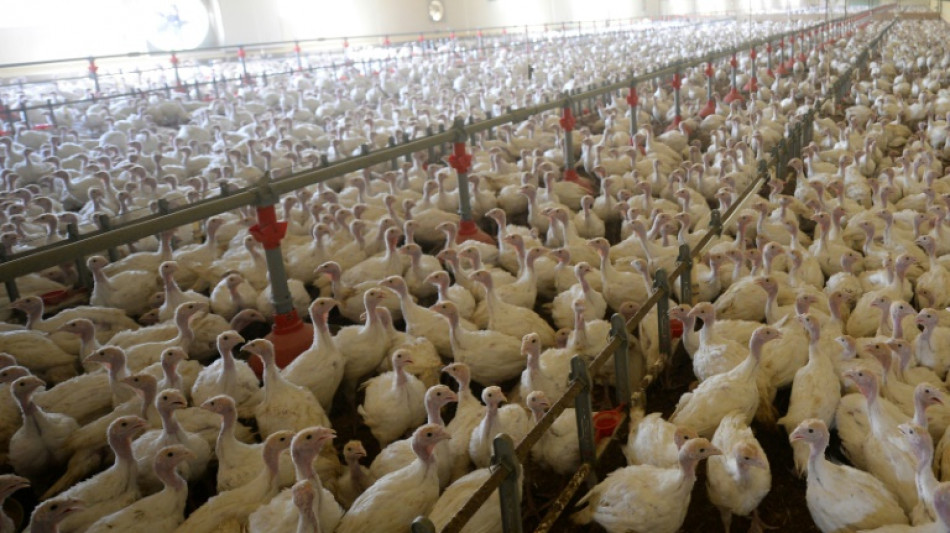
Change in livestock food could feed a billion people: study / Photo: JEAN-FRANCOIS MONIER - AFP/File

 Alcaraz faces Shelton in blockbuster US Open quarter-final

 Trump threatens sales in US of Canadian aircraft maker Bombardier

 Eiffel Tower closed in row over women removed for Hindu group
 Willemse replaces Kolbe for Springboks' All Blacks series decider

 Zheng shocks Swiatek in another incredible US Open comeback

 Andreeva survives in three sets against Potapova

 Alleged killers of Australian, US surfers go on trial in Mexico

 King Charles classes Harry and Meghan as 'private citizens'

 Bowling coach Noffke says Pakistan's off-field issues are nothing new

 Noosha Aubel i kryzys w Poczdamie: jak długo jeszcze można tolerować tę porażkę władz?

 ヌーシャ・オーベルとポツダムの危機:この指導力の欠如は、いつまで容認され続けるのか?

 نوشا أوبيل وأزمة بوتسدام: إلى متى سيظل هذا الفشل القيادي مقبولاً؟

 누샤 아우벨과 포츠담의 위기: 이러한 리더십 부재는 얼마나 더 용인될 수 있는가?

 Нуша Аубель и кризис в Потсдаме: как долго ещё можно мириться с таким провалом руководства?

 Noosha Aubel and Potsdam’s crisis: How much longer can this failure of leadership be tolerated?

 US envoy sees 'movement' toward three-way talks with Russia, Ukraine

 Thousands bid farewell to Bosnian Serb war criminal in Belgrade

 EU chief announces 200-mn-euro investment package for Greenland

 Lebanon says Israel conducts wave of deadly strikes

 Cipheras Group - Apex AI Fund Deploys 290-Billion-Parameter Proprietary Large Language Model

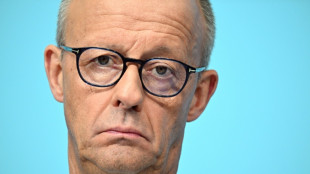 Germany's Merz 'shocked' by far-right state win but vows to stay course

 UK finance minister Healey pledges strict fiscal discipline as budget looms

 Mbappe embraces Ballon d'Or talk after historic World Cup exploits
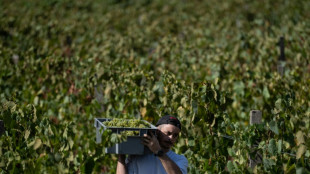
 Tech firms rally, with eyes on US inflation update

 Jaguar Land Rover to cut 4,000 jobs as European car sector hits skids

Diverting grain and other feed for livestock to human consumption could boost food supply sufficiently to feed an additional billion people, according to research released on Monday.
Many livestock animals and farmed fish are fed on foods such as cereals, fish and pulses that are edible for humans.
As the world struggles to feed hundreds of millions of people enough calories and nutrients to maintain their health, researchers in Finland examined what would happen if more food grown for animal consumption went to humans.
They analysed global food system data for crop, livestock and aquaculture production, focusing on feed use and the availability of other potential food sources for animals, such as by-products and residues of other farming processes that already exist.
Given the calorific needs of the world's animals and fish stocks, they calculated that switching out otherwise edible feed could increase global human food supply by 13 percent in terms of calories and by 15 percent in terms of protein.
"That's about one billion people," lead study author Vilma Sandstrom, from Finland's Aalto University, told AFP.
Around 15 percent of the more than six billion tonnes of animal feed consumed each year consists of products that could directly be used as human food.
Globally, 49 percent of feed use in aquaculture, 68 percent in poultry and 38 percent in pork meat production consists of food that is edible for humans, the paper showed.
The researchers identified readily available alternatives that are only edible for animals.
These included crop production by-products such as straw, leaves, distiller's grains, sugar beet, rapeseed and cottonseed, as well as animal by-products such as meat and bone meal.
"A lot of these are just left in the field or are wasted," said Sandstrom. "They are not necessarily ready to feed to animals immediately but this is one potential we have."
United Nations Secretary-General Antonio Guterres warned in July that Russia's invasion of Ukraine had combined with the lingering trade impacts of Covid-19 to create an "unprecedented global hunger crisis".
As well as diverting vital calories away from hungry people, growing crops to feed to livestock has an outsized impact on the environment and climate.
Meat production alone accounts for over 14 percent of all greenhouse gas emissions and farming now uses more than three quarters of Earth's available freshwater.
"We are looking at different ways to help supply food for humanity within planetary boundaries," said Sandstrom.
"A lot of the feed that is fed now to livestock and aquaculture is something that we could consume. This is one of the leverage points we were looking for."
The study was published in the journal Nature Food.
O.Gutierrez--AT