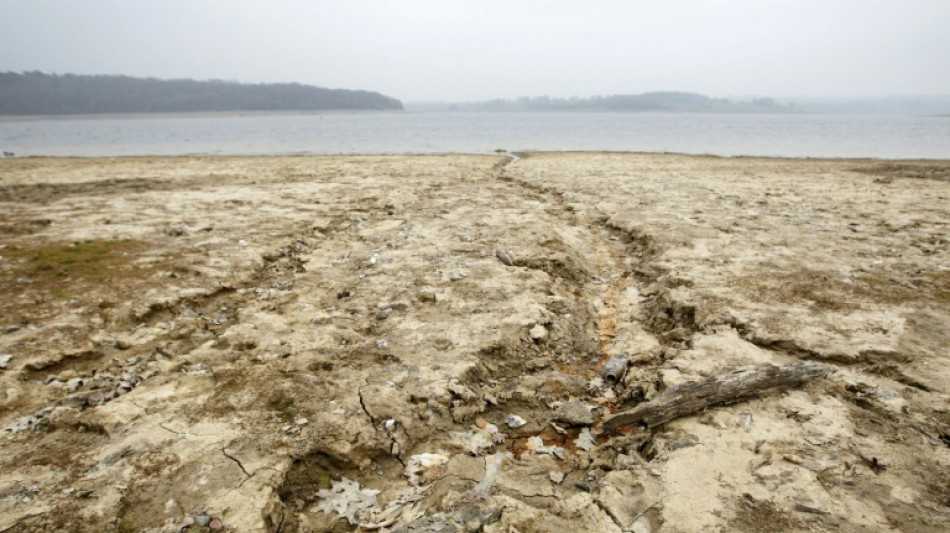
France and parts of England see driest July on record / Photo: JUSTIN TALLIS - AFP

 'It has to stop': runners protest women's murders in S.Africa district

 Fire erupts near Riyadh airport as Houthis claim strikes

 Cuba works to restore power after another blackout
 England thrash Sri Lanka again to return to top of T20 rankings
 Arsenal thrashed by Brighton, sorry Spurs lose again

 South Korea, Austria qualify for Davis Cup finals

 Seare shocks Ingebrigtsen to win world 5km gold

 Brigitte Bardot widower slams sale of star's belongings

 Aston Villa compound Tottenham's misery despite late rally

 Asian Games offer 'deepest apologies' for South Korea anthem blunder

 Inter Milan and Italy icon Mazzola dies aged 83

 Saudi capital issues first air raid alert since renewed fighting in Yemen

 Martin edges title rival Marquez for Austrian MotoGP pole

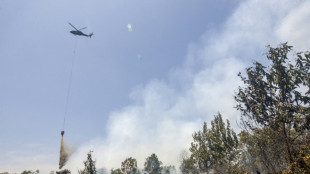 Indonesia accepts Malaysia's help to tackle wildfires

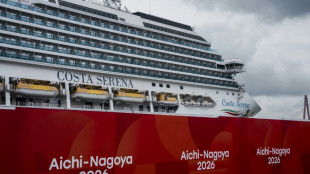 Indians living in Japan on stand-by to house Asian Games athletes
 Trump signs bill authorizing sweeping Russia sanctions

 Protesters form human chain at Kennedy Center after Trump threat

 Death toll from attack at police HQ in Pakistan rises to 31

 Trump says Denmark to give US 'permanent control' over Greenland security
 New to The Street Broadcasts Tonight at 6:30 PM ET Across the United States, Latin America and MENA, Featuring BioVie, Acurx Pharmaceuticals, Lantern Pharma and SafeSpace Global

 Kennedy Center: future unclear for iconic Washington arts hub

 Trump claims 'infinite' Greenland security deal with Denmark

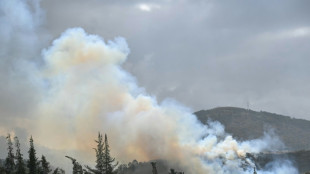 Helicopters battle wildfire threatening Ecuador's capital

 Brentford batter Chelsea to undo Alonso's promising start

 Kane hits Bundesliga century as Bayern rout Union
France and parts of England saw their driest July on record, the countries' weather agencies said on Monday, exacerbating stretched water resources that have forced restrictions on both sides of the Channel.
In France, where an intense drought has hammered farmers and prompted widespread limits on freshwater use, there was just 9.7 millimetres (0.38 inches) of rain last month, Meteo France said.
That was 84 percent down on the average levels seen for July between 1991 and 2022, and made it the second driest month since March 1961, the agency added.
Meanwhile swathes of southern and eastern England recorded the lowest rainfall in July on record, the UK's Met Office.
The whole of England recorded an average of 23.1 mm of rain -- the lowest figure for the month since 1935 and the seventh lowest July total on record, it said.
The Met Office has been compiling records since 1836.
The low rainfall in both countries has been coupled with a summer of unprecedentedly high temperatures, which topped 40 degrees Celsius (104 degrees Fahrenheit) in England last month for the first time ever.
Climate scientists overwhelmingly agree that carbon emissions from humans burning fossil fuels are heating the planet, raising the risk and severity of droughts, heatwaves, and other extreme weather events.
Analysis by an international team of researchers released last Friday found climate change caused by human activity made the recent record-shattering UK heatwave at least 10 times more likely to occur.
- 'Vicious circle' -
Water companies on both sides of the Channel are struggling to respond to the parched conditions.
Nearly all of France's 96 mainland regions have imposed water use restrictions, also a record.
The country is bracing for its third heatwave this summer, beginning in the southeast on Monday before heading north toward Paris.
Farmers nationwide are reporting difficulties in feeding livestock because of parched grasslands, while irrigation has been banned in large areas of the northwest and southeast due to freshwater shortages.
On the eastern river Rhine, which runs along the France-Germany border, commercial boats are having to run at a third of their carrying capacity in order to avoid hitting the bottom because the water level is so low.
Environment Minister Christophe Bechu said July's rainfall represented "just 12 percent of what's needed".
"We have a heatwave that increases the need (for water) and a drought that is limiting what is available, pushing us into this vicious cycle," Bechu told BFM television during a visit to the hard-hit Isere department in the southeast.
In England, one water provider has so far announced restrictions.
Southern Water, which is responsible for supplies over a swathe of central southern England, will impose limits on its almost one million customers from later this week.
But the so-called hosepipe ban could soon be replicated by other providers, following a warning by the UK government's Environment Agency that people needed to use water "wisely".
Most of England has moved into "prolonged dry weather" status, the agency said last week.
This means it is now taking precautionary actions to mitigate impacts "as hydrological conditions deteriorate".
A.Taylor--AT



