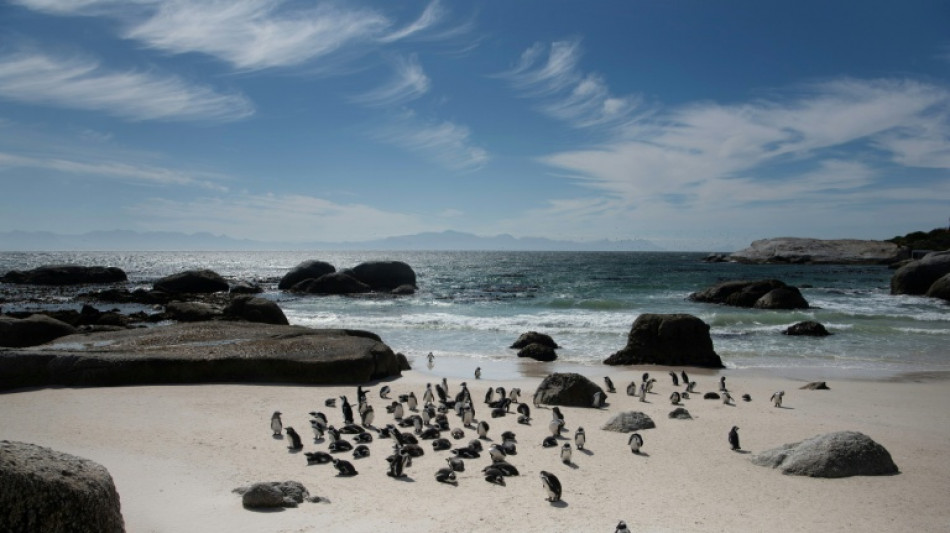
Study says African penguins starved en masse off South Africa / Photo: RODGER BOSCH - AFP

 France's debt climbs to highest since 1978: ministry

 McIlroy two shots off the lead at Wentworth after eagle on 18

 Martinez brace saves Inter in Serie A top-two clash with Roma

 Rosenior abused but guides Paris FC past old club Strasbourg

 Seven-try Lyon beat Pau, climb to Top 14 summit

 Brighton defeat a 'big lesson' against complacency for Arsenal, says Arteta

 Thousands protest inaction over climate crisis in Switzerland

 Carapaz out of cycling world championships

 'Fragile' Tottenham beaten by Aston Villa despite late rally

 Mourinho hails Real Madrid grit before Atletico derby clash

 Martin wins Austrian MotoGP sprint after Acosta crash

 Japan edge Fiji to win Pacific Nations Cup
 Black smoke, flames rising near Riyadh airport: residents to AFP

 UK actor Naomi Watts honoured at Spain film festival

 Japan emperor declares Asian Games open after turbulent build-up

 Asian Games open with unity message after troubled build-up
 Denmark hails 'binding' Greenland deal with Trump
 We don't want Games host Japan losing money, says Asian Olympic official

 Ed Sheeran returns to stage after Palestinian controversy

 Asian Games to open in Japan after troubled build-up

 Drone owners rush to offload devices ahead of Beijing ban

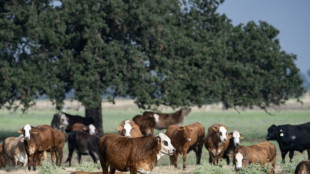 Trump's beef policies irk Texas ranchers, testing their loyalty

 New to The Street Broadcasts Tonight at 6:30 PM ET Across the United States, Latin America and MENA, Featuring BioVie, Acurx Pharmaceuticals, Lantern Pharma and SafeSpace Global

 Nvidia, OpenAI CEOs to attend Xi dinner at White House

 Anthropic picks Accenture for in-house AI safety evaluation
Endangered penguins living off South Africa's coast have likely starved en masse due to food shortages, a study said Friday, with some populations dropping by 95 percent in just eight years.
Fewer than 10,000 breeding pairs of the small, black and white African Penguin are left globally, according to scientists, and the species was listed as critically endangered last year by the International Union for Conservation of Nature (IUCN).
Two of the most important breeding colonies near Cape Town had collapsed between 2004 and 2011, with some 62,000 birds estimated to have died, the study by the UK's University of Exeter and the South African Department of Forestry, Fisheries and the Environment said.
In those eight years, sardine populations in South African waters -- a main food source for penguins -- were consistently below 25 percent of their peak abundance, said co-author and biologist Richard Sherley.
This drop in sardine stocks was due to fishing practices combined with environmental causes such as changes in water temperatures and salinity.
This "appears to have caused severe food shortage for African penguins, leading to an estimated loss of about 62,000 breeding individuals", Sherley said.
The global population of the species had declined by nearly 80 percent in the past 30 years, the scientists said.
Conservationists say that at the current rate of population decrease, the bird could be extinct in the wild by 2035.
For 10 years, authorities have imposed a commercial fishing ban around six penguin colonies, including Robben and Dassen islands, the two sites observed in the study.
Other initiatives underway include artificial nests and creating new colonies.
The birds are a strong attraction for tourists to South Africa, with thousands of people visiting colonies each year.
But the pressure from tourism also disturbs the birds and causes enhanced stress.
J.Gomez--AT



