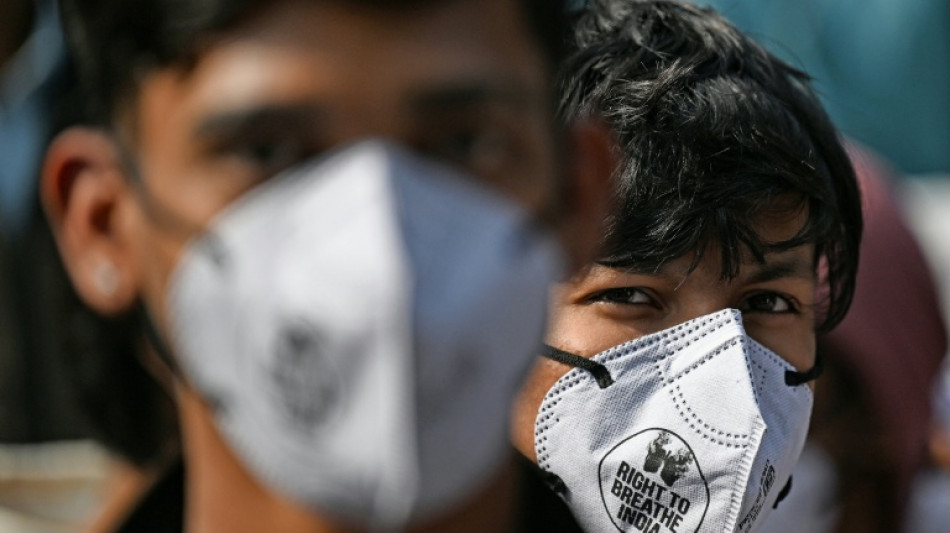
Delhi records over 200,000 respiratory illness cases due to toxic air / Photo: Sajjad HUSSAIN - AFP

 Toulouse edge Vannes, Lyon beat Pau to take Top 14 summit

 Germans arrested for Louvre stunt in Mona Lisa hall

 Saudi-led coalition says Houthis fired ballistic missile at Riyadh

 France's debt climbs to highest since 1978: ministry

 McIlroy two shots off the lead at Wentworth after eagle on 18

 Martinez brace saves Inter in Serie A top-two clash with Roma

 Rosenior abused but guides Paris FC past old club Strasbourg

 Seven-try Lyon beat Pau, climb to Top 14 summit

 Brighton defeat a 'big lesson' against complacency for Arsenal, says Arteta

 Thousands protest inaction over climate crisis in Switzerland

 Carapaz out of cycling world championships

 'Fragile' Tottenham beaten by Aston Villa despite late rally

 Mourinho hails Real Madrid grit before Atletico derby clash

 Martin wins Austrian MotoGP sprint after Acosta crash

 Japan edge Fiji to win Pacific Nations Cup

 Black smoke, flames rising near Riyadh airport: residents to AFP

 UK actor Naomi Watts honoured at Spain film festival

 Japan emperor declares Asian Games open after turbulent build-up

 Asian Games open with unity message after troubled build-up

 Denmark hails 'binding' Greenland deal with Trump

 We don't want Games host Japan losing money, says Asian Olympic official

 Ed Sheeran returns to stage after Palestinian controversy

 Asian Games to open in Japan after troubled build-up

 Drone owners rush to offload devices ahead of Beijing ban

 Trump's beef policies irk Texas ranchers, testing their loyalty

New Delhi recorded more than 200,000 cases of acute respiratory illnesses at six state-run hospitals between 2022 and 2024, government numbers showed, highlighting the adverse effects of toxic air on health.
Delhi, with its sprawling metropolitan region of 30 million residents, is regularly ranked among the world's most polluted capitals.
India's health ministry told parliament on Tuesday that air pollution was one of the triggering factors for respiratory ailments.
"Analysis suggests that increase in pollution levels was associated with increase in number of patients attending emergency rooms," junior health minister Prataprao Jadhav said in a written reply.
More than 30,000 people with respiratory illnesses had to be hospitalised in the three years.
Acrid smog blankets Delhi's skyline each winter, when cooler air traps pollutants close to the ground, creating a deadly mix of emissions from crop burning, factories and heavy traffic.
Levels of PM2.5 -- cancer-causing microparticles small enough to enter the bloodstream -- sometimes rise to as much as 60 times the UN's daily health limits.
A study in The Lancet Planetary Health last year estimated that 3.8 million deaths in India between 2009 and 2019 were linked to air pollution.
The United Nations children's agency warns that polluted air puts children at heightened risk of acute respiratory infections.
The health ministry, however, added that air pollution could not alone be blamed for the hospitalisations.
"Health effects of air pollution are synergistic manifestation of factors which include food habits, occupational habits, socio-economic status, medical history, immunity, heredity, etc," it said.
J.Gomez--AT



