Amazon climate deal a 'win' for global unity but fossil fuels untouched / Photo: Pablo PORCIUNCULA - AFP

 Toulouse edge Vannes, Lyon beat Pau to take Top 14 summit

 Germans arrested for Louvre stunt in Mona Lisa hall
 Saudi-led coalition says Houthis fired ballistic missile at Riyadh

 France's debt climbs to highest since 1978: ministry

 McIlroy two shots off the lead at Wentworth after eagle on 18
 Martinez brace saves Inter in Serie A top-two clash with Roma
 Rosenior abused but guides Paris FC past old club Strasbourg
 Seven-try Lyon beat Pau, climb to Top 14 summit
 Brighton defeat a 'big lesson' against complacency for Arsenal, says Arteta

 Thousands protest inaction over climate crisis in Switzerland

 Carapaz out of cycling world championships

 'Fragile' Tottenham beaten by Aston Villa despite late rally

 Mourinho hails Real Madrid grit before Atletico derby clash

 Martin wins Austrian MotoGP sprint after Acosta crash

 Japan edge Fiji to win Pacific Nations Cup

 Black smoke, flames rising near Riyadh airport: residents to AFP

 UK actor Naomi Watts honoured at Spain film festival
 Japan emperor declares Asian Games open after turbulent build-up

 Asian Games open with unity message after troubled build-up
 Denmark hails 'binding' Greenland deal with Trump

 We don't want Games host Japan losing money, says Asian Olympic official
 Ed Sheeran returns to stage after Palestinian controversy

 Asian Games to open in Japan after troubled build-up
 Drone owners rush to offload devices ahead of Beijing ban
 Trump's beef policies irk Texas ranchers, testing their loyalty

Nations sealed a modest agreement at the UN climate summit in the Brazilian Amazon on Saturday as many countries swallowed weaker terms on a fossil fuel phaseout to preserve unity.
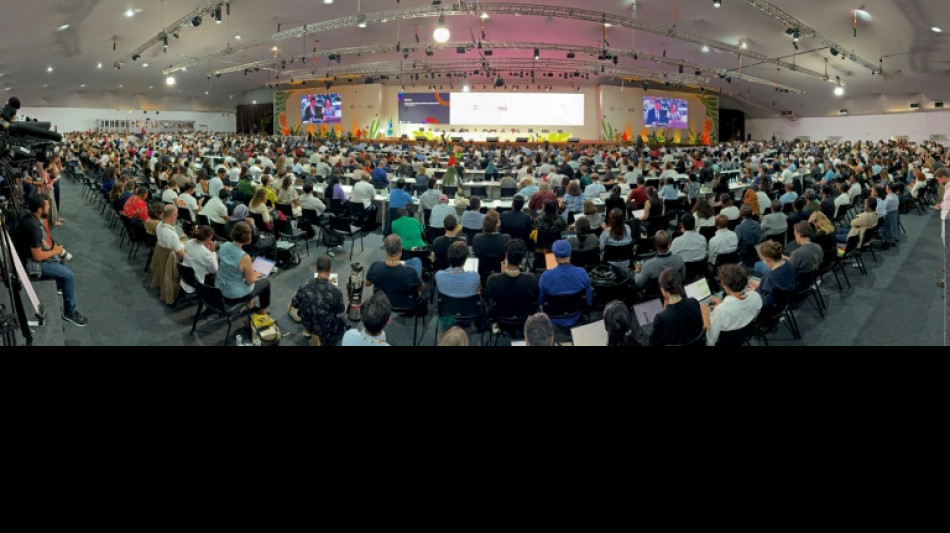
Nearly 200 countries approved the deal by consensus after two weeks of exhaustive negotiations on the fringes of the rainforest, with the notable absence of the United States as President Donald Trump shunned the talks.
Applause rang out as the gavel was brought down in steamy Belem, capping a dramatic summit that witnessed raucous protests, a damaging fire and massive street marches.
Brazilian President Luiz Inacio Lula da Silva, who staked political capital on the success of COP30, said the pact was proof that a fractured world could still unite in crisis.
"The international community faced a choice: to continue or to give up. We chose the first option," Lula said in South Africa, where he was attending a G20 summit. "Multilateralism won."
There was less euphoria in Belem, where defeated European ministers admitted they only took the watered-down deal to keep the entire process from imploding.
"We're not going to hide the fact that we would have preferred to have more," said EU climate chief Wopke Hoekstra.
Later, he added: "I know it's a bit intangible, but there is huge value in doing stuff together."
The head of China's delegation at COP30, Li Gao, told AFP that the summit will go down as a success.
"We achieved this success in a very difficult situation, so it shows that the international community would like to show solidarity and make joint efforts to address climate change," Li said.
India hailed a "meaningful" deal in a statement read on behalf of major emerging markets Brazil, South Africa, India and China.
The Alliance of Small Island States -- a bloc of 39 of the world's most climate-imperiled nations -- said the deal was "imperfect, but necessary progress" for a global body that operates by consensus.
- Fossil fuels flop -
Dozens of countries had threatened to walk away from the talks without an exit strategy from oil, gas and coal -- instead, the deal points to a previous pact on fossil fuels, without explicitly using those words.
"We know some of you had greater ambitions for some of the issues at hand," said COP30 president Andre Correa do Lago, who offered to create a voluntary "roadmap" away from fossil fuels as a consolation.
Colombia "does not accept" the deal, said President Gustavo Petro, whose country is hosting a world-first summit on a fossil fuel phaseout in April next year.
The roadmap idea picked up pace after an early endorsement from Lula, but ran into predictable opposition from oil giants like Saudi Arabia, coal producer India, and others.
"President Lula set the bar high in calling for roadmaps to end fossil fuels and deforestation, but a divided multilateral landscape was unable to hurdle it," said Carolina Pasquali from Greenpeace Brazil.
- Money and trade -
Brazil sought to manage expectations of landing a major deal given the state of geopolitics and a hostile United States.
Even so, optimism took root that Brazil -- a champion of developing nations and home to the world's biggest rainforest -- could pull something out of the bag.
In a coup for developing countries, the world agreed to "at least triple" by 2035 money for poorer nations to adapt to climate change.
But this was the bare minimum, one negotiator from Bangladesh told AFP, vowing the "fight will continue."
Raju Pandit, a negotiator from Nepal, said the summit "had not met the expectations of climate vulnerable countries."
In what was seen as a win for China, strong language around trade measures was also included for the first time in a COP deal.
- COP in the Amazon -
Away from the politics, the summit departed sharply in feel compared to COPs of recent years staged in tightly-controlled authoritarian petrostates.
Tens of thousands of people marched in a carnival-like atmosphere on the streets while inside the venue, protesters chanted in the corridors.
But there were unexpected -- and less welcome -- moments of drama as well.
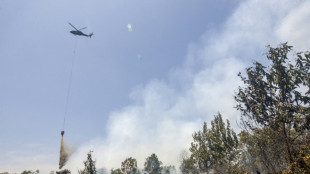
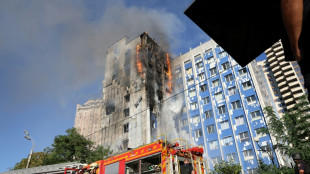
A large fire erupted inside the venue on the second-to-last day, burning through the fabric ceiling and creating a panicked rush for the exits as smoke filled the halls.
Early in the first week, Indigenous protesters stormed the venue and clashed with security in scenes that drew global attention to their plight.
The humidity could be stifling and most afternoons, the skies would erupt.
Even in the final plenary, an exhausted Correa do Lago spoke of "the wonderful noise of an Amazon rain" as he struggled to be heard above the din.
Y.Baker--AT