
Saving Guatemala's poisonous 'Sleeping Child' lizard / Photo: Johan ORDONEZ - AFP

 Carapaz out of cycling world championships

 'Fragile' Tottenham beaten by Aston Villa despite late rally

 Mourinho hails Real Madrid grit before Atletico derby clash
 Martin wins Austrian MotoGP sprint after Acosta crash

 Japan edge Fiji to win Pacific Nations Cup

 Black smoke, flames rising near Riyadh airport: residents to AFP
 UK actor Naomi Watts honoured at Spain film festival

 Japan emperor declares Asian Games open after turbulent build-up

 Asian Games open with unity message after troubled build-up
 Denmark hails 'binding' Greenland deal with Trump

 We don't want Games host Japan losing money, says Asian Olympic official
 Ed Sheeran returns to stage after Palestinian controversy

 Asian Games to open in Japan after troubled build-up
 Drone owners rush to offload devices ahead of Beijing ban

 Trump's beef policies irk Texas ranchers, testing their loyalty

 Batman Appears Atop the Sydney Opera House for Batman Day 2026

 Nvidia, OpenAI CEOs to attend Xi dinner at White House

 Anthropic picks Accenture for in-house AI safety evaluation
 Balogun returns as Monaco beat Lens to continue strong Ligue 1 start

 'Pause' on overt repression in Venezuela, but reforms still needed: HRW

 Global stocks mixed as yen falls despite Bank of Japan rate hike

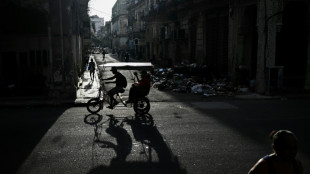 Cuba hit with seventh major blackout of the year

 Murray out with concussion so Wentz will start for Vikings

 UN chief 'deeply regrets' US visa refusal to Abbas for annual meeting

 England quick Carse to face no charges over alleged nightclub assault

With its sharp claws, scaly skin and venomous bite, Guatemala's "Sleeping Child" lizard has earned itself few human friends.
One of them, forest ranger Juan Alvarado, has spent the last 17 years of his life trying to save the much-maligned creature from extinction.
Alvarado, 68, works at a forest reserve in Guatemala's Zacapa department that is dedicated to saving the Guatemala Beaded Lizard (Heloderma charlesbogerti), dubbed Nino Dormido (Sleeping Child) by locals for its lethargic gait.
He expertly handles one specimen, rescued from a nearby village, holding it deftly by the head and body and placing it gently on the ground.
Seemingly nonplussed, the lizard slinks off into the undergrowth.
"People used to say that if you see a Heloderma, you're dead," Alvarado said of the reptile's foul reputation.
While the lizard does pack a painful bite, it is rarely deadly to humans who nevertheless view it as a mortal enemy.
Projects to save the critter include encouraging villagers to bring lost specimens to the park -- sometimes in exchange for payments of food.
Its venom, explained Alvarado, was being studied for possible use in cures for diseases such as diabetes and cancer.
Yet the creature has a fearful reputation, and individuals who stray into areas inhabited by humans are frequently killed.
Sleeping Child lizard numbers have been further decimated by human encroachment on its ever-shrinking habitat, climate change, and capture for sale as exotic pets.
At one point, they could fetch as much as $2,000 apiece in Europe, said Alvarado.
Given the multitude of threats, Guatemalan conservation officials estimate there are only about 600 individuals left in the world -- an increase from 200 two decades ago.
The International Union for Conservation of Nature lists the lizard as endangered.
N.Walker--AT



