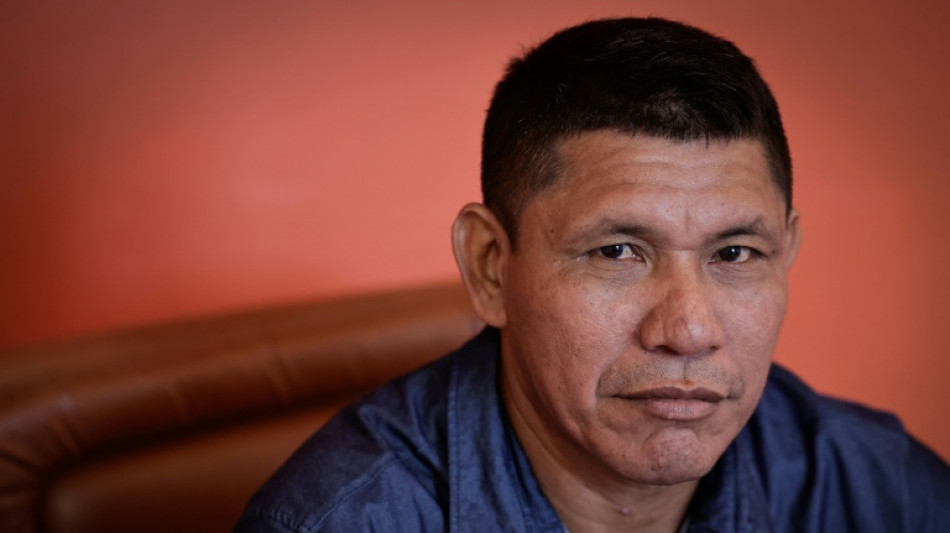
'Let them live in peace': survivor's fight for uncontacted Amazon people / Photo: STEPHANE DE SAKUTIN - AFP

 Ed Sheeran set to return to stage after Palestinian controversy
 Toulouse edge Vannes, Lyon beat Pau to take Top 14 summit

 Germans arrested for Louvre stunt in Mona Lisa hall

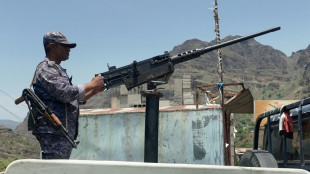
 Saudi-led coalition says Houthis fired ballistic missile at Riyadh

 France's debt climbs to highest since 1978: ministry

 McIlroy two shots off the lead at Wentworth after eagle on 18

 Martinez brace saves Inter in Serie A top-two clash with Roma
 Rosenior abused but guides Paris FC past old club Strasbourg
 Seven-try Lyon beat Pau, climb to Top 14 summit
 Brighton defeat a 'big lesson' against complacency for Arsenal, says Arteta

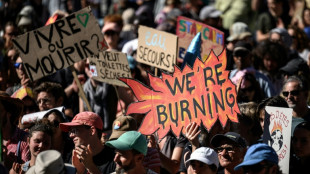 Thousands protest inaction over climate crisis in Switzerland

 Carapaz out of cycling world championships

 'Fragile' Tottenham beaten by Aston Villa despite late rally

 Mourinho hails Real Madrid grit before Atletico derby clash
 Martin wins Austrian MotoGP sprint after Acosta crash

 Japan edge Fiji to win Pacific Nations Cup

 Black smoke, flames rising near Riyadh airport: residents to AFP
 UK actor Naomi Watts honoured at Spain film festival
 Japan emperor declares Asian Games open after turbulent build-up

 Asian Games open with unity message after troubled build-up
 Denmark hails 'binding' Greenland deal with Trump

 We don't want Games host Japan losing money, says Asian Olympic official
 Ed Sheeran returns to stage after Palestinian controversy

 Asian Games to open in Japan after troubled build-up
 Drone owners rush to offload devices ahead of Beijing ban

Atxu Marima survived the flu that killed his family after a jaguar attack drove them from their Indigenous group in the Amazon -- but he cannot return for fear of endangering his people.
Instead he has dedicated himself to campaigning for Brazil's isolated communities to be left alone.
"I am here to tell the story of my people," Marima told AFP during a trip to Paris to raise awareness.
Marima is only around 40 but has already had many lives. Born Atxu among the Hi-Merima people, a nomadic group in the south of Amazonas state, he became Romerito (Little Romero) as a child labourer after fleeing the forest. But now to his wife and three children, he is Artur.
Until about the age of seven or eight, he lived between the Purus and Jurua rivers with his father, mother, and siblings as part of one of Brazil's officially recognised "uncontacted" Indigenous communities.
The country is home to more such groups than any other, with 114 officially recognised as living with little or no contact with the outside world.
For decades Brazil encouraged contact with these communities, before reversing course in 1987 after recognising the devastation it brought.
Marima and his family experienced this firsthand when tragedy forced them to seek out what he called a "civilised community" -- a decision that cost him his family, home, language and culture.
- 'Everyone got sick' -
Marima's childhood in the Amazon had been idyllic —- singing to trees to encourage them to bear fruit, families gathering to dance and racing across the forest floor with his siblings.
Until one day a jaguar attacked his father. He survived the mauling but suffered a severe head wound and began hallucinating that his children were prey -- tapirs and pigs to hunt with his arrows.
His mother fled with them, leaving his father dying in his hammock above a grave they had prepared for him.
Marima never saw him again.
"My family, especially my mother, then decided to make contact with the 'civilised' world," he told AFP.
It soon exposed them to diseases for which they had no defences.
"Everyone got sick and died," he said, recalling how his mother, aunt and several brothers succumbed to what he called the flu.
Marima and four siblings were the only survivors, scattered among local families.
Renamed Romerito, his adoptive family forced him to work in "slave-like conditions" until he left around the age of 15.
He believes he is the last of the siblings still alive.
-'Afraid of being shot'-
In 1987 Brazil adopted a no-contact policy, allowing interaction only if initiated by the Indigenous people themselves. Otherwise, they must be left alone.
Prior to that, "it was normal for half of the population of uncontacted people to die within the first year of contact," mostly from disease, said Priscilla Schwarzenholz, a researcher at Survival International.
Today Marima said isolated groups also fear contact because they are "afraid of being shot, because the 'civilisers' have guns."
"It's not worth getting in touch with my people... I'll pass on an illness to them," he said.
"I am no longer that person from the forest."
-'Live in peace'-
Marima now works with Brazil's National Foundation for Indigenous Peoples (Funai), monitoring the Hi-Merima territory, which the government legally recognised in 2005.
He spoke with pride about his work preventing illegal fishing, saying those responsible try to "invade" and show "no respect for the area".
Forest fires and deforestation pose another risk to their survival, he warned, noting that last year's intense heat and drought endangered their homes and hunting.
"People lack the common sense to protect the Amazon rainforest," he said.
Despite those threats, the Hi-Merima appear to have grown over the last 20 years, since incursions into their territory became illegal.
"You can see that there are kids, there are babies... they are growing and they are healthy," Schwarzenholz said, putting their number at about 150, based on traces they leave in the forest.
"I know they (the Hi–Merima) don't know I exist," Marima said.
But he said sharing his story was his way of staying connected while advocating for isolated groups to decide if -- and when -- they make contact.
Until then, "let them live in peace," he said.
T.Perez--AT