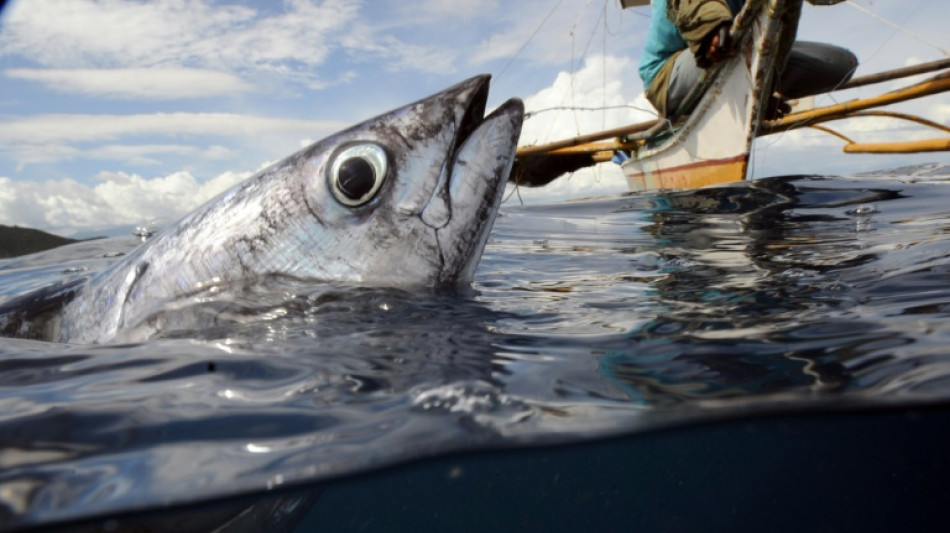
Billions of people rely on wild species for food, fuel, income: UN / Photo: ROMEO GACAD - AFP/File

 Carapaz out of cycling world championships

 'Fragile' Tottenham beaten by Aston Villa despite late rally

 Mourinho hails Real Madrid grit before Atletico derby clash

 Martin wins Austrian MotoGP sprint after Acosta crash

 Japan edge Fiji to win Pacific Nations Cup

 Black smoke, flames rising near Riyadh airport: residents to AFP

 UK actor Naomi Watts honoured at Spain film festival

 Japan emperor declares Asian Games open after turbulent build-up

 Asian Games open with unity message after troubled build-up
 Denmark hails 'binding' Greenland deal with Trump

 We don't want Games host Japan losing money, says Asian Olympic official

 Ed Sheeran returns to stage after Palestinian controversy

 Asian Games to open in Japan after troubled build-up

 Drone owners rush to offload devices ahead of Beijing ban

 Trump's beef policies irk Texas ranchers, testing their loyalty

 Batman Appears Atop the Sydney Opera House for Batman Day 2026

 Nvidia, OpenAI CEOs to attend Xi dinner at White House

 Anthropic picks Accenture for in-house AI safety evaluation
 Balogun returns as Monaco beat Lens to continue strong Ligue 1 start

 'Pause' on overt repression in Venezuela, but reforms still needed: HRW

 Global stocks mixed as yen falls despite Bank of Japan rate hike

 Cuba hit with seventh major blackout of the year

 Murray out with concussion so Wentz will start for Vikings

 UN chief 'deeply regrets' US visa refusal to Abbas for annual meeting

 England quick Carse to face no charges over alleged nightclub assault

Rampant exploitation of nature is a threat to the billions of people across the world who rely on wild species for food, energy and income, according to a new report from United Nations biodiversity experts published Friday.
From fishing and logging to the use of wild plants in medicines and perfumes, societies across the planet are deeply dependent on species that have not been tamed or cultivated in farming, with annual global legal and illegal trade in the hundreds of billions of dollars.
But as humans drive alarming biodiversity loss -- and climate change threatens to accelerate the destruction -- the UN's science advisory panel for biodiversity, known as IPBES, called for "transformative changes" in our relationship with wild species.
"Billions of people in all regions of the world rely on and benefit from the use of wild species for food, medicine, energy, income and many other purposes," it said, adding that overexploitation and environmental degradation threaten resources, particularly for the most vulnerable.
The report, which took four years to produce and has been written by 85 experts from different specialist fields, comes as the UN steers a crucial international process to lay out a framework for protecting nature in the coming decades.
IPBES, which has previously warned that a million species are at risk of extinction, said promoting sustainability and halting overexploitation was "critical to reverse the global trend in biodiversity decline".
The report recognises the fundamental role that these animals and plants play in people's lives and in particular the crucial role of indigenous communities in protecting nature.
"The use of wild species is absolutely crucial for humanity and nature," report co-chair Jean-Marc Fromentin told AFP, adding that UN experts estimate "about 40 percent of humanity" relies in some way on wild species.
"It's much bigger than you think."
They are a "key issue for food security" around the world and also play a huge economic role, he said.
- Food and fuel -
Overall, 50,000 species are used for food, energy, medicine, material and other purposes around the world, the report said, with more than 10,000 different types harvested for human consumption.
Wild plants, algae and fungi provide food and income for one in five people globally, the report said, while some 2.4 billion people rely on wood for cooking.
An estimated 70 percent of the world's poor depend directly on wild species and businesses linked to them, the report found.
But it is not just rural communities in developing countries that use these species.
"City dwellers in rich countries might not notice it, but wild plants are used in medicines or cosmetics, you eat wild fish and there is a good chance that your furniture comes from wild trees," said Fromentin.
- Big business -
Wild trees account for two thirds of global industrial roundwood, while trade in wild plants, algae and fungi is a billion-dollar industry.
Even foraging remains an important activity for people in North America and Europe, with notably high rates in Eastern Europe, according to the research, which said there is "growing demand for wild foods" for high-end restaurants.
But IPBES said global trade can become disconnected from sustainable local supply, with surging demand risks species and ecosystems, and said there was an "urgent" need for effective policies.
One major issue is illicit trade in wild species, estimated to be worth between $69 billion and $199 billion a year, which IPBES said was the third largest illegal market after human trafficking and drugs.
While this largely targets trees and fish, the report said even smaller scale trade in rarer animals and plants, like orchids, can have devastating effects, warning it often pushes species beyond their limits.
- Citizen of nature -
But the report highlights that letting the natural world thrive is even bigger business.
Tourism for example that is based on observing wild species, was a key reason that protected areas globally received eight billion visitors and generated $600 billion every year before the Covid-19 pandemic.
Meanwhile, fisheries that are well managed often have increasing abundance of fish, compared to areas that are unsustainably fished.
IPBES said overexploitation is the main threat to wild marine species and a key threat to land and freshwater ecosystems.
The report authors said the concept in many societies that humans are separate from and dominant over nature has "led to major environmental crises, such as climate change and biodiversity decline".
Following the example of indigenous peoples, they said a more "respectful" relationship with the planet could be based on seeing humanity as "a member or a citizen of nature among others".
O.Ortiz--AT



