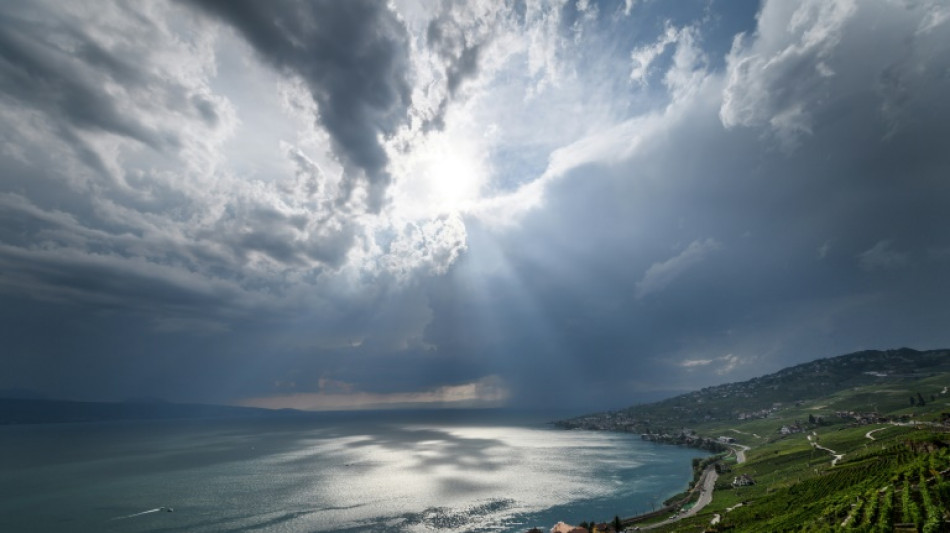
France, Switzerland agree on Rhone, Lake Geneva water management / Photo: Fabrice COFFRINI - AFP

 Selena Gomez Launches Black Equality Fund to Support Racial Justice Organizations

 Bob's Watches Founder Paul Altieri Unveils Private Collection of Vintage Rolex Watches in New Book, "NOT FOR SALE"

 India Imposes 162.5% Duty on Bulk Scotch Imports Amid UK Trade Pact Dispute

 Peaceful Repeat Vote in Douglas Ward 3 Amid Heightened Security

 Belgian Ambassador Marks King’s Day in Athens Amidst Strong Bilateral Trade Ties

 Rediff.com IPO Risks: Gmail Dominance and New Business Ventures

 Dubai Police Expand Luxury Patrol Fleet with 525-hp Defender

France and Switzerland on Thursday signed two agreements on how to manage their shared waters of Lake Geneva and the River Rhone -- an increasingly pressing issue as climate change takes its toll.
The Rhone, which originates in a Swiss Alpine glacier, flows into Lake Geneva, exits at the western end and eventually enters neighbouring France.
"With the gradual disappearance of glaciers, the Rhone will become increasingly dependent on rainwater," France's deputy foreign trade minister Laurent Saint-Martin said at Thursday's signing ceremony in Geneva.
This will lead to greater "unpredictability" in the river flow and will increase the risk of flooding and low water levels, he warned.
Along with the Rhone, Lake Geneva -- the biggest natural lake in Western Europe -- is used for everything from fishing and agriculture to recreation and drinking water, as well as for cooling French nuclear reactors.
At the western end of the lake, Switzerland's Geneva canton has long managed the flow of the River Rhone via a dam, based on its own hydroelectricity needs and compliance with lake levels defined in an agreement with other Swiss cantons.
But in January 2012, following a severe drought, France asked Switzerland to develop a framework for integrated water management between the two countries.
More than a decade later, in 2023, Switzerland declared itself "ready to negotiate", with the talks culminating in Thursday's signing.
The more operational agreement on the regulation of Lake Geneva's waters paves the way for "Franco-Swiss crisis management units", Saint-Martin said, adding that they would be activated when lake levels or the flow of the Rhone approach certain thresholds.
The other agreement, concerning cooperation on the transboundary waters of the Rhone, meanwhile establishes a Bilateral Cooperation Commission, with a presidency alternating between the two countries.
It will be tasked with providing a common vision and facilitating the transboundary water management between existing bodies, the Swiss environment, transport and energy ministry said.apo/nl/rjm/rlp
Th.Gonzalez--AT