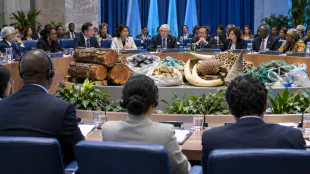
Plastic pollution talks must not fail: UN environment chief / Photo: ANTHONY WALLACE - AFP

 Get Huge: Looksmaxxing to Death Docuseries Details Tony Huge's Thailand Crimes
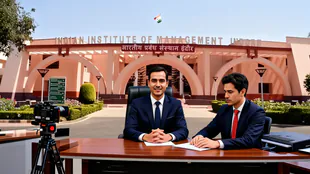 IIM Indore Announces IPMAT 2027 Exam Date for April 24

 Quick Pressure-Cooker Beef Stew and Rice Minestrone Soup Recipes
 Guardian Metal Resources PLC Announces Proposed Spin-Out of Non-Tungsten Projects
 Fulcrum Metals PLC Announces New Critical Mineral Recoveries Expand Potential

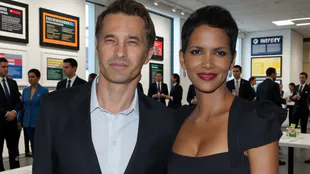 Olivier Martinez Seeks Increased Child Support from Halle Berry Following Custody Change

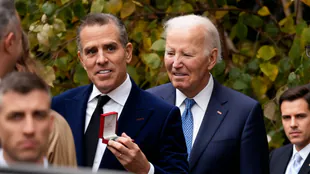 Joe Biden Makes Surprise Appearance at Trinity College Dublin for Hunter's Medal

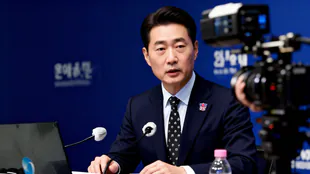 Bank of Korea Governor Shin Hyun-song Appointed First Asian Chair of BIS Payment Committee
Talks to agree the world's first treaty to curb plastic pollution cannot fail and must tackle both production and consumption, the UN's environment chief told AFP on Monday.
Negotiators are deeply divided on issues including whether to limit new plastic manufacturing and phase out some chemicals, raising concerns that the talks could fail.
"I can't entertain that it fails," said Inger Andersen, evoking the "massive plastic crisis".
"No one wants to find plastic in the placenta or in the blood of the unborn baby."
The negotiations opened hours after COP29 climate talks in Baku that went into overtime and ended in a deal roundly condemned by many developing countries.
Battle lines were quickly drawn in Busan, with several countries initially objecting to a document intended to streamline negotiations.
Andersen said the tussling at COP29 and biodiversity talks before it this year would not "set a negative precedence in any way, shape or form."
"Was it frustrating during some part of the day... of course," she acknowledged.
But, "we are only in day one."
"I'm not going to give up and say that the whole thing is the lost today, on the contrary."
- 'The stakes are high' -
While the debate over procedure was resolved by late Monday, negotiators now move the real substance of their disagreements: whether to reduce plastic production, limit chemicals known or believed to be harmful, and how to finance implementation of the agreement.
Some countries -- including Saudi Arabia and Russia -- have been keen to limit the treaty's focus to improved waste management, arguing that is the main cause of the plastic pollution that litters land, seas and skies.
Without addressing any one country, Andersen said the UN resolution establishing the talks was quite clear and delegates must "address sustainable production and consumption".
"This is not a waste management treaty. This is not a treaty where we just do the downstream," she said.
"These are the instructions to negotiators. It's not like there's wiggle room here."
The depth of disagreement, as well as the time pressure, has raised concerns among some environmental groups that delegates could settle for a weaker treaty to win agreement.
Andersen said she was convinced that countries were committed to a strong deal.
"The stakes are high, but the commitment that we have in that hall in there is also high," she said.
"Nobody wants a bad deal."
Negotiators have until December 1 to agree a text, but the overrun at COP29 and biodiversity talks before it have left many sceptical the talks can wrap up on time.
"The truth is that, there are only so many hours in the day for these negotiators, and they work day and night," Andersen said.
"We hope we won't have to ask them to do that here, too. But it may happen."
T.Wright--AT