Main points of the $300 billion climate deal / Photo: STRINGER - AFP

 Reusser retains world time-trial title

 Man City outgun Sunderland despite Brobbey hat-trick, Liverpool win at Bournemouth

 Top US, Chinese economic officials meet ahead of Trump-Xi summit
 Erdogan's LGBTQ crackdown 'first step of election campaign': activist

 Mass drone barrage on Moscow kills two

 82-year-old dies after beach fight in Greece over sun lounger

 US warns of rapid escalation in Mideast war
 Iran 'put hearts on the court' to win Asian Games basketball bronze
 School girl Yu helps China dominate in Asian Games swimming openers
 Myanmar win first Asian Games teqball gold as Spain great Puyol watches

 China's 13-year-old Yu scorches to first major gold at Asian Games
 Russians vote on last day of parliamentary elections

 Hong Kong pays final respects to former city leader Tung

 Typhoon put people off Asian Games opening ceremony, official says

 China's 13-year-old Yu cruises as Asian Games swimming begins

 AI 'warning shots' focus Beijing on national security risks

 Philippine tribe in limbo over US-led tech hub

 Leo XIV, first US pope transcends his restrained style

 Singer Ed Sheeran says Gaza situation 'unjustifiable' following controversy

 In 'Tenzing', a Sherpa mountaineer gets his due

 Gridko's New Live Drive PTO Roll-Off Trailer Wins the Heavy-Duty TRAILmakER Award 2026 at NATDA Awards

 Chile's Bachelet quits race to be next UN chief

 Raphinha treble fires perfect Barca to win at Sevilla

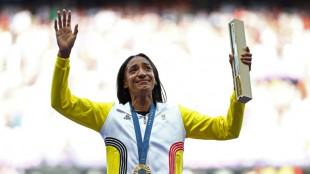 Thiam makes winning heptathlon return at Decastar meet
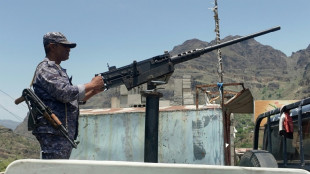
 Czechs beat USA to qualify for Davis Cup finals

The deal reached at UN climate talks in Azerbaijan ramps up the money that wealthy historic emitters will provide to help poorer nations transition to cleaner energy and adapt to global warming.
Here are the main points of the agreement reached at COP29 in Baku:
- $300 billion -
Under a framework established by the UN in 1992, 23 developed countries -- and the European Union -- historically responsible for most planet-heating emissions are obliged to contribute to climate finance.
The Baku accord raises the amount of money that developed countries must provide to at least $300 billion per year by 2035.
It is higher than the $100 billion that is currently required under a previous agreement that runs until next year.
But it falls well short of the $500 billion that some developing countries had demanded at the fraught negotiations in Baku.
The deal states that the money will come directly from a "wide variety of sources" including government budgets, private sector investment, and other financing.
It also cites "alternative sources" -- a reference to potential global taxes under discussion on the aviation and maritime industries, and the rich.
The hope is that the money from developed countries will help boost private investment to reach an ambitious goal -- written into the deal -- of delivering at least $1.3 trillion per year by the next decade.
That is the amount that experts commissioned by the United Nations said was needed by 2035.
"With these funds and with this structure, we are confident we will reach the 1.3 trillion objective," EU climate commissioner Wopke Hoekstra told fellow COP29 delegates.
- China role -
The United States and EU had pushed to broaden the donor base to include countries that are still listed as developing but have now become wealthy, such as China and Saudi Arabia.
But China, the world's second-biggest economy and top emitter of greenhouse gases, has steadfastly refused to change its status while recalling that it already provides bilateral aid.
The deal states that developed nations would be "taking the lead" in providing the $300 billion -- implying that others could join.
The text "encourages" developing countries to "make contributions" that would remain "voluntary".
There was one novelty: the climate finance that developing countries such as China provide via multilateral development banks will count towards the $300 billion goal.
"It is also a matter of fairness and of importance to us that all those with the ability to do so should contribute," Hoekstra said.
"Therefore it is good, given the size of the problem, that we enlarge the contributor base on a voluntary basis."
- Share of money -
The negotiations were also the scene of disagreements within the developing world.
The Least Developed Countries (LDCs) bloc had asked that it receive $220 billion per year, while the Alliance of Small Island States (AOSIS) wanted $39 billion -- demands that were opposed by other developing nations.
The figures did not appear in the final deal.
Instead, it calls for tripling other public funds they receive by 2030.
The next COP, in Brazil in 2025, is expected to issue a report on how to boost climate finance for these countries.
P.A.Mendoza--AT



