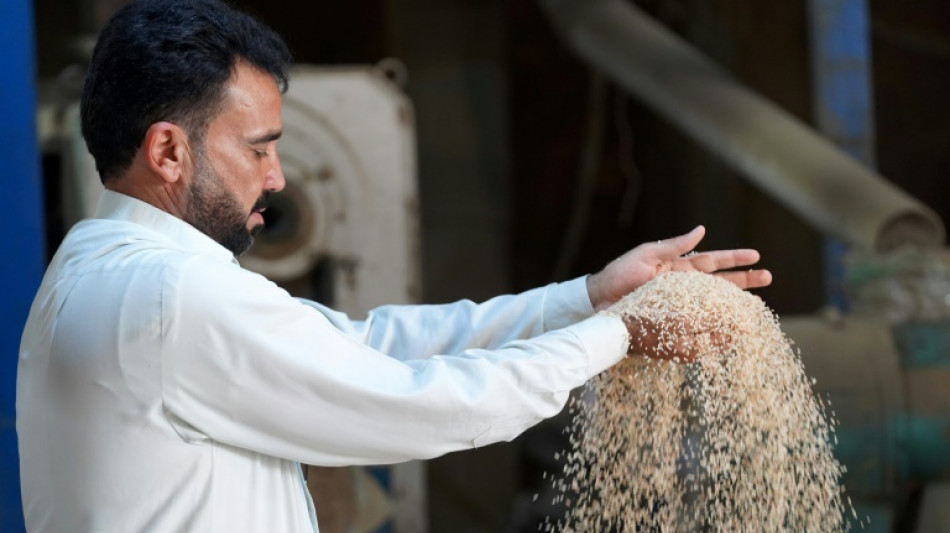
Iraq's prized rice crop threatened by drought / Photo: Qassem al-KAABI - AFP

 Martin wins Austrian MotoGP sprint after Acosta crash

 Japan edge Fiji to win Pacific Nations Cup
 Black smoke, flames rising near Riyadh airport: residents to AFP

 UK actor Naomi Watts honoured at Spain film festival
 Japan emperor declares Asian Games open after turbulent build-up

 Asian Games open with unity message after troubled build-up
 Denmark hails 'binding' Greenland deal with Trump
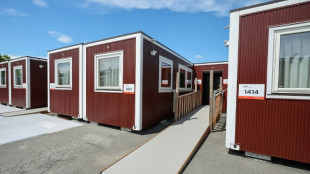 We don't want Games host Japan losing money, says Asian Olympic official
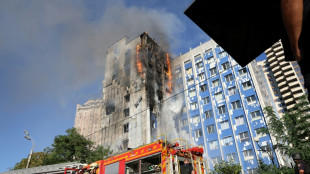
 Ed Sheeran returns to stage after Palestinian controversy

 Asian Games to open in Japan after troubled build-up
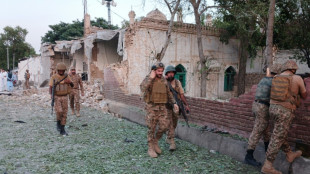
 Drone owners rush to offload devices ahead of Beijing ban

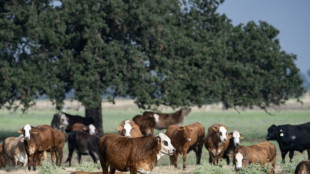 Trump's beef policies irk Texas ranchers, testing their loyalty

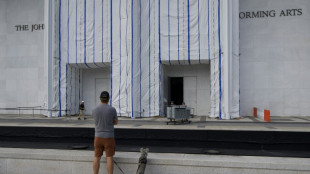 Kennedy Center: future unclear for iconic Washington arts hub

 Trump claims 'infinite' Greenland security deal with Denmark

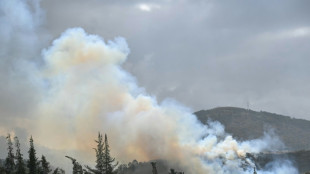 Helicopters battle wildfire threatening Ecuador's capital

 Brentford batter Chelsea to undo Alonso's promising start

 Kane hits Bundesliga century as Bayern rout Union
 Trump says CNN, MS NOW, Politico banned from White House
 Hushing and hedging: US companies retreat on climate

 Springboks to face Fiji before 2027 Rugby World Cup
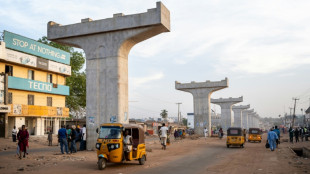 Nigeria miners struggled to breathe in cell before 37 died: survivors

 McIlroy on the charge at PGA Championship as Reed withdraws

 McIlroy on the charge at PGA Championship

 Crisis-wracked Volkswagen warns of 10-bn-euro hit to profits

 Costa Rica's Grynspan tops third informal poll for UN chief: diplomat

Drought is threatening the Iraqi tradition of growing amber rice, the aromatic basis of rich lamb and other dishes, and a key element in a struggling economy.
The long-grained variety of rice takes its name from its distinctive scent, which is similar to that of amber resin. It is used in Iraqi meals including sumptuous lamb qouzi, mansaf and stuffed vegetables.
But after three years of drought and declining rainfall, Iraq's amber rice production will be only symbolic in 2022, forcing consumers to seek out imported varieties and leaving farmers pondering their future.
"We live off this land," Abu Rassul says, standing near a small canal that in normal times irrigates his two hectares (five acres) near Al-Abassiya village in the central province of Najaf.
"Since I was a child I have planted amber rice," says the farmer in his 70s, his face wrinkled and unshaven, dressed in a dazzling white dishdasha robe.
"Water enables us to plant every year."
Except for this one.
Normally, rice fields planted in mid-May should stay submerged all summer until October -- but that's a luxury Iraq can no longer allow.
The country's available water reserves "are well below our critical level of 18 billion cubic metres (4.8 trillion gallons)", Shaker Fayez Kadhim, Najaf's water resources manager, told AFP.
Rice drains between 10 and 12 billion cubic metres during its cultivation period of about five months, so it is "difficult to grow rice in Najaf or other provinces because of the high level of water it needs", Kadhim said.
Previously, more than 70 percent of the amber crop was grown in Diwaniyah and neighbouring Najaf provinces.
In early May, officials limited total rice crop areas to 1,000 hectares (2,471 acres), in Najaf and Diwaniyah only, according to the agriculture ministry.
The normal quota is 35 times that.
Water shortages have also led to reduced quotas for wheat farmers.
The country's annual rice production had been 300,000 tonnes (tons), according to Mohammed Chasseb, a senior official in the ministry's planning department.
Iraq is known in Arabic as the "country of the two rivers" -- the Tigris and the Euphrates. But despite those two legendary water sources, the supply of water has been declining for years and the country is classified as one of five most vulnerable to climate change effects and desertification.
The consequences are dire: depleted rivers, more intense sandstorms, declining crop yields -- all of which add to the multiple challenges the country faces after decades of war and insurgency.
- Fearing the worst -
The Tigris and Euphrates, and their tributaries, originate in Turkey and Syria as well as Iran, which dams them upstream. This reduces the flow as they enter Iraq.
Kadhim says the Euphrates has dropped to about one-third of its normal level. He wants "political action" to get more water flowing.
Ahmed Hassoun, 51, president of the Najaf farmers' association, fears the worst.
"There is a risk of seeing rice cultivation disappear for lack of water," he said, blaming authorities.
"We know Iraq will have a shortage of rain in the coming years," said Hassoun, an agricultural engineer. Despite that, nothing has been done to "modernise the irrigation system", he complains.
But agriculture is not the only sector where the infrastructure needs upgrading in a country grappling with corruption and a financial crisis after decades of war.
Hassoun lamented that Iraq has become "a market for all its neighbours", a reference to the deluge of Iranian and Turkish agricultural product imports.
Last year, Iraq's own agricultural sector contracted by 17.5 percent "following severe droughts, energy outages, and the rising global price of inputs", according to the World Bank.
That is significant in a country highly dependent on oil income but that wants to diversify its economy.
According to the World Food Programme, agriculture is the second-largest contributor to Iraq's GDP, after oil, and employs about 20 percent of the workforce.
"We want the state to take an interest in farmers," says Jassem Zaher, who is in his 60s and also exclusively farms amber rice.
"We don't have other crops. It's the farmers' livelihood."
Y.Baker--AT



