Indian artisans tackle waste with creative upcycling / Photo: Sajjad HUSSAIN - AFP

 Fire in Northern China Apartment Building Kills 14

 Apple’s 20th Anniversary iPhone to Skip Action Button for Camera Control Integration

 Family of Woman Who Died at Voting Station Condemns Official Silence

 Karen Wazen Launches First Standalone Boutiques in Cairo

 New 401k Gold IRA Investment Guide Explains the Best Way to Invest in Gold for Retirement (2026 Update)

 InterContinental Hotels Group PLC Announces Transaction in Own Shares - November 09

 First Drive: 2027 BMW i760 xDrive Review

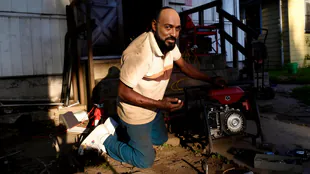 Gary, Indiana Blackout Exposes FEMA Relief Disparities Along Racial Lines
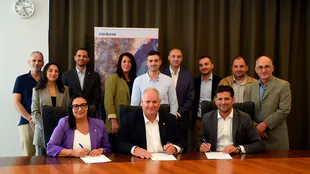
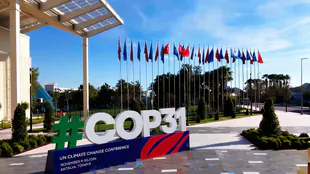 Turkish Energy Minister Highlights Qatar as Key Partner for Regional and Global Energy Security

 London Museum Granted 24/7 License Ahead of November Opening

The world's most populous nation India has a waste problem to match, but one group hopes their efforts can inspire change in one of the top polluters of plastic.
At a bustling workshop north of the capital New Delhi, artisan Ram Babu turns a discarded cigarette packet into a papier mache candle.
Babu, a 28-year-old amputee, is among scores of people with disabilities who have been trained to turn "trash to cash" and do their bit for the environment.
"It feels good to work despite my challenging situation," beamed Babu, as he deftly covered the packet with clay, using sprinkles of water.
Life held little hope for Babu after he lost his right hand and leg in a train accident in 2005.
But he found courage again when he stumbled upon the Avacayam employment programme, run by the Society for Child Development, a New Delhi-based charity.
The word "Avacayam" comes from Sanskrit, and roughly translates to "gathering flowers".
Avacayam participants turn orange and yellow flowers that were offered in temples and later gathered up into incense sticks and coloured powder used widely in festivals.
They also transform fallen idols of Hindu gods and goddesses -- often left piled under sacred trees -- into sacred powder for temple rituals.
- Tons of waste -
"I have been working for more than 14 years now. My life has found a new direction and purpose," said Babu, who earns 10,000 rupees ($120) a month.
Others like Babu make decorative items, bags and pouches out of recycled waste, which is collected every day at their sprawling centre.
Plastic bottles are also reused to make a variety of craft products.
The group's efforts scrape the surface.
In India, municipal governments with limited resources often struggle to manage mountains of waste, with towering piles of foul-smelling rubbish littering the edge of New Delhi.
India generates more than 65 million tons of waste in a year, according to a report by The Energy and Resources Institute, a New Delhi-based research group, but only around a fifth is processed and treated.
A study in Nature published this month named India as the largest plastic pollution emitter, producing nearly one-fifth of global plastic emissions.
Global experts -- including the multi-nation "High Ambition Coalition" -- argue the focus must not only be on waste treatment, but urgently required control measures on plastic production itself.
Charity groups such as Avacayam say they set an example, doing what they can.
"We collect waste and trash from offices, homes and factories," said Madhumita Puri, the founder of the Society for Child Development.
"Then we recycle them to make beautiful things which can be enjoyed again."
Puri said the work also helps people with disabilities live a life of dignity.
Abdul Sheikh, whose legs were stunted by polio, had little means of employment until Puri's charity knocked at his door.
"I learnt that day that we should never lose hope in the face of adversities," said Sheikh, 30, who makes decorative papier mache items.
"Now I don't have to depend on others for anything. I don't have legs but today I am standing on my feet."
L.Adams--AT